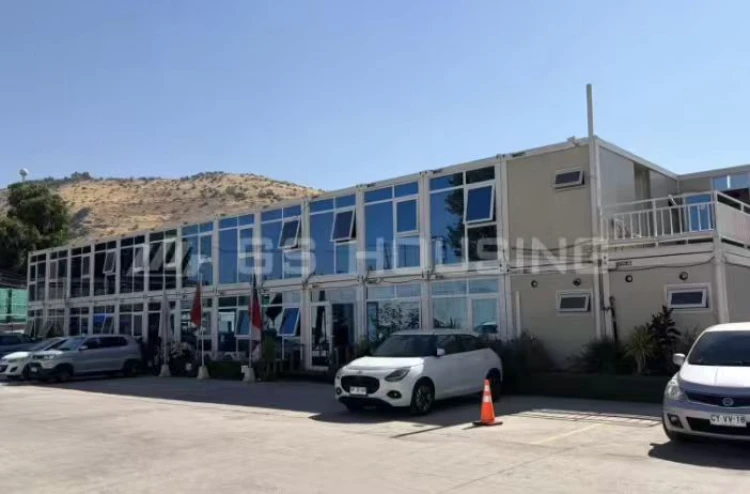
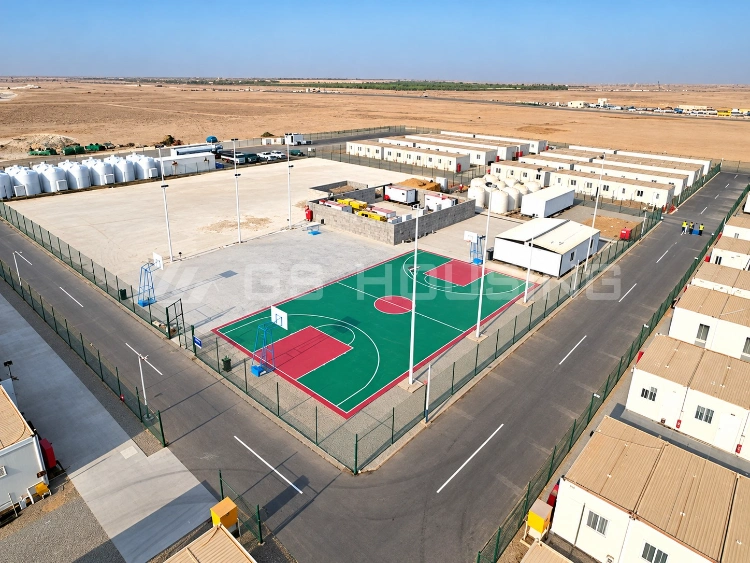
On a large mining, construction or oil and gas project, even a short delay in workforce accommodation can affect more than the planned move-in date. It may create additional site costs, complicate labor mobilization and put pressure on the wider project schedule. For procurement teams, modular building lead time is therefore more than a logistics detail — it is part of the project schedule.
Modular construction can shorten the overall project schedule by moving part of the work into the factory, but there is no universal answer to how long the full process takes. Many buyers ask for a single delivery number upfront without accounting for the different stages behind it. Delays in design approval, production, shipping or site preparation can all affect the final handover date.
This guide explains the full modular construction timeline, the factors that can extend or shorten lead time, and how large project buyers can coordinate production, shipping and installation more effectively.
The Full Modular Building Timeline
A complete modular building delivery involves more than factory production. The process normally runs from initial requirements through design, manufacturing, logistics, installation and final handover.
On large projects, these stages do not always follow a strict linear sequence. Multiple activities can run in parallel, which is one of the core scheduling advantages of prefabricated construction.
1.Requirements and Design Confirmation
The first stage covers specification review, layout adjustment, engineering drawing development and final client approval.
For a standard catalog configuration with minimal changes, this stage can be relatively straightforward. Custom layouts, specialized room functions or project-specific structural requirements may require additional design revisions.
This is also where project conditions need to be established. Building use, local design loads, climate, electrical requirements, insulation, doors and windows and other specifications should be confirmed before the production schedule is finalized.
A modular building manufacturer with an in-house engineering team can also reduce the time needed to coordinate drawing revisions and technical questions.
2.Client Approval and Documentation
Production normally cannot be released until the required drawings and specifications have been formally approved.
For overseas projects, the documentation stage may include structural calculations, material specifications, fire-performance documentation, electrical compliance reports and other project-specific approvals. Local code requirements or additional client review cycles can also affect the schedule.
For this reason, buyers should distinguish between the time needed to prepare a quotation and the actual production lead time. A project may be discussed for several weeks before the final drawings are approved, but that period should not automatically be counted as factory production time.
3.Factory Production
Once the drawings are formally approved, the project enters the production schedule.
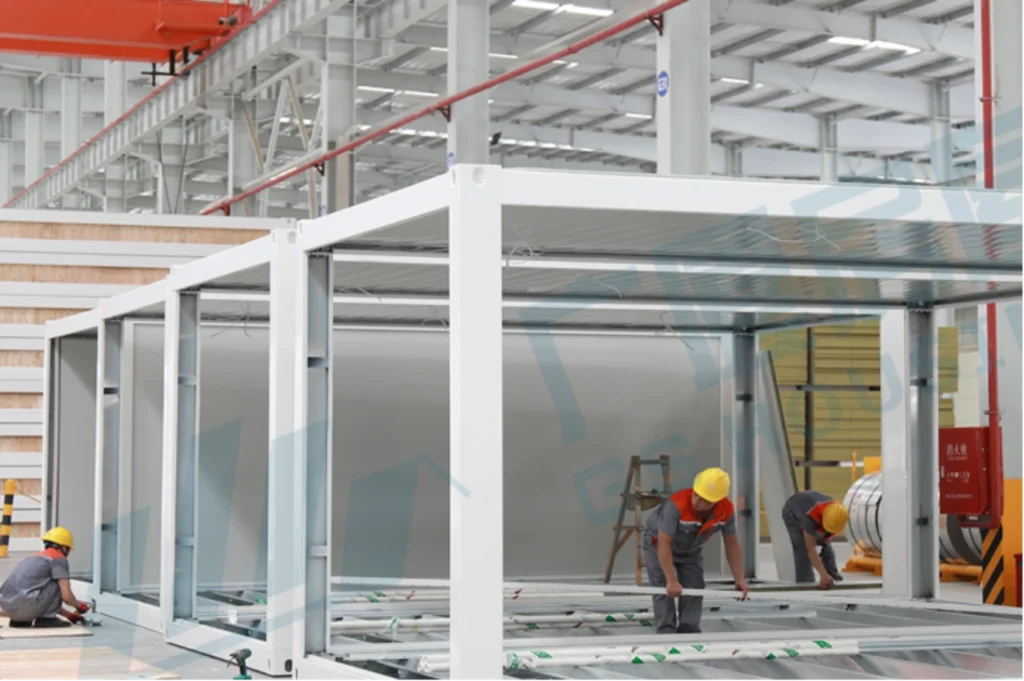
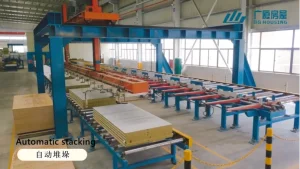
Standardized flat-pack units are easier to plan because the main manufacturing processes are already established. Steel components move through cutting, cold forming, welding and coating, followed by panel and component assembly.
Custom configurations, additional wet areas, upgraded insulation or project-specific components may require extra production steps and dedicated scheduling.
For large projects, production capacity becomes particularly important. GS Housing currently states an annual production capacity of more than 80,000 flat-pack modular building units, supported by automated production lines and a large technical team. The actual production schedule for each project still depends on quantity, specification and the production slot confirmed for the order.
4.Transport and Logistics
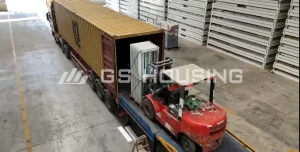
After production and quality inspection, the buildings or components are packed and prepared for shipment.
Transport duration varies considerably by destination. Projects close to the factory or connected to established road networks may have a relatively short logistics phase. Overseas projects require sea freight, port handling, customs clearance and inland transportation.
For remote sites, logistics planning should start while the buildings are still in the design and production stages. Waiting until production is complete to arrange shipping can create unnecessary delays.
The modular building delivery time therefore depends not only on how quickly the factory produces the units, but also on the route, destination and local transport conditions.
5.Site Preparation
Site preparation can usually run in parallel with factory production.
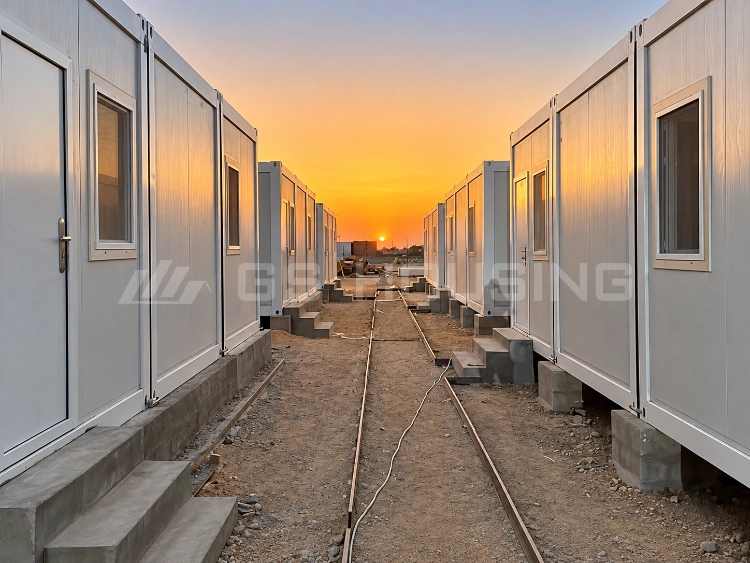
Typical work includes ground leveling, foundation construction, utility connection runs, drainage and access preparation. The exact scope depends on the project and foundation system.
This parallel workflow is critical. If the site is not ready when the first shipment arrives, units may need to be stored temporarily. That can create additional handling, security and local logistics costs while reducing the schedule advantage of modular construction.
6.Installation and Commissioning
Once the site and first delivery batch are ready, installation can begin.
Installation time varies according to the building type, factory fit-out level, site conditions, available equipment and the number of workers assigned to the installation team.
Foldable or expandable modular units can require less structural assembly on site than conventional flat-pack buildings. Standard flat-pack buildings with complete interior, electrical and plumbing fit-out involve more installation work, but factory prefabrication can reduce the amount of construction that has to be completed on site.
After installation, electrical, plumbing and HVAC systems may need testing and commissioning before formal inspection and handover.
What Affects Modular Building Lead Time
Four factors usually have the biggest influence on the overall modular building timeline. For large projects, several of these factors often interact.
Project Quantity
A small order can sometimes fit into an existing production schedule. A project involving hundreds of units requires more detailed material planning, production allocation and quality control.
Large batch orders may therefore need a dedicated production plan rather than simply being added to a standard production run.
The supplier’s available production capacity matters, but capacity alone does not determine the delivery date. The confirmed specification, production slot and delivery plan all need to be considered together.
Degree of Customization
Standard configurations generally move through design and production more easily than heavily customized buildings.
Layout changes, additional partitions, wet rooms, upgraded insulation, special door and window positions and other modifications can add engineering and manufacturing steps.
Customization does not necessarily create a problem. The important point is to understand its schedule impact before the order is placed, rather than after production has started.
Configuration Complexity
A basic office building and a fully fitted accommodation unit do not require the same level of factory work.
Buildings with bathrooms, kitchens, specialized electrical systems or climate-specific insulation packages may require more components to be installed and tested before shipment.
More factory fit-out can reduce the amount of work required on site, but it may also increase the manufacturing workload. The right balance depends on site labor, local construction conditions and the project’s overall schedule.
Project Location and Logistics
A project close to the factory can have a very different logistics timeline from one on another continent or in a remote region.
Sea freight schedules, port congestion, customs clearance, inland transportation and road access can all affect modular building delivery time.
For projects in the Middle East, Africa, Latin America or other overseas markets, logistics should be included in the project schedule from the beginning rather than treated as a final step after production.
The Key Efficiency Advantage: Parallel Scheduling
The main scheduling advantage of modular construction is not simply that modules are faster to install. It is that factory production and site preparation can progress in parallel.
While the factory is manufacturing the buildings, the project team can prepare foundations, utilities, drainage and access routes. When the first batch arrives, installation can begin without waiting for the entire site program to finish.
This is one of the most important differences between modular and conventional construction scheduling.
For large projects, the production schedule and civil works schedule should therefore be coordinated rather than managed separately. A delay on either side can affect the point at which installation can begin.
For more on aligning building design with site and climate conditions for remote locations, see our guide on planning remote workforce accommodation.
Planning Lead Time for Large Batch Projects
For projects involving hundreds of units, lead time planning needs to go beyond simply asking the supplier for a production date.
Lock the Production Slot Early
Large projects can occupy a significant amount of production capacity. Once the key specifications and order are confirmed, buyers should discuss production scheduling with the supplier as early as possible.
Material sourcing and production planning can then be coordinated around the expected delivery phases.
Freeze the Critical Specifications Early
Large projects can lose time when important specifications continue changing after production planning has started.
Layout, wall systems, insulation, doors and windows, electrical scope and special room functions should be confirmed before the production schedule is locked wherever possible.
This does not mean every minor detail has to be decided at the first inquiry. It means the items that affect engineering, material sourcing and manufacturing should be clearly identified before production begins.
Plan Phased Delivery
Large projects rarely need every unit on site at exactly the same time.
Phased production and phased shipping can allow installation to begin with the first batch while later batches remain in production. This can also spread logistics demand and reduce the peak requirement for site labor and installation equipment.
The delivery sequence should be coordinated with the actual construction plan rather than determined only by factory output.
Align Site Work With Production Batches
The most effective large projects match delivery batches with corresponding areas of site preparation.
For example, the first shipment can be scheduled for the first completed accommodation zone while foundations and utilities for later zones continue in parallel.
This requires coordination between the modular building supplier, civil contractor and project management team.
There Is No Single Standard Lead Time
Some suppliers publish a standard lead time that appears to apply to every project. In practice, prefab building lead time changes with project conditions.
A small order of standard foldable units for a nearby site can have a very different timeline from a large order of customized accommodation buildings for a remote overseas project. Both situations can be normal.
The lead time should therefore be confirmed against the actual specification, order quantity, production slot and destination. For procurement teams, the useful number is the lead time for the specific project, not a standard figure applied to every order.
For reference, when comparing modular building quotes, the production lead time should be stated from the point of drawing approval, not from the date of the first inquiry. This distinction makes supplier quotations easier to compare and gives the project team a clearer basis for schedule planning.
For more information on comparing supplier pricing and scope, see our guide on modular building quotes.
FAQ
How long does it take to build a modular building?
There is no single answer for every project. The total time depends on design requirements, order quantity, configuration complexity, production scheduling and project location. Standard configurations are generally easier to schedule than heavily customized buildings, while large batch projects require more detailed production and logistics planning.
What modular building type has the fastest installation time?
Foldable or expandable modular units generally require less structural assembly on site than conventional flat-pack buildings. However, actual installation time depends on the unit configuration, site conditions, available equipment, installation workforce and the level of factory fit-out.
Does customization always increase lead time?
Customization generally adds engineering and production steps, so it can extend the schedule compared with a standard configuration. The extent of the impact depends on how much the design differs from the supplier’s established configuration and whether additional materials or production processes are required.
Can site preparation reduce the total project time?
Yes. Factory production and site preparation can run in parallel, which is one of the main scheduling advantages of modular construction. The overall project can move more efficiently when foundations, utilities and access are prepared while the buildings are being manufactured.
How does quantity affect modular building delivery time?
Small orders may fit into existing production schedules, while large-volume orders require dedicated production planning, material sourcing and line allocation. A supplier with sufficient production capacity can support larger batch projects, but the actual delivery schedule still depends on the confirmed specification, production slot and shipping plan.
Request a Lead Time Review
Modular building lead time is one of the important schedule considerations on a large infrastructure or resource project. Getting it right affects contractor mobilization, camp opening dates and overall project planning.
As a modular building manufacturer, GS Housing produces flat pack modular buildings with configurable wall, roof, floor, electrical and interior specifications. Its engineering and production teams plan each project according to the confirmed specification, quantity and destination.
If you are planning a large project and need a detailed production and delivery schedule, share your project country, building use, estimated quantity and specification requirements to request a project-specific modular construction schedule.