Long-term mining and infrastructure project sites need more than basic temporary rooms. They need a worker camp that can support daily living, project management, hygiene, dining, rest, and later expansion. If the camp is poorly planned, small problems can turn into daily operational delays: crowded dormitories, long walking routes, weak sanitary areas, and difficult camp management.
GS Housing works with modular container house systems for overseas construction, mining, municipal, energy, and infrastructure project sites. For B2B buyers, the value is not only the modular unit itself. It is the ability to plan offices, dormitories, canteens, bathrooms, shower rooms, and activity spaces as one complete project camp system. This is especially important for remote sites, where labor availability, material supply, weather, and transportation can all affect the project schedule.
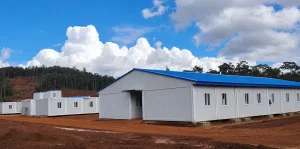
What Makes a Modular Worker Camp Suitable for Long-Term Project Sites?
A long-term worker camp must stand up to repeated daily use. It also needs a layout that keeps work, rest, food service, washing, and internal traffic organized. Modular systems are often chosen because units can be planned, delivered, assembled, and expanded in phases.
Durable Flat-Pack Container Houses for Daily Use
Durability should be checked before layout design. A temporary building may look acceptable at first, but daily foot traffic, weather exposure, and frequent maintenance soon test its real quality.
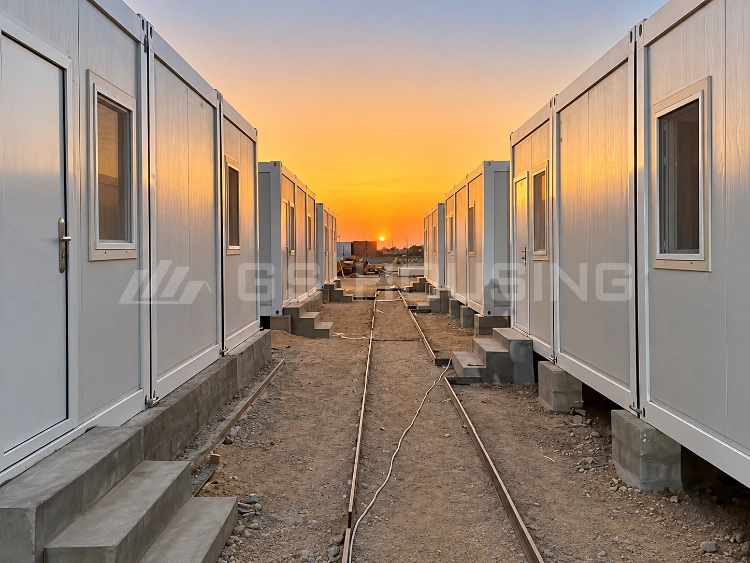
GS Housing’s Flat Pack Container House uses modular components such as upper frames, lower frames, columns, and interchangeable wall panels. For project buyers, this means one system can be used for dormitories, offices, bathrooms, shower rooms, dining halls, meeting rooms, and other camp facilities.
Flexible Layouts for Dormitories, Offices, Canteens, and Dining Halls
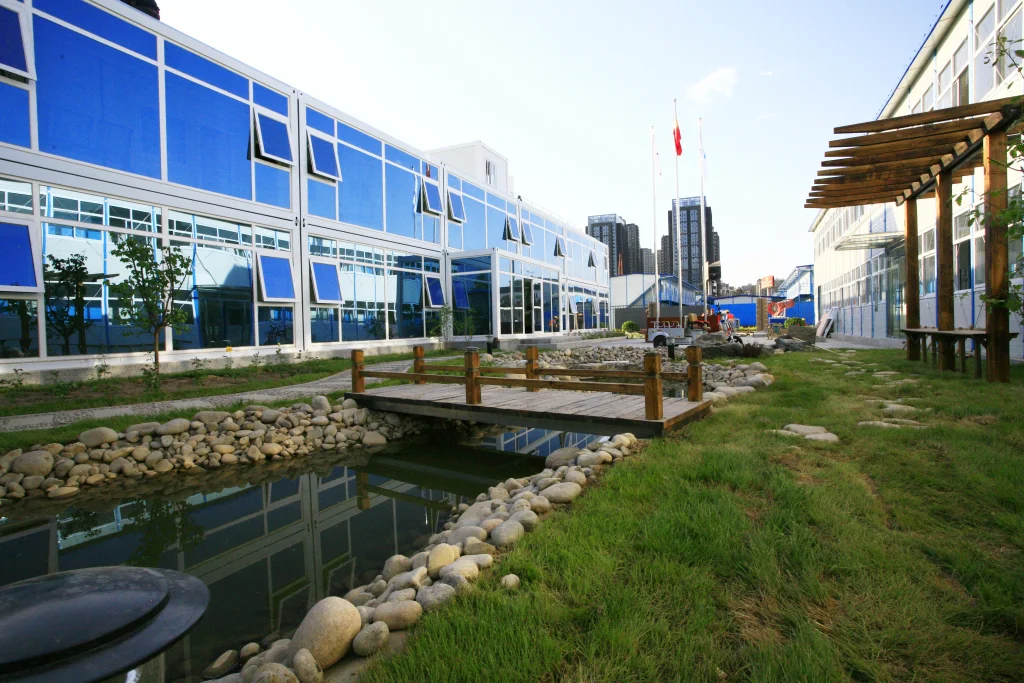
A worker camp should not be planned as a simple row of rooms. Management teams need offices and meeting rooms near the project control area. Workers need dormitories close to bathrooms, shower rooms, dining halls, and recreation spaces.
Flat-pack units can be combined horizontally and vertically, which helps contractors use limited land more efficiently. They can also form larger buildings for office blocks, staff dormitories, or public facilities.
Factory-Prefabricated Systems for Faster Site Assembly
On remote project sites, long on-site construction creates more risk. Rain, limited skilled labor, weak access roads, and site restrictions can all delay traditional temporary buildings.
Factory-prefabricated systems move many processes into a controlled production setting. Depending on the selected configuration, interior work, electrical systems, and supporting functions can be prepared before delivery. This helps the site team reduce installation pressure after the units arrive.
How Should You Plan Long-Term Worker Accommodation for Large Teams?
Large worker accommodation is not just about the number of beds. Buyers should consider daily operation, staff structure, public facility use, and later project changes.
Worker Capacity and Living Space Planning
Start with workforce size and project phases. How many workers will live on site at the peak stage? Will subcontractor teams increase later? Will managers, engineers, and general workers live in the same camp?
These questions affect dormitory quantity, public facility size, and zoning. For long-term projects, it is usually safer to leave room for expansion instead of only meeting the first-stage demand.
Separate Zones for Management and General Staff
Separating management zones from general living zones improves daily order. It also helps control visitors, protect documents, and reduce noise around office areas.
Offices, meeting rooms, and reception spaces should be closer to the camp entrance or project office area. Dormitories and activity spaces can be placed deeper inside the camp, away from heavy traffic and busy access routes.
Sanitary, Dining, and Recreation Facilities
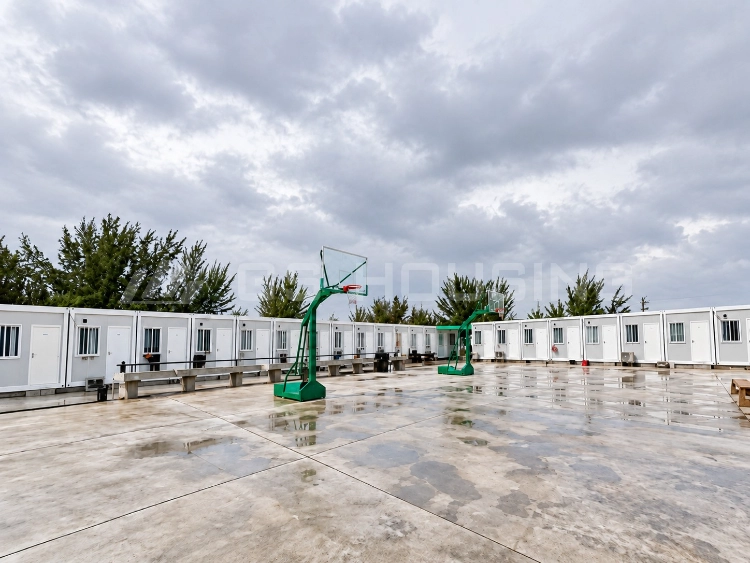
A worker camp needs more than sleeping rooms. Bathroom and shower facilities, dining halls, laundry areas, small shops, and activity rooms directly affect worker comfort.
For hot, rainy, dusty, or remote sites, sanitary planning is especially important. Workers need easy washing access after shifts. Dining halls should match shift schedules. Activity rooms can reduce the pressure of long stays away from home.
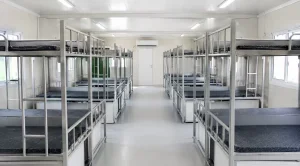
Why Modular Worker Camps Are Suitable for Remote Long-Term Project Sites
Remote sites are difficult for traditional temporary buildings. Materials may arrive late. Local labor may be limited. Weather may stop work. The camp may also need to expand or adjust as the project develops.
Stronger Adaptability to Harsh Project Environments
Mining and infrastructure sites may face dust, humidity, heavy rain, strong sun, or limited road access. A suitable worker camp should use durable materials, clear drainage planning, simple maintenance routes, and practical interior functions.
Before confirming a plan, buyers should discuss climate, use period, insulation needs, ventilation, drainage, and maintenance access. A camp should match the site, not just the drawing.
Easier Transport for Mining and Infrastructure Sites
Remote project transport often decides whether the camp can be delivered smoothly. Modular units allow buyers to arrange delivery by project phase. Priority areas such as offices, dormitories, bathrooms, and dining spaces can be handled first.
This is useful for mining, road, railway, energy, and industrial project sites where the workforce may grow step by step.
Reduced On-Site Work and Faster Project Start
Traditional temporary buildings often need more local labor and longer site supervision. Modular systems reduce on-site work because more preparation happens before delivery.
Site preparation is still important. Foundations, drainage, access roads, lifting space, utilities, and safety routes must be coordinated. Once these are ready, modular camp installation can move faster and with fewer site variables.
What Should a Construction Worker Camp Include for Better Project Efficiency?
A worker camp supports a project only when it supports daily routines. The right buildings help teams work, rest, eat, wash, and communicate without confusion.
Office Buildings for Project Management Teams
Project offices should include space for managers, engineers, meetings, document storage, and visitor reception. Modular office buildings are practical because they can be expanded when new teams enter the site.
For EPC contractors and mining operators, a flat-pack office system can help centralize communication instead of spreading management work across scattered temporary rooms.
Staff Dormitories With Practical Living Functions
Dormitory planning should consider rest quality, ventilation, lighting, walking distance, and access to bathrooms and showers. For long-term use, the dormitory should not feel like a short-term emergency shelter.
Modular staff dormitories can be grouped by team, shift, or department. Management dormitories may need more private facilities, while general worker dormitories may use nearby public sanitary buildings.
Bathroom and Shower Facilities, Dining Halls, and Activity Rooms
Public facilities often decide whether the camp runs well after handover. Bathrooms and shower rooms should be easy to reach but also easy to clean and maintain. Dining halls should support shift-based meals. Activity rooms give workers a place to relax after work.
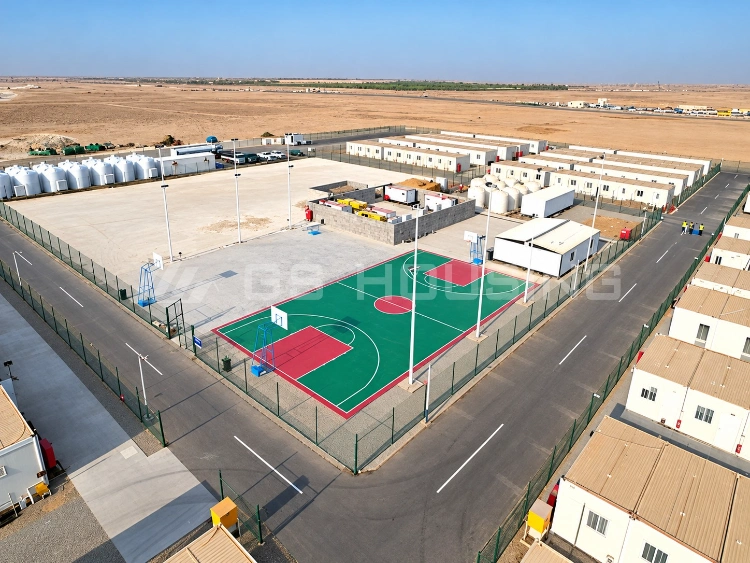
The GS Housing Indonesia mining camp case is a useful reference for large camp planning because it includes office buildings, staff canteens, dormitories, bathroom and shower facilities, an activity room, and service spaces.
How Modular Worker Camps Support Mining and Overseas Infrastructure Projects
Mining and overseas infrastructure projects need clear planning, reliable production, and support from design to installation. A modular worker camp can reduce uncertainty when the supplier has real project experience.
Indonesia Mining Camp Case for 5,000 Workers
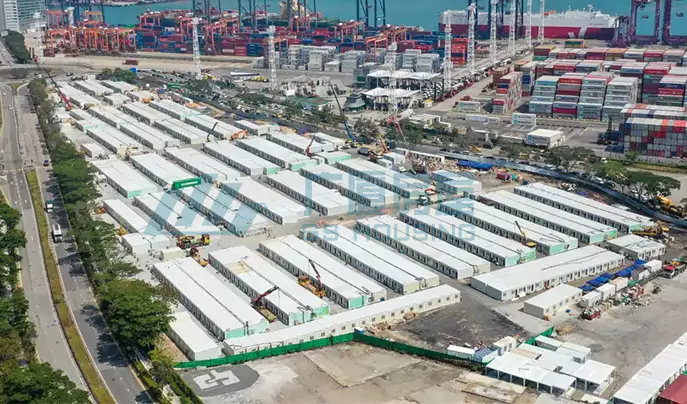
In the Indonesia mining camp project, GS Housing supplied modular prefabricated container houses for worker accommodation and project support functions. The camp included a comprehensive office building, staff canteens, dormitories, public bathhouses, an activity room, and supporting service areas.
For buyers, this type of case helps make internal procurement discussions easier. The team can compare its own needs by workforce size, office function, dining demand, sanitary planning, and public activity space.
Modular Combination for Large-Scale Camp Expansion
Large project sites often change. Workforce numbers may rise during peak construction, then decrease during operation or maintenance. A modular system gives the camp more room to adjust than fixed temporary buildings.
Expansion should be considered early. Leave space for extra dormitories, keep utility routes clear, and protect main roads for later installation. This avoids rebuilding core areas later.
Professional Installation Guidance and Technical Support
A worker camp is a working system. Even good house units can cause problems if installation, utility connection, drainage, and maintenance access are poorly handled.
GS Housing can provide installation guidance, technical documents, and project support based on project needs. For overseas buyers, this helps local teams reduce assembly mistakes and improve handover quality.
Request a Modular Worker Camp Solution for Your Project
Before choosing a worker camp supplier, prepare the basic project information: site location, workforce size, expected use period, building functions, climate conditions, site access, and required facilities. If available, share land drawings or a rough layout. This helps the supplier recommend a camp plan that fits real site conditions instead of only sending a standard product list.
Contact GS Housing for Workforce Camp and Remote Project Accommodation Solutions
Consider GS Housing if your team is comparing dormitory layouts, office buildings, dining halls, sanitary units, or phased camp plans. Clear early communication helps confirm unit type, layout logic, installation support, and documents needed for procurement review, especially for mining, construction, energy, and infrastructure project sites.
Request a Customized Proposal for Your Workforce Camp and Remote Project Accommodation!
FAQ
Q: What is the main advantage of a modular worker camp for long-term project sites?
A: The main advantage is system planning. Dormitories, offices, dining halls, bathrooms, shower rooms, and activity rooms can be arranged by function, which supports daily management better than scattered temporary buildings.
Q: Is a Flat Pack Container House suitable for mining worker accommodation?
A: Yes. A Flat Pack Container House can be suitable for mining worker accommodation when layout, insulation, ventilation, sanitary facilities, and site utilities are planned correctly. Mining sites often need fast setup, durable structures, and flexible expansion.
Q: What should buyers prepare before asking for a worker camp plan?
A: Buyers should prepare workforce numbers, project location, expected use period, required building functions, site layout, climate conditions, and installation needs. This helps the supplier recommend suitable dormitory, office, dining, sanitary, and support facilities.