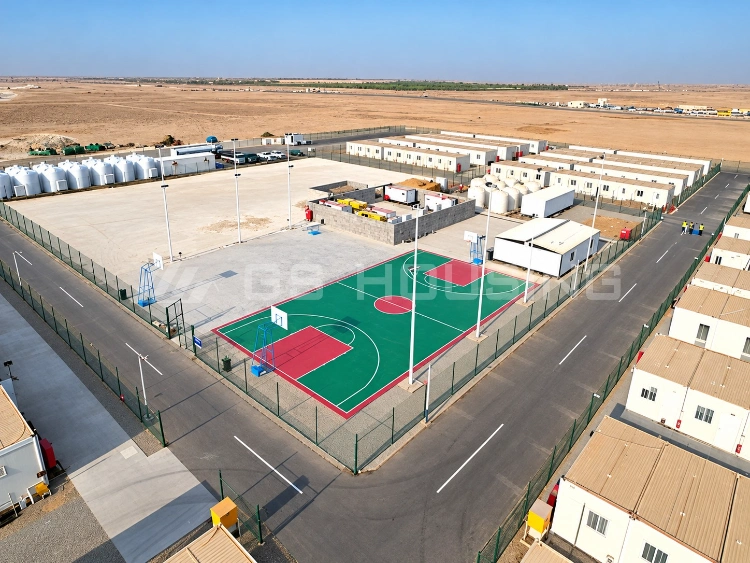
Construction sites often need offices, worker dormitories, bathrooms, shower rooms, dining areas, and storage before the main project can operate efficiently. For short-term and simple site needs, traditional temporary buildings may be sufficient. For longer construction, mining, infrastructure, or industrial project sites, they can become harder to move, expand, and manage.
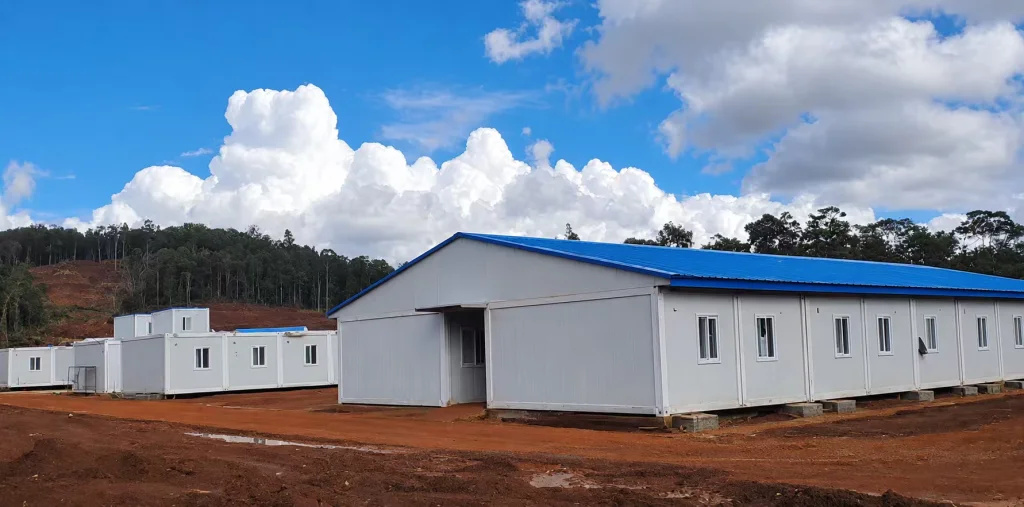
GS Housing provides modular container house systems for overseas project sites. Its Flat Pack Container House can be used for offices, worker accommodation, bathrooms, dining halls, meeting rooms, and other site facilities. For B2B buyers, the key question is not only installation speed. The building system should match the site layout, workforce size, project period, transport conditions, and later relocation needs.
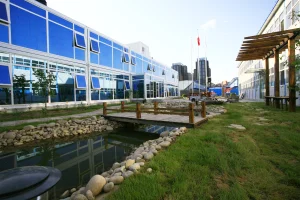
Key Differences Between Flat-Pack Container Houses and Traditional Temporary Buildings
Before choosing a construction site building, project managers can compare the two options by setup, flexibility, reuse value, and daily site management.
| Selection Point | Flat Pack Container House | Traditional Temporary Buildings |
| Site Setup | More factory-prepared work and faster assembly | More on-site work and longer coordination |
| Layout Flexibility | Easier to combine, expand, or relocate | Harder to adjust after installation |
| Project Use | Suitable for phased or repeat project use | More suitable for short and simple projects |
| Building Functions | Offices, dormitories, bathrooms, dining areas, and public spaces | Function and quality may vary depending on site construction and local workmanship |
| Site Management | More standardized unit planning | More variation in structure and layout control |
Factory-Prefabricated Structure and Faster Assembly
Traditional temporary buildings often need more work on site. Materials arrive separately, workers assemble them step by step, and weather or access issues can slow progress.
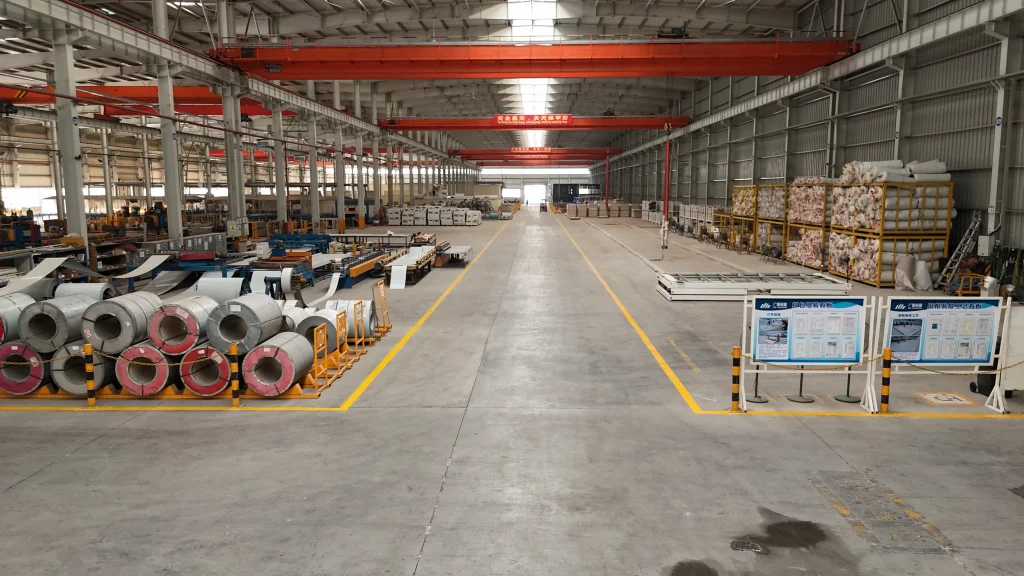
GS Housing’s Flat Pack Container House uses modular frame components, including upper frames, lower frames, columns, and interchangeable wall panels. Water, heating, electrical systems, and interior finishes can be prefabricated according to project needs. This reduces secondary work after delivery and makes installation easier to control.
Flexible Combination for Offices, Dormitories, and Public Areas
A construction site rarely needs one room type only. Site offices may need meeting rooms and document space. Workers need dormitories, bathrooms, shower rooms, and dining areas.
Flat-pack units can be combined horizontally and vertically. This helps when land is limited or when office areas must be separated from worker living areas. Traditional temporary buildings can also be arranged by function, but later expansion is often less convenient.
Stronger Reuse Value for Multi-Phase Projects
Road, railway, mining, and infrastructure projects may need different layouts at different stages. Some traditional temporary buildings may be less convenient to relocate or reuse across multiple project phases.
Flat-pack units are often more suitable for projects that require relocation, expansion, or repeated use across different phases. The same system can serve as offices, dormitories, sanitary rooms, or public buildings in different layouts. This helps contractors handle multi-phase project planning with less rebuilding work.
Advantages of Flat-Pack Container Offices for Project Site Management
A site office is where drawings are checked, subcontractors report, meetings are held, and daily decisions are made. Poor office planning can slow communication and create document management problems.
Flat Pack Container Office for Project Teams
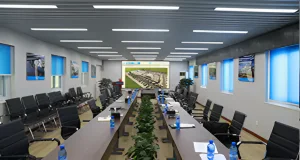
A Flat Pack Container Office can be arranged as a management office, meeting room, negotiation room, or document room. For contractors and project management teams, this makes the office zone easier to plan at the start.
Instead of placing temporary rooms randomly, the project team can build a clearer office block near the entrance, security point, or main work zone.
Stable Space for Meetings and Document Work
Construction projects generate drawings, reports, safety records, inspection documents, and daily notes. If the office is crowded or poorly divided, teams waste time finding space for meetings and records.
Flat-pack offices can include separate areas for management, engineering discussion, reception, and document storage. This is useful on sites with many subcontractors.
Easy Expansion When the Site Team Grows
Many sites start with a small team. Later, more engineers, supervisors, suppliers, and subcontractors enter the project. A fixed office can become crowded quickly.
Flat-pack office units make expansion easier if space is reserved in the first layout. Buyers should discuss future team growth before confirming the office plan.
How Does Temporary Construction Site Housing Affect Worker Comfort?
Worker comfort affects daily site management and productivity. If workers sleep poorly, queue too long for washing, or walk far between dormitories and dining areas, work routines suffer.
Temporary Construction Site Housing With Better Daily Functions
A good housing layout starts with worker movement. Workers return from shifts, wash, eat, rest, and prepare for the next day. If these functions are scattered, the camp may look complete on paper but fail in daily use.
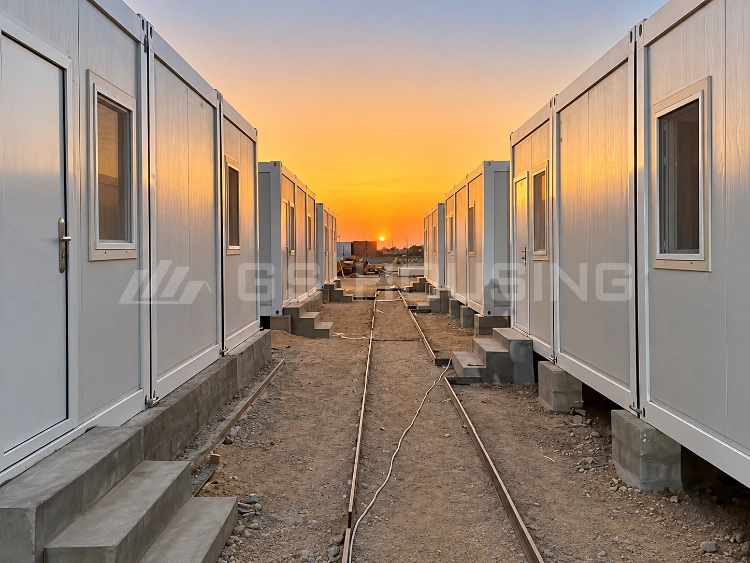
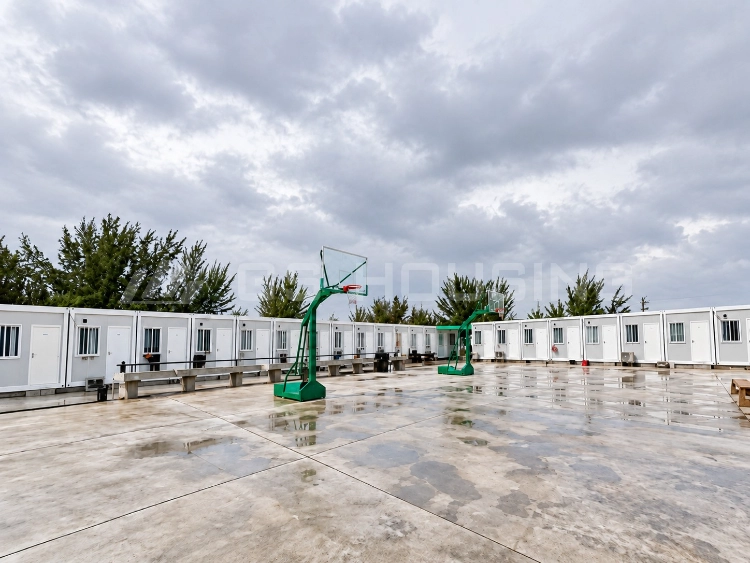
Flat-pack units can form a connected modular site accommodation system. Dormitories, bathrooms, shower rooms, dining halls, and recreation areas can be grouped by actual worker flow.
Worker Dormitories, Bathrooms, and Shower Rooms
Dormitories should not be planned only by bed count. Buyers should also check ventilation, lighting, walking distance, privacy, cleaning access, and nearby sanitary facilities.
For long-term use, dormitory zones should stay away from noisy vehicle routes and heavy work areas. Sanitary buildings need clear access, drainage planning, and enough space for shift-based use.
Safer Living Areas for Long-Term Site Use
Long-term living areas need clear walkways, lighting, fire access, security points, and emergency routes. A modular layout helps repeated building units stay aligned with the camp plan.
Maintenance also matters. If worker housing is hard to clean, inspect, or repair, small problems can build up over time.
Why Do Contractors Choose Modular Site Accommodation and Portable Container Buildings?
Contractors choose modular site accommodation because project sites often change. A system that can be installed, expanded, and relocated with fewer site variables gives managers better control.
Modular Site Accommodation for Fast Project Deployment
Fast deployment helps when support facilities are needed before permanent buildings are ready. Modular site accommodation can provide offices, dormitories, sanitary rooms, and dining spaces faster than many traditional temporary methods.
Site preparation is still needed. Foundations, utility connections, drainage, lifting space, and internal roads should be ready before installation.
Portable Container Buildings for Relocation Needs
Portable Container Buildings are useful for road projects, mining sites, industrial construction, and temporary municipal projects where the work location may shift.
Before choosing a relocatable system, buyers should ask how often buildings may move, which functions must move first, and whether the same units will be reused as offices, dormitories, or support spaces.
Lower Site Work Compared With Traditional Buildings
Traditional temporary buildings often rely on more local labor and longer on-site construction. Modular buildings reduce part of that pressure because many components are prepared in advance.
This is useful when the site has limited skilled labor, tight schedules, or difficult weather. It also reduces interference with the main construction work.
How Can GS Housing Support a Prefabricated Construction Site Project?
For B2B buyers, supplier support should be checked before ordering. A supplier should be able to discuss site layout, building functions, installation sequence, and documents needed by procurement and engineering teams. GS Housing’s modular building support covers design customization, installation guidance, project management, and after-sales service for international construction projects.
Prefabricated Construction Site Layout Planning and Modular Camp Design
A construction site layout should start with real project needs: number of managers, number of workers, use period, office functions, dormitory arrangement, sanitary buildings, dining space, and site access.
GS Housing can match Flat Pack Container House units with offices, dormitories, bathrooms, shower rooms, dining halls, meeting rooms, and public areas. This helps plan the site as one working system.
Custom Flat-Pack Container House Production, Transportation, and Installation Support
Custom production should follow use requirements, not decoration alone. Buyers should confirm room type, layout size, internal function, climate needs, utility connections, and installation conditions before production.
For overseas projects, the site team should ask for drawings, assembly guidance, and technical documents before the units arrive. Early technical communication can reduce installation mistakes.
Request a Modular Construction Site Solution from GS Housing
Before sending an inquiry, prepare the site location, project type, workforce size, building functions, use period, available land, installation conditions, and any rough layout if available. These details help GS Housing judge whether your project needs a simple office group, a worker accommodation zone, or a complete modular site accommodation plan. A Flat Pack Container House is more suitable for projects that need repeatable units, faster setup, later expansion, or relocation, while traditional temporary buildings may still work for very small and short projects. Clear early information also helps confirm the right configuration, installation documents, and project support scope.
Request a Customized Proposal for Your Modular Construction Site Project!
FAQ
Q: What is the main difference between a Flat Pack Container House and traditional temporary buildings?
A: A Flat Pack Container House is factory-prefabricated and designed as a modular unit that can be combined, expanded, or relocated more easily. Traditional temporary buildings usually need more on-site work.
Q: Is a Flat Pack Container House suitable for long-term construction site housing?
A: Yes. It can be suitable when dormitories, bathrooms, shower rooms, dining areas, walkways, ventilation, drainage, and maintenance access are planned together.
Q: What information should buyers prepare before choosing modular site accommodation?
A: Buyers should prepare the project location, workforce size, use period, room functions, site layout, climate conditions, utility needs, and installation requirements.