Introduction
Remote construction projects rarely run into trouble because workers don’t have enough equipment.
More often, problems start when the labor camp can no longer handle the way the project is growing.
At first, the setup feels acceptable.
A few dormitory blocks. Shared bathrooms. Temporary dining space.
Then the workforce doubles.
Meal lines get longer.
Bathrooms become overloaded.
Maintenance teams fall behind.
People spend too much time simply moving across the site.
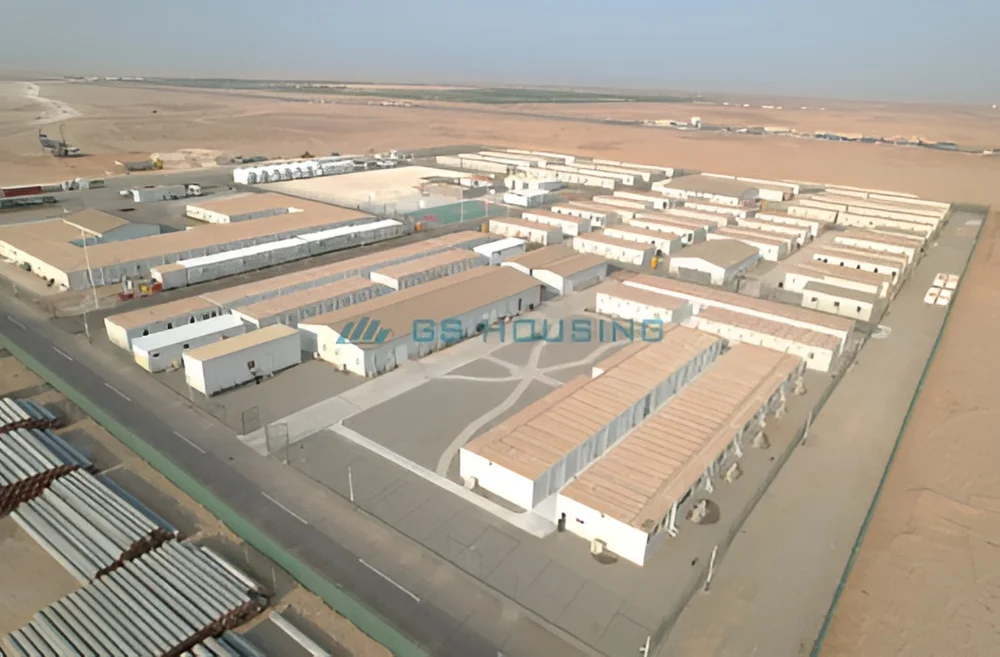
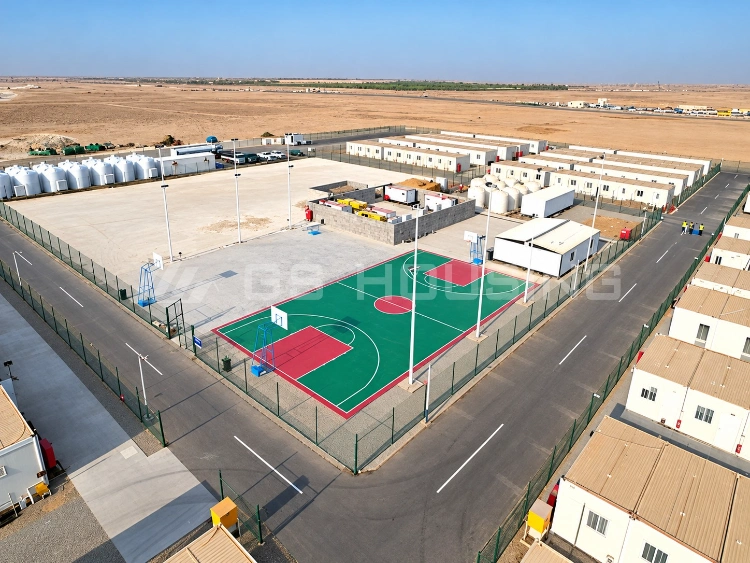
That’s one reason prefab labor camp buildings are now standard across mining projects, EPC developments, oilfields, and large infrastructure sites.
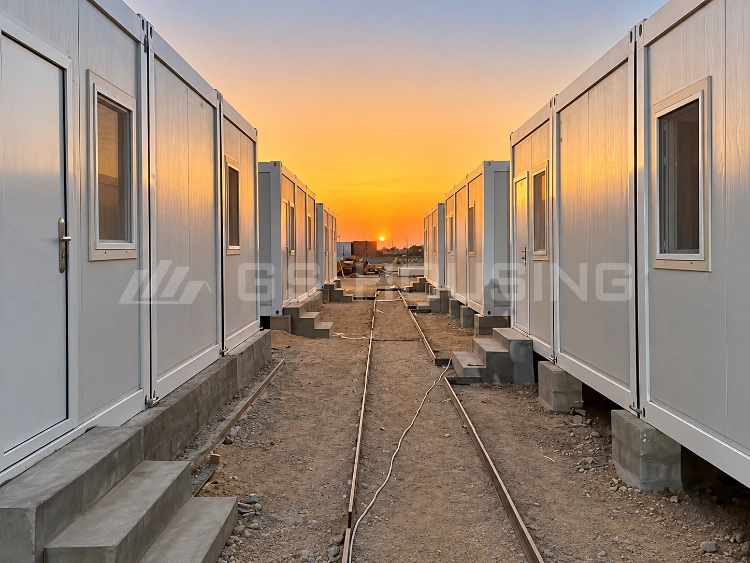
Unlike traditional temporary buildings, prefabricated labor camp systems are manufactured in factories, shipped in modular sections, and assembled quickly on-site. For remote regions with limited local construction capacity, that difference matters a lot.
Today, these systems are widely used across:
- Middle Eastern EPC projects
- African mining developments
- Southeast Asian industrial zones
- Remote infrastructure corridors
This guide covers:
- What facilities a prefab labor camp normally includes
- What really affects project cost
- Why modular camp systems work well in remote areas
- How to prepare accurate project requirements before requesting quotations
Why Prefab Labor Camp Buildings Became Common in Remote Projects
Ten years ago, many contractors still built labor camps directly on-site using local labor and temporary structures.
In isolated regions, that approach gradually became harder to control.
Weather delays, labor shortages, inconsistent workmanship, and material delivery problems often pushed camp construction far behind schedule.
Prefab labor camp systems changed the process.
Most fabrication now happens inside the factory before shipment. Once materials arrive on-site, the work mainly involves:
- Foundation preparation
- Crane lifting
- Module installation
- Utility connections
For many projects, workforce accommodation becomes operational weeks earlier than with conventional construction methods.
And on remote projects, earlier camp deployment usually means the entire project can start earlier as well.
What Facilities Are Usually Included in a Prefab Labor Camp
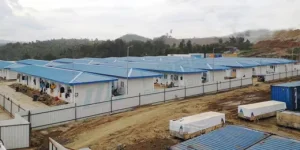
Although every project has different requirements, most labor camps follow a fairly similar structure.
The reason is simple: operational pressure inside camps tends to repeat itself from project to project.
Accommodation Buildings Usually Occupy Most of the Site
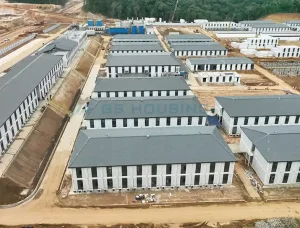
Dormitories are still the largest part of most labor camp layouts.
Projects commonly combine:
- Shared worker rooms
- Supervisor accommodation
- Management rooms
- Temporary isolation spaces
In tropical mining regions, ventilation becomes a bigger issue than many teams expect during early planning.
Poor airflow affects sleep quality quickly, especially during long work rotations.
Because of that, many contractors now prefer modular worker housing systems with insulation, wiring, and interior finishing completed before shipment.
👉 Learn more about our modular workforce accommodation systems designed for remote industrial projects.
Dining Facilities Often Become the First Pressure Point
Interesting thing about labor camps: the kitchen usually isn’t the problem.
Timing is.
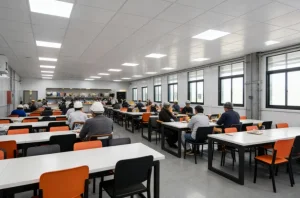
When several hundred workers finish shifts within the same hour, even large dining halls start struggling.
Most prefab dining systems now include:
- Industrial kitchens
- Refrigeration rooms
- Dry storage areas
- Waste collection zones
- Multiple serving lines
Large Middle Eastern and African EPC projects often divide dining areas by subcontractor groups or shift schedules. It sounds minor, but it reduces congestion surprisingly well.
Bathroom Layout Affects Daily Operations More Than Expected
A single oversized sanitation block may look efficient during planning.
Operationally, it often creates new problems later:
- Long walking distances
- Drainage pressure concentrated in one area
- Maintenance bottlenecks
- Heavy congestion during shift changes
That’s why newer labor camp designs usually spread bathroom facilities across several accommodation zones instead of centralizing everything.
Most prefab sanitation modules already include:
- Plumbing systems
- Waterproof flooring
- Ventilation equipment
- Drainage integration
Which means site installation becomes much faster.
Medical and Support Facilities Become More Important Over Time
Smaller projects sometimes underestimate support infrastructure.
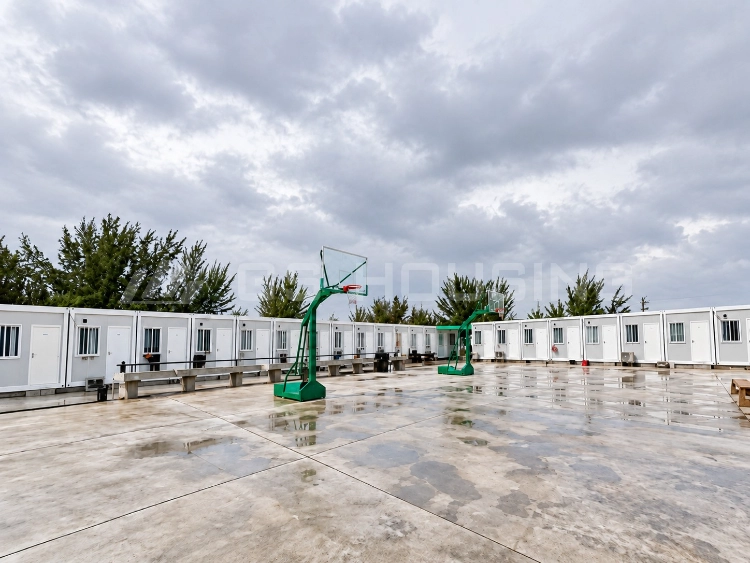
But in remote mining and oilfield projects, medical and recreation areas often expand faster than expected once workforce numbers increase.
Larger camps typically include:
- First aid rooms
- Temporary clinics
- Laundry facilities
- Recreation spaces
- Quarantine rooms
In longer-duration projects, these facilities play a surprisingly large role in workforce retention and daily camp stability.
👉 See how our complete prefabricated camp systems are used across large remote workforce projects worldwide.
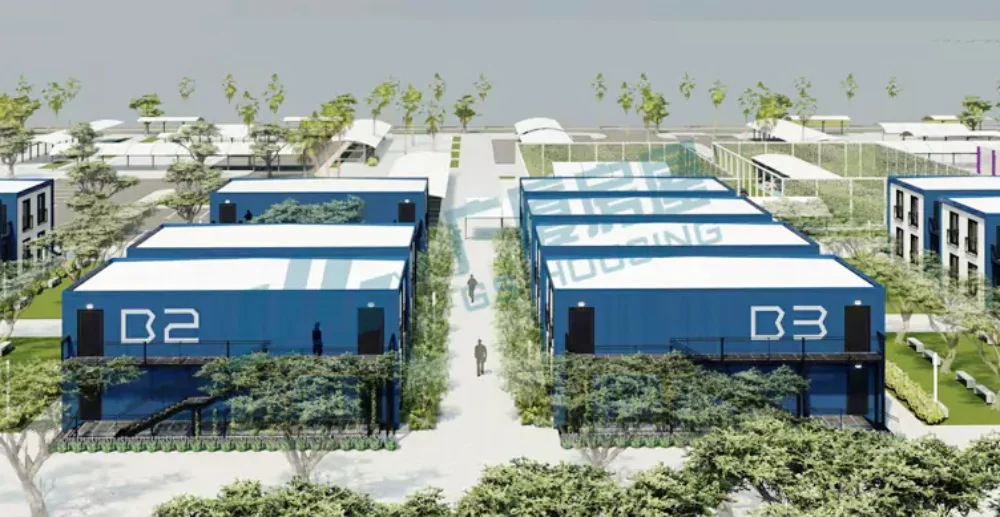
Real Project Example: Bahamas 800-Worker Construction Camp
One project that reflected this well was GS Housing’s Bahamas workforce accommodation camp.
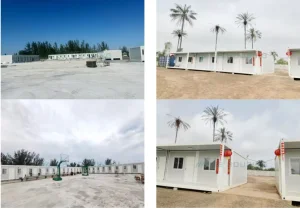
The site needed housing for roughly 800 construction workers within a very limited timeline. Local construction resources on the island were relatively limited, and transporting conventional building materials in large quantities would have created major scheduling pressure.
Instead, the project used modular prefab labor camp buildings manufactured before shipment.
The deployment included:
- Worker dormitories
- Dining halls
- Modular sanitation facilities
- Office buildings
- Support and recreation areas
Because the modules arrived largely finished, installation moved much faster than traditional on-site construction.
The phased layout also gave the contractor more flexibility later as workforce numbers changed during different construction stages.
👉 You can see the Bahamas camp project here:Bahamas workforce accommodation project
What Actually Affects Prefab Labor Camp Cost
Many buyers focus too heavily on unit price during early discussions.
In reality, labor camp cost is shaped more by project conditions than by the modules themselves.
Workforce Size
The number of units still has the biggest impact on total budget.
Larger camps, however, often reduce per-unit deployment cost because transportation and installation become more centralized.
Climate Requirements
Climate adaptation changes both material selection and long-term operating cost.
For example:
Hot regions usually require:
- Reflective roofing
- Stronger cooling systems
- Additional insulation
- Sun-shading structures
Cold regions often require:
- Thicker insulation
- Heating systems
- Snow-load-resistant roofing
- Anti-freezing water systems
These upgrades affect both upfront pricing and daily operating efficiency.
Transportation Distance
For overseas projects, logistics can account for a significant part of the budget.
Remote mining regions may involve:
- Port limitations
- Inland transportation challenges
- Crane access restrictions
- Poor road conditions
Container-based modular systems remain popular partly because transportation planning becomes easier to predict.
Installation Complexity
Some camps install in less than a week.
Others take much longer.
Installation timelines depend heavily on:
- Terrain conditions
- Foundation preparation
- Local labor availability
- Utility access
- Crane positioning
For isolated projects, suppliers that coordinate transportation and installation together usually reduce project risk considerably.
How to Prepare Better Requirements Before Requesting Quotations
Many quotation problems start with incomplete project information.
To receive accurate pricing, suppliers usually need:
- Exact project location
- Workforce size
- Room configuration requirements
- Required facilities
- Installation timeline
- Climate conditions
- Local building standards
- Special customization requirements
The more detailed the requirement sheet is, the easier it becomes to compare quotations properly.
Why Prefabricated Labor Camps Continue Expanding Worldwide
Remote projects are increasing faster than local infrastructure can support them.
Mining operations move deeper inland.
Energy projects expand into deserts.
Infrastructure projects spread into isolated regions.
Prefab labor camp buildings help solve several operational problems at the same time:
- Faster deployment
- Standardized quality
- Easier expansion
- Lower dependence on local labor
- Reusable infrastructure
For many contractors today, predictability matters almost as much as cost itself.
Final Thoughts
A prefab labor camp is no longer treated as simple temporary housing beside a project.
On large remote sites, it becomes part of the operational infrastructure supporting the workforce every day.
The most effective camps are usually not the cheapest ones upfront.
They are the projects planned around:
- Workforce circulation
- Future expansion
- Climate adaptation
- Transportation efficiency
- Long-term maintenance
As remote construction and mining projects continue expanding globally, modular labor camp systems will likely remain the preferred approach for workforce accommodation.
Need Help Planning a Prefab Labor Camp Project?
GS Housing supplies modular labor camp systems for:
- Mining projects
- EPC developments
- Oilfield camps
- Infrastructure construction
- Remote industrial sites
Depending on project scale and local conditions, camp configurations may include:
- Accommodation buildings
- Dining halls
- Modular bathrooms
- Office facilities
- Medical rooms
- Shared support areas
In remote projects, camp planning usually affects more than accommodation alone.
Transportation access, workforce circulation, utility pressure, climate conditions, and future expansion all influence how efficiently the site operates later.
Some projects prioritize deployment speed.
Others focus more on insulation performance, phased expansion, or reducing transportation complexity in isolated areas.
If you already have preliminary workforce numbers or site conditions available, the GS Housing team can also help review layout direction, module configuration, and transportation planning before quotation stage.
👉 Contact GS Housing to discuss your prefab labor camp project requirements.