Introduction
Most project delays in Indonesia don’t start with construction.
They start with coordination.
A mining contractor opens a new site in Kalimantan.
A port expansion project begins in Sulawesi.
An infrastructure project mobilizes hundreds of workers to a remote area in Papua.
The equipment arrives.
The workforce arrives.
The project schedule starts.
Then the project team discovers something unexpected:
There isn’t enough space to manage the project properly.
Meeting rooms are overloaded.
Engineers share temporary workstations.
Procurement teams work from accommodation buildings.
Documents move between scattered offices.
At that point, the problem is no longer construction.
It’s management.
That’s why a container office Indonesia project is rarely just about providing office space.
It’s about creating an operational center that keeps hundreds or thousands of workers moving in the same direction.
And in Indonesia, that challenge becomes even more complicated because project sites often involve:
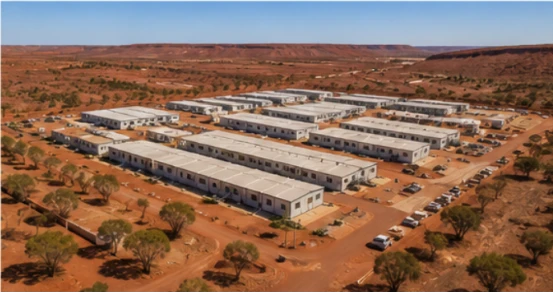
- Remote mining locations
- Island-to-island logistics
- Heavy rainfall
- High humidity
- Rapid workforce growth
- Limited local construction resources
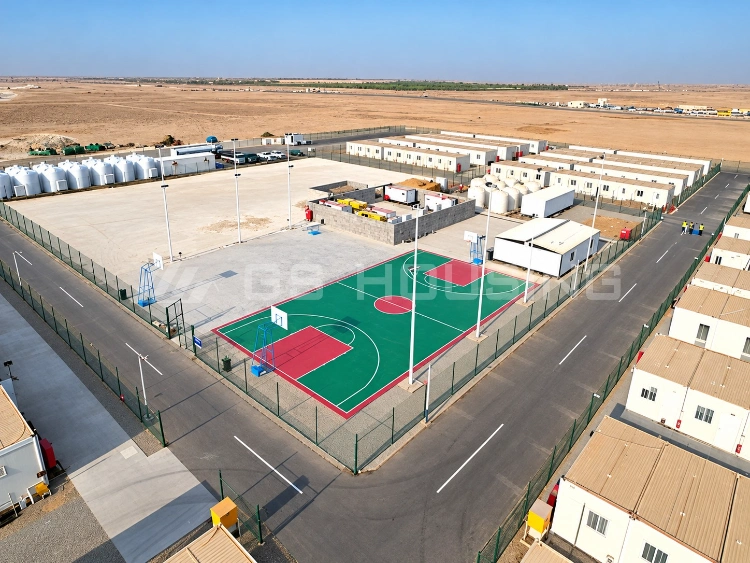
As a result, many contractors now combine office buildings, accommodation facilities, dining halls, and support services into integrated modular developments rather than treating them as separate purchases.
Most Container Office Indonesia Projects Start Small—And Then Grow Faster Than Expected
At the beginning, the request usually sounds simple.
“We need a project office.”
That’s it.
Maybe a few offices.
A meeting room.
Some space for engineers.
Nothing unusual.
But six months later, reality looks different.
The workforce has doubled.
Additional subcontractors arrive.
Client representatives require workspace.
Engineering teams expand.
Weekly coordination meetings become daily meetings.
The original office layout suddenly feels much smaller than expected.
This happens so often that experienced project managers rarely design offices around today’s workforce numbers.
They design around future workforce numbers.
Because expanding accommodation is relatively easy.
Expanding project management functions after operations begin is usually much harder.
This is one reason many contractors evaluating remote mining accommodation and office facilities for Indonesian projects start considering long-term expansion requirements before finalizing the initial layout.
The Biggest Office Problem Is Often Not the Office
Here’s something many first-time buyers don’t expect.
The biggest complaint on large Indonesian projects is often not office size.
It’s distance.
Distance between:
- Offices and accommodation
- Offices and dining facilities
- Engineering teams and project managers
- Meeting rooms and operational departments
On paper, a ten-minute walk doesn’t sound important.
In practice, it adds up quickly.
Particularly during Indonesia’s rainy season.
Engineers moving between buildings multiple times per day.
Supervisors walking across muddy site roads.
Procurement teams transporting documents between separate facilities.
None of these activities seem expensive individually.
Together, they create operational friction.
A surprising amount of productivity can disappear through inefficient camp layouts.
That’s why experienced project teams often spend more time discussing circulation than square meters.
The objective isn’t simply building larger offices.
It’s reducing unnecessary movement.
What Functions Are Usually Included Inside a Container Office Indonesia Setup?
Many overseas buyers picture container offices as standalone administration buildings.
Modern projects are usually more sophisticated.
A typical container office Indonesia development often forms part of a larger operational system.
Ground Floor
Usually includes:
- Reception areas
- Project management offices
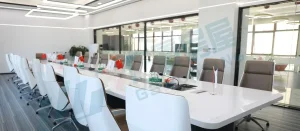
- Meeting rooms
- Visitor rooms
- Security coordination offices
These spaces handle most daily communication for a typical construction site office Indonesia development.
Second Floor
Often includes:
- Engineering departments
- Procurement teams
- Document control offices
- Technical review rooms
- Management offices
This area typically becomes the administrative core of the project.
Nearby Supporting Buildings
The office rarely operates alone.
Most projects also require:
- Workforce accommodation
- Dining facilities
- Laundry buildings
- Medical stations
- Warehouses
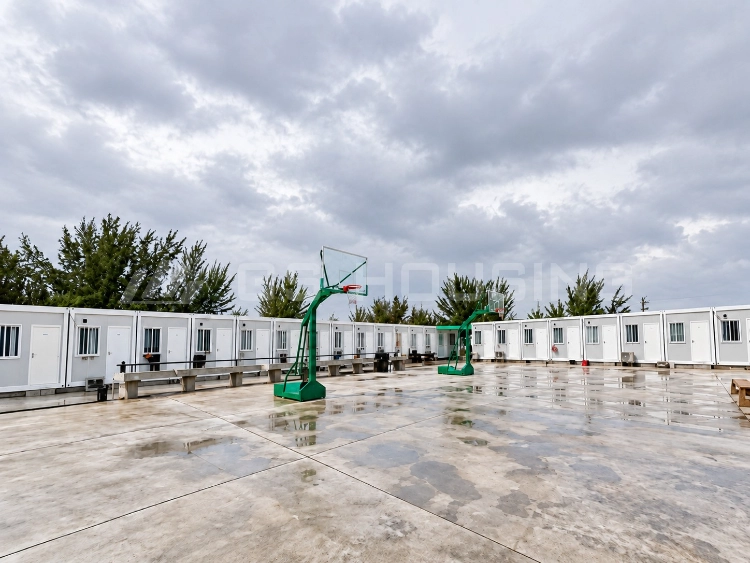
- Recreation facilities
For this reason, many contractors evaluate container house solutions designed for remote project deployment alongside office facilities rather than purchasing each building separately.
The Rainy Season Usually Exposes Problems Nobody Discussed During Procurement
Most procurement meetings focus on buildings.
Indonesia’s rainy season focuses on everything else.
Heavy rainfall creates challenges that don’t always appear in tender documents.
For example:
- Site access roads become difficult
- Material storage areas require protection
- Drainage systems become critical
- Building connections need weather protection
Many project teams focus heavily on structural specifications.
Experienced operators often pay equal attention to water management.
Because a perfectly designed office building can still become difficult to operate if workers must walk through flooded access routes every day.
Humidity creates another challenge.
Without proper insulation and ventilation, indoor comfort can deteriorate surprisingly quickly.
This is particularly important for long-term mining and infrastructure projects where facilities may remain operational for several years.
A 5,000-Person Indonesia Project That Needed Offices, Accommodation, and Support Facilities at the Same Time
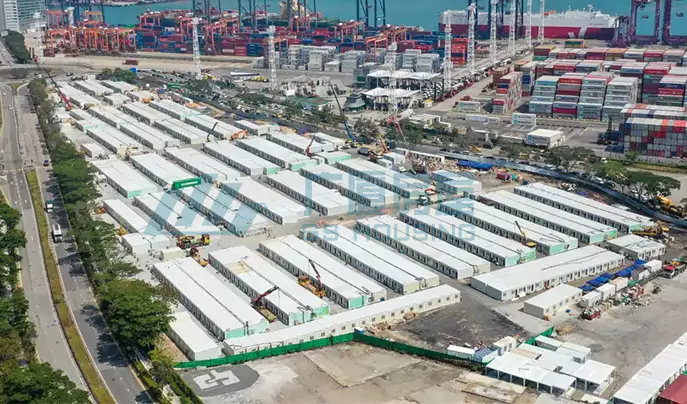
A useful example comes from GS Housing’s Indonesia workforce accommodation and office camp project.
The development ultimately supported more than 5,000 personnel through 1,081 modular units.
The challenge wasn’t simply housing workers.
The project also required:
- Office buildings
- Management facilities
- Dining halls
- Sanitation facilities
- Recreation areas
- Public support infrastructure
And all of it needed to be deployed within a demanding project schedule.
Rather than relying heavily on traditional construction, much of the manufacturing work was completed before shipment.
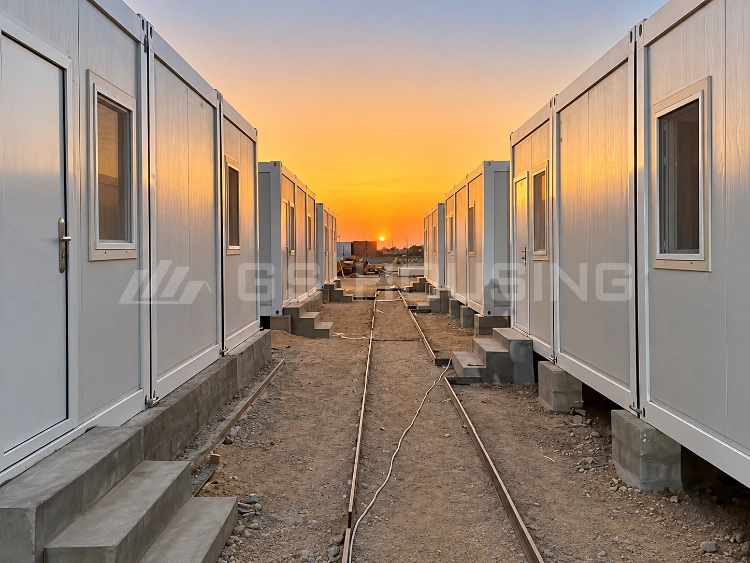
Modules were produced in factory conditions, transported to site, and assembled locally.
That approach reduced on-site construction pressure while allowing the camp to expand alongside workforce growth.
Although every project differs, the same challenge appears repeatedly across Indonesian mining developments:
Workforce accommodation alone is not enough.
Projects need operational infrastructure.
The office, accommodation, dining, and support facilities must function as a single system.
Why Modular Building Indonesia Projects Make Logistics Easier Across Multiple Islands
Indonesia presents a unique challenge.
The project site and the manufacturing location are often separated by sea.
Transportation therefore becomes a major consideration.
A modular building Indonesia solution provides several advantages:
Shipping Efficiency
Modules are designed for predictable transportation.
This simplifies logistics planning between islands.
Faster Installation
Large portions of construction are completed before shipment.
On-site work is significantly reduced.
Easier Expansion
Additional units can be deployed later as workforce numbers increase.
Better Quality Control
Factory production reduces variability compared with extensive on-site construction.
For mining, infrastructure, and port developments operating under tight schedules, these advantages often become more important than the buildings themselves.
Why More Mining Camp Indonesia Developments Combine Offices and Accommodation
A decade ago, many projects purchased office buildings and accommodation separately.
Today, integrated planning is becoming more common.
The reason is simple.
Operations are interconnected.
Accommodation affects workforce wellbeing.
Dining facilities affect productivity.
Office layouts affect coordination.
Warehouse locations affect logistics.
Changing one part often affects everything else.
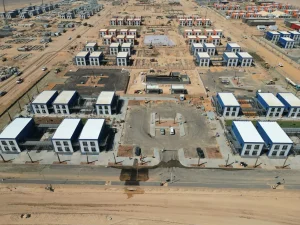
As a result, many project teams now evaluate complete prefabricated camp systems for mining and infrastructure projects rather than comparing individual buildings one at a time.
The objective is no longer simply providing facilities.
It’s creating a camp that functions efficiently throughout the project lifecycle.
Final Thoughts
Successful Indonesian projects rarely succeed because they have the biggest offices.
They succeed because operations run smoothly.
And smooth operations usually come from planning offices, accommodation, logistics, and support facilities together rather than separately.
That’s especially true for mining developments, infrastructure projects, ports, and industrial construction sites where workforce numbers can change rapidly and environmental conditions create additional pressure.
Before procurement begins, it is often worth reviewing how similar modular camp projects delivered across Southeast Asia by GS Housing ) approached office layouts, accommodation planning, transportation logistics, and future expansion requirements.
If you’re currently evaluating office facilities, accommodation capacity, or integrated camp layouts for an upcoming project, you can share your project requirements with our project team for a preliminary layout and deployment assessment and discuss practical solutions based on your workforce size, project schedule, and site conditions