Introduction
Choosing the right modular camp supplier China can mean the difference between a project that runs smoothly and one that suffers delays, budget overruns, and operational headaches.
A few years ago, an EPC contractor evaluating accommodation facilities for a large overseas workforce camp received quotations from five Chinese suppliers. At first glance, the decision looked easy. The lowest quotation was nearly 20% cheaper than the highest one.
But several months later, the situation looked very different.
Additional transportation charges appeared. Installation support wasn’t included. Several material specifications turned out to be different from what the client expected.
What looked like the cheapest option on paper eventually became one of the most expensive.
Stories like this are surprisingly common.
Because when buyers search for a modular camp supplier China, many focus on the number at the bottom of the quotation.
Experienced procurement teams focus on something else:
Risk.
Can the supplier deliver on time?
Can they support international logistics?
Do they understand local compliance requirements?
Will they still answer the phone after the containers leave the factory?
For mining projects, construction camps, oilfield developments, infrastructure projects, and workforce accommodation programs, those questions often matter more than the initial unit price.
This guide explains how experienced buyers evaluate Chinese suppliers before signing a contract—and why the best supplier is not always the one offering the lowest quotation.
Why the “Factory” You’re Talking To May Not Be the Factory Building Your Camp
One of the most common misunderstandings in international procurement is assuming every supplier owns a factory.
In reality, some companies are manufacturers.
Others are traders.
Some are sourcing companies coordinating multiple factories.
None of these models are automatically wrong.
The problem starts when buyers don’t know which one they’re dealing with.
A genuine prefab camp manufacturer China typically controls:
- Production schedules
- Material procurement
- Quality inspections
- Factory workforce
- Manufacturing processes
A trading company may not.
That difference becomes important when project schedules become tight.
Imagine requesting a design modification three weeks before production.
A factory can often respond immediately.
A trader may need to relay information through multiple parties before receiving an answer.
Delays begin to accumulate.
So how can buyers quickly verify a supplier?
Ask for:
- Factory address
- Business registration
- Production videos
- Workshop photos
- Raw material inventory
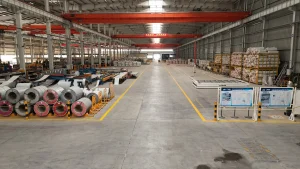
- Live factory inspection or VR tour
Reliable manufacturers are usually proud to show how products are made.
That’s one reason many buyers review GS Housing’s factory facilities and production capabilities before moving into detailed quotation discussions.
A Quick Factory Verification Checklist
| Question | Factory | Trader |
| Can arrange a live factory video tour | ✓ | Sometimes |
| Controls production schedules directly | ✓ | ✗ |
| Provides workshop photos from current production | ✓ | Limited |
| Allows third-party factory inspection | ✓ | Sometimes difficult |
| Issues manufacturing progress reports | ✓ | Depends |
The goal isn’t necessarily to avoid traders.
The goal is understanding who actually controls production before signing a contract.
The Best Modular Camp Supplier China Usually Solves More Than Manufacturing Problems
Many first-time buyers assume a supplier’s job is simply producing buildings.
Ironically, manufacturing is often the easiest part of the project.
The real challenges usually appear elsewhere.
For example:
- Camp layout planning
- Engineering coordination
- International shipping
- Customs documentation
- Installation guidance
- Local compliance requirements
A supplier may produce excellent buildings and still struggle to support a project successfully.
This becomes especially important when camps are deployed in remote locations.
- Mining projects in Australia
- Oilfield camps in Saudi Arabia
- Infrastructure developments in Africa
- Construction projects in Southeast Asia
The buildings may be similar.
The project challenges are not.
That’s why experienced EPC teams increasingly look for suppliers capable of supporting the entire project lifecycle rather than simply manufacturing individual modules.
A strong supplier should assist with planning before production starts, maintain quality control during manufacturing, and continue providing technical support after shipment.
Interestingly, some of the best modular building supplier China companies spend more time discussing logistics than buildings.
Because that’s often where projects succeed—or fail.
Why Overseas Experience Often Separates a Good Modular Camp Supplier China From an Average One
Surprisingly, some of the strongest suppliers are not the ones with the longest certificate lists.
They’re often the ones with the fewest problems after delivery.
Many buyers assume certifications are the best way to measure supplier capability.
Certifications matter.
But certificates don’t load containers.
They don’t solve customs issues.
And they don’t help a site manager assemble a camp in the middle of a remote mining project.
Experience does.
That’s why seasoned procurement teams often review completed projects before reviewing certificates.
A labor camp in Saudi Arabia may require:
- SASO compliance
- Extreme heat resistance
- Sand protection measures
A mining camp in Australia may prioritize:
- Wind resistance
- Fire performance
- Transportation efficiency
A workforce camp in Indonesia may require:
- Moisture protection
- Fast installation during rainy seasons
- Coastal corrosion resistance
The technical solution changes.
Suppliers with international experience typically recognize these challenges earlier.
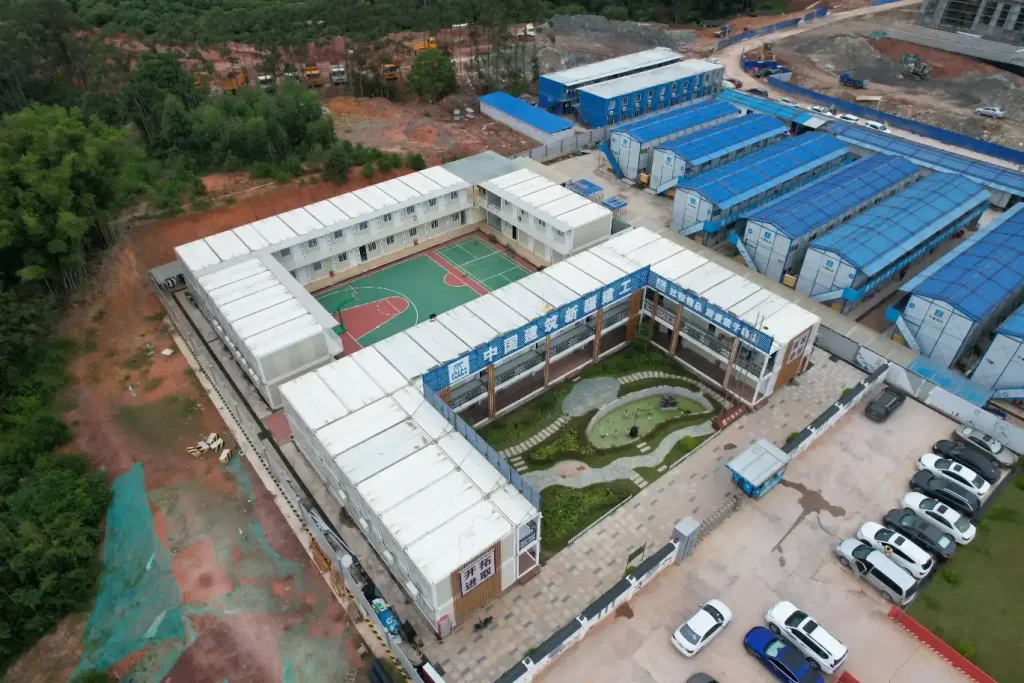
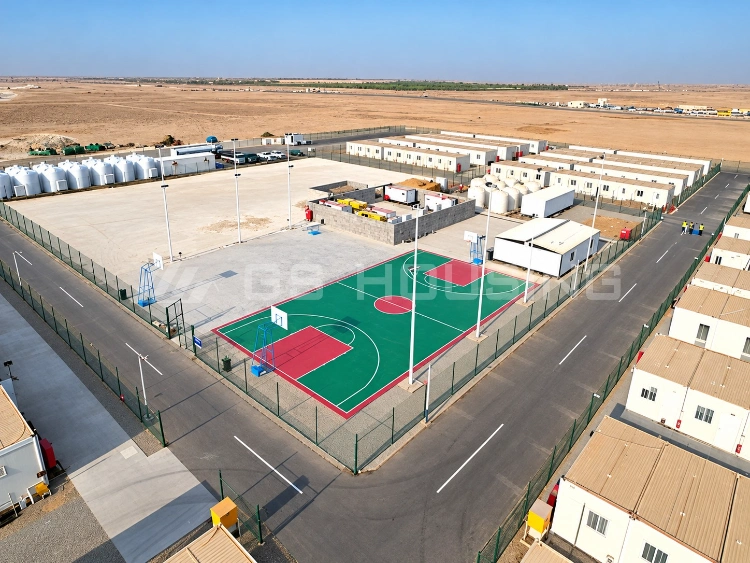
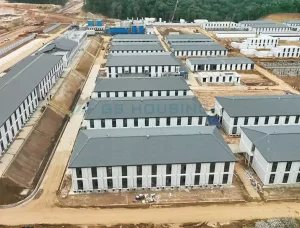
A useful example is GS Housing’s Saudi Arabia accommodation camp project supporting more than 10,000 personnel.
Another is the Indonesia integrated camp development accommodating approximately 5,000 personnel using 1,081 modular units, combining accommodation, offices, dining facilities, and support infrastructure within a single project.
Projects like these don’t just demonstrate manufacturing capability.
They demonstrate delivery capability.
That’s a very different thing.
Why More Certifications Don’t Automatically Mean a Better Container House Manufacturer China
Many buyers ask:
“Do you have certificates?”
A better question might be:
“Which certificates does my project actually require?”
Common requirements include:
Quality Management
- ISO 9001
Environmental Management
- ISO 14001
Occupational Health & Safety
- ISO 45001
Product Compliance
- CE
- SGS
- ASTM-related testing
- BV inspection reports
- UL-related certifications
- SASO
- GOST-R
The important point is simple.
Relevant certificates matter.
Irrelevant certificates rarely do.
Experienced suppliers typically help buyers identify which documentation is required before production begins—not after containers reach the destination port.
The Quote Looked Cheaper Until the Project Started
One EPC procurement manager once shared a lesson he learned the hard way.
Three suppliers submitted proposals.
The cheapest quotation was selected.
Everything looked fine.
Until installation began.
The camp price was competitive.
The missing costs were not.
Additional crane charges appeared.
Inland transportation had not been included.
Several utility connections were outside the supplier’s scope.
None of these costs were hidden.
They simply weren’t discussed.
That’s why experienced buyers spend less time comparing totals and more time comparing scope.
A quotation should answer one question clearly:
“What exactly will arrive on site?”
Common exclusions may include:
- Inland transportation
- Foundation works
- Crane services
- Installation labor
- Utility connections
- Certification fees
- Spare materials
For large projects, these unbudgeted costs can easily add 20–30% to the final project total.
For workforce accommodation developments, many contractors compare complete prefabricated camp solutions for construction, mining, and industrial projects rather than evaluating individual buildings separately.
The goal is understanding the complete project cost—not just the building price.
Why Experienced Buyers Ask About Steel Thickness Before They Ask About Paint Color
Many buyers visiting a factory for the first time naturally focus on things they can see.
The showroom.
The sample buildings.
The paint finish.
The reception area.
Yet the details that determine whether a camp performs well after five years are often hidden inside the structure.
Experienced buyers usually ask:
- What steel grade is being used?
- How thick is the galvanization?
- What insulation density is specified?
- How are roof joints sealed?
- What wind loads has the structure been designed for?
Those details rarely appear in marketing brochures.
Yet they often determine whether a camp remains operational years later.
One supplier may offer a lower price simply by reducing specifications in areas most buyers never inspect.
Which is why reviewing technical drawings often reveals more than reviewing sales presentations.
One Last Check Before You Sign the Contract
By the time most buyers reach the final supplier shortlist, the quotations often look surprisingly similar.
That’s usually when the most important questions should be asked.
Not about price.
About execution.
Before signing, ask yourself:
- Have I verified who actually owns the factory?
- Have I reviewed comparable overseas projects?
- Do I clearly understand what is excluded from the quotation?
- Can this supplier support logistics and installation?
- If the camp expands two years later, will they still be able to support it?
Those questions rarely appear in procurement spreadsheets.
Yet they often determine whether a project runs smoothly after the purchase order is issued.
Sometimes the difference between a successful project and a difficult one isn’t the building.
It’s the supplier behind it.
Final Thoughts
Choosing a modular camp supplier China is rarely about finding the lowest quotation.
It’s about finding the lowest overall project risk.
The strongest suppliers combine manufacturing capability, international project experience, logistics coordination, technical support, and long-term reliability.
Because once production begins, changing suppliers becomes difficult.
Once the camp reaches site, it becomes almost impossible.
For buyers still comparing options, reviewing container house systems designed for international deployment and learning more about GS Housing’s global project experience and manufacturing capabilities can provide useful reference points before requesting detailed quotations.
And if you’re currently evaluating suppliers for an upcoming workforce accommodation project, you’re welcome to discuss your project requirements with the GS Housing team before moving into procurement. This often helps identify potential risks long before they become expensive problems.