Introduction
When planning mining camp accommodation Australia for remote resource developments, the buildings themselves are rarely the biggest budget item.
Getting it there is.
That surprises many first-time buyers.
A project team may spend months comparing accommodation specifications, insulation performance, fire ratings, and building layouts.
Then the freight quotation arrives.
Suddenly transportation becomes one of the largest numbers in the budget.
In some remote Pilbara projects, inland freight can account for 35-45% of the total camp budget—more than the cost of the buildings themselves.
The challenge is simple.
Australia’s major mining regions are rarely close to major cities.
Projects are often located in:
- Western Australia
- Pilbara
- Northern Territory
- Queensland mining regions
- Remote resource developments
Distances of 1,000 to 2,000 kilometers from port to site are not unusual.
Some projects require accommodation for hundreds or even thousands of workers before production can begin.
At that point, camp planning becomes less about buildings and more about logistics.
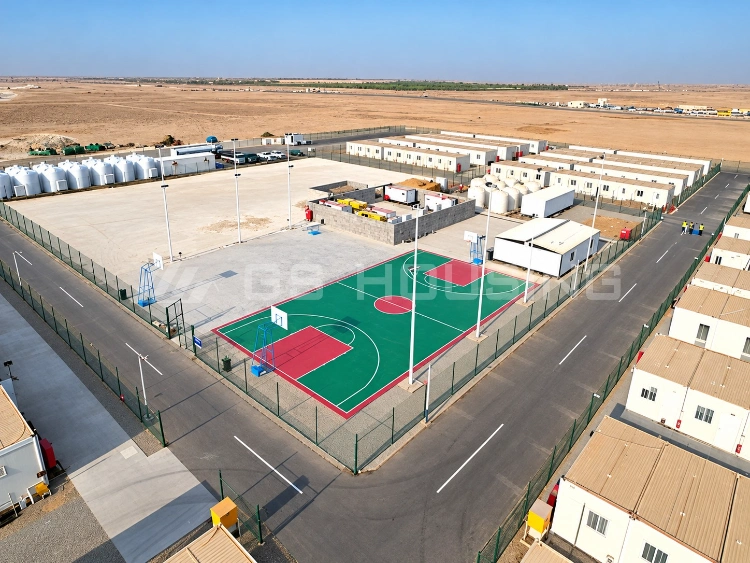
This is one reason mining camp accommodation Australia projects increasingly rely on flat pack modular systems.
Not because the buildings are fundamentally different.
Because the transportation economics are.
Why Remote Mining Accommodation Australia Projects Often Start With Freight Calculations
Many buyers begin by asking:
“How much does the accommodation cost?”
Experienced mining contractors often ask something else first:
“How many trucks will it take?”
That may sound backwards.
For remote mining accommodation projects, it isn’t.
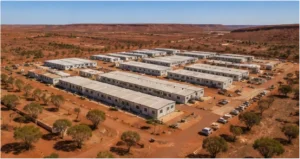
A traditional site-built camp typically requires separate deliveries for:
- Structural materials
- Roofing systems
- Interior finishes
- Electrical components
- Plumbing equipment
- Construction support materials
Every shipment introduces another variable.
Every variable introduces risk.
And in remote mining developments, risk tends to become expensive very quickly.
When sites are hundreds or thousands of kilometers from major logistics hubs, transportation planning becomes part of the accommodation strategy itself.
This is particularly true for projects working under strict mobilization schedules.
A camp that costs slightly more upfront but reduces freight movements can often become the lower-cost solution overall.
Many procurement teams only discover this after comparing transportation scenarios rather than building prices alone.
Why Flat Pack Mining Camp Systems Are Changing Mining Camp Accommodation Australia Economics
A common assumption is that flat-pack buildings are chosen primarily because they’re cheaper.
Sometimes they are.
Sometimes they aren’t.
The real advantage is transport efficiency.
A standard modular building occupies the same shipping volume whether occupied or empty.
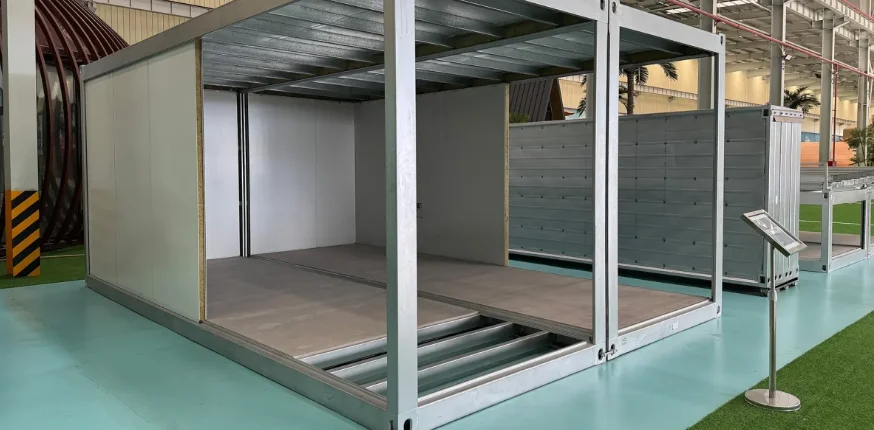
A flat pack mining camp works differently.
Structural components are packed compactly for shipment and assembled on-site.
As a result:
- More units fit into each container
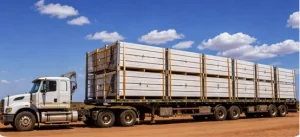
- Fewer truck movements are required
- Inland transportation costs decrease
- Storage requirements become easier to manage
For projects located deep inside Western Australia or remote Queensland mining regions, these savings can become substantial.
One logistics manager involved in a remote resource project described it this way:
“The buildings weren’t the problem. Moving air was.”
It’s a surprisingly accurate description of what freight costs can look like across long Australian transport routes.
What a Modular Mining Camp Australia Project Usually Includes
When people hear “mining camp,” they often picture rows of dormitories.
The reality is usually more complex.
A modern modular mining camp Australia project functions as a small operational community that supports both living and working requirements.
Accommodation is only one part of the system.
Most camps typically combine:
Accommodation Buildings
- Worker dormitories
- Supervisor rooms
- Management accommodation
- Isolation rooms
Kitchen and Dining Facilities
- Industrial kitchens
- Cold storage rooms
- Dry storage areas
- Dining halls
Bathroom and Laundry Facilities
- Shower blocks
- Toilet facilities
- Laundry rooms
- Water supply systems
Office and Administration Areas
- Site management offices
- Engineering departments
- Meeting rooms
- Document control facilities
Interestingly, dining facilities often become one of the busiest parts of the camp.
A camp may comfortably house 800 workers.
But if 800 workers finish a shift within 45 minutes, the dining hall can quickly become a bottleneck if circulation and serving capacity were not properly planned.
This is one reason experienced project teams evaluate operational flow rather than focusing only on accommodation capacity.
What a 12,000-Person Mining Workforce Camp Revealed About Modular Scalability
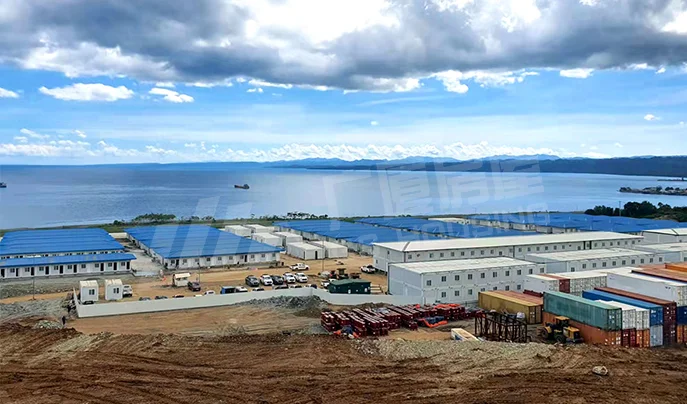
A useful example comes from GS Housing’s workforce accommodation development supporting the Huayou mining project in Indonesia.
The project ultimately required accommodation and support facilities for more than 12,000 personnel using over 3,000 modular units.
While the project was located in Indonesia rather than Australia, the logistical challenges were remarkably similar to those faced by many Australian mining developments.
The project involved:
- Remote site conditions
- Large workforce numbers
- Aggressive deployment schedules
- Limited local construction resources
The final development included:
- Accommodation buildings
- Office facilities
- Dining halls
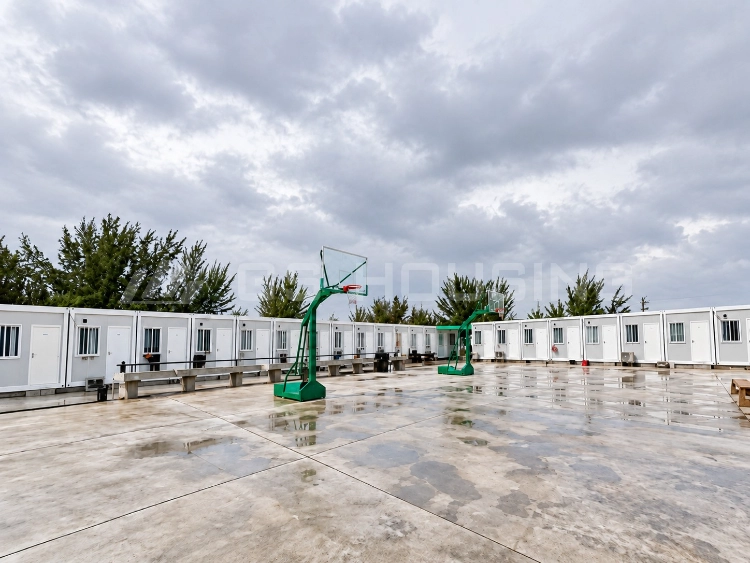
- Recreation areas
- Service facilities
Rather than relying heavily on conventional site construction, much of the manufacturing was completed before shipment.
This reduced on-site workloads and allowed accommodation capacity to expand alongside workforce growth.
The lesson applies equally well to Australian mining operations.
Large workforce accommodation projects rarely remain the same size throughout their lifecycle.
The ability to expand gradually often becomes just as important as the initial deployment itself.
Why Wind, Fire, and Thermal Performance Matter in Remote Mining Accommodation
Transportation receives most of the attention during procurement.
Operations take over after handover.
Australian mining environments place significant demands on camp buildings.
Depending on location, accommodation systems may face:
- High winds
- Bushfire exposure
- Large temperature fluctuations
- Dust intrusion
- Continuous year-round use
This changes purchasing priorities.
Fire Resistance
Fire-resistant wall systems and non-combustible materials are increasingly specified to meet Australian Standard AS 3959 (Bushfire Attack Level) requirements.
Thermal Performance
Cooling costs remain a long-term operating expense.
Better insulation often produces savings long after installation is complete.
Maintainability
This point receives less attention during tender evaluations than it probably should.
Remote maintenance visits are expensive.
Components that perform reliably over long periods can significantly reduce operational disruption, especially when replacement materials or technicians must travel long distances to reach the site.
For many operators, maintainability becomes a lifecycle cost issue rather than a construction issue.
Why Many Mining Camp Accommodation Australia Projects No Longer Build Everything On Site
Twenty years ago, site-built camps were common across many mining developments.
Today, the economics look different.
Labor costs have increased.
Construction schedules have tightened.
Remote workforce availability has become less predictable.
Under these conditions, modular construction provides several practical advantages:
- Faster deployment
- More predictable quality
- Reduced on-site labor requirements
- Easier future expansion
- Improved transportation efficiency
This does not mean traditional construction has disappeared.
For some permanent developments, it still makes sense.
But for workforce accommodation supporting active mining operations, modular systems increasingly offer a more practical balance between speed, cost control, and operational flexibility.
Final Thoughts
The biggest challenge facing mining camp accommodation Australia projects is not usually the building itself.
It’s distance.
Distance affects freight.
Distance affects maintenance.
Distance affects labor availability.
And distance affects project schedules.
That’s why successful mining camp planning often starts with logistics rather than architecture.
The camps that perform best over time are rarely the ones designed only around today’s workforce numbers.
They’re the ones designed around transportation realities, future expansion, and long-term operations.
For mining companies evaluating remote workforce housing, comparing different modular accommodation configurations, transportation strategies, and phased deployment approaches can help avoid costly adjustments later in the project.
Many of the lessons discussed above can also be seen across a wide range of resource, infrastructure, and industrial projects delivered through GS Housing’s modular camp portfolio , where transportation efficiency, scalability, and long-term operational performance often become just as important as the buildings themselves.
If you’re currently assessing accommodation requirements for a remote mining project, it can be useful to review potential camp layouts, transportation options, and workforce projections before finalizing procurement decisions. In many cases, addressing those questions early makes future expansion considerably easier to manage.
For project-specific discussions, preliminary layout recommendations, or deployment planning support, you can discuss your project requirements with the GS Housing team once site conditions, workforce numbers, and project schedules become clearer.