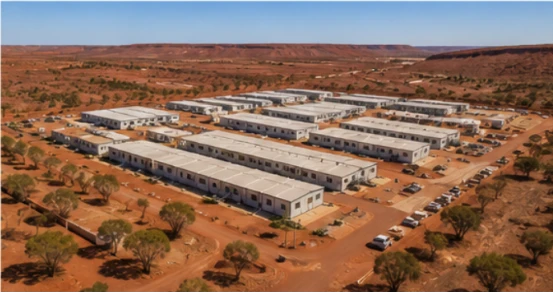
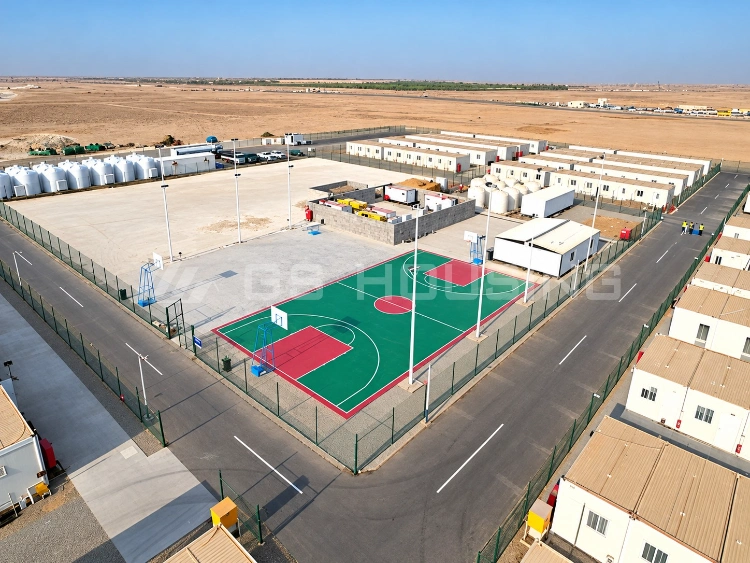
Refugee camp housing may look simple at first glance. It may seem that placing shelter units on available land with enough spacing is enough. But once people actually move in, small planning mistakes become big problems. Toilets are too far. Showers are hard to clean. Medical rooms may be placed in unsuitable locations. Families may need to cross busy circulation routes to reach daily services.
For large-scale temporary accommodation projects, GS Housing can provide modular housing solutions for emergency shelter, worker accommodation, clinics, and camp facilities. The company works on modular building solutions for project use, including emergency shelter, worker accommodation, clinics, and camp facilities. For B2B buyers, the useful part is not only the container house itself. The team can also help with layout planning, delivery arrangement, installation support, and functional space design. For refugee camp housing projects, this type of support can be highly practical. A camp has to be ready for use, not just look complete on paper.
How Can Refugee Camp Housing Start with Safe Shelter Planning?
Shelter planning should come first, but it should not stop at “where to put the rooms.” You need safe sleeping areas, clear walking routes, and units that can be installed without making the site too complicated.
Rapid Deployment Shelter Units
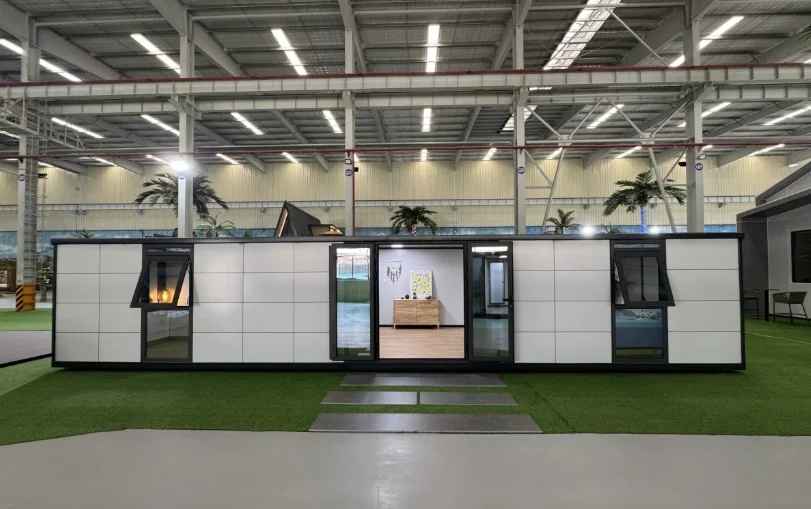
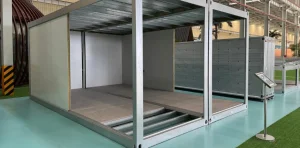
Emergency projects usually start under pressure. There may be people waiting for shelter, while the site is still being prepared. In this situation, folding container houses can help because they are made for fast setup and simple site work.
They can be used as temporary accommodation, staff rooms, command rooms, or emergency living areas. For project teams, the value is clear. You can create usable indoor space first, then improve the rest of the camp step by step.
Durable Steel-Framed Shelter Units
Camp shelters are used all day. Doors, walls, floors, and public routes face heavy use. Weather may also change fast, especially in open or remote areas. A weak shelter may work for a few days, but longer use will expose problems.
Steel-framed shelter units give the camp a stronger base. They suit repeated use better than light short-term structures. For camp operators, this means fewer worries about safety, daily repair, and structure stability.
Flexible Family Housing Layouts
Families do not all need the same layout. Some need connected rooms. Some need a quieter area. Children, elderly people, and people needing extra care should not be placed in noisy or crowded corners. Staff accommodation may also need a separate zone.
A modular house layout gives you more room to adjust. You can group units by family type, function, or access needs. If the camp population changes later, the layout can still be changed without starting from zero.
How Can Sanitation Areas Improve Camp Health and Daily Living?
Sanitation is one of the first areas that affects daily life. In refugee camp housing, hygiene areas should be part of the first layout plan.
Modular Toilet and Shower Zones
Toilet and shower zones should be easy to reach, but they should not sit too close to sleeping areas. The distance needs to feel reasonable. The route should also be clear, especially at night.
Modular sanitation units can be arranged in rows or smaller groups. The choice depends on land shape, user numbers, and how people move through the site. A clear layout also makes cleaning, inspection, and gender-separated use easier to manage.
Clean and Wastewater Route Separation
Clean water and wastewater routes should be planned early. If this part is added later, the site often becomes messy.
Clean water points need simple access. Wastewater routes should stay away from sleeping areas, kitchens, and food storage. Drainage also needs to match the ground condition. Otherwise, rain and daily use can turn a good-looking site into a difficult one.
Utility Spaces Designed for Easy Maintenance
Maintenance workers need access to water, power, drainage, and repair points. If these points are hidden inside busy living zones, every small repair becomes a disturbance.
Utility rooms or service spaces can be included in the camp layout. This gives maintenance teams a clear place to work. In a large camp system, this saves time and avoids many daily complaints.
How Can Clinics Be Planned Within Refugee Camp Housing Projects?
Medical space should not be treated as a spare room. Even a basic clinic helps reduce pressure during an emergency.
Basic Medical Consultation Rooms
A clinic unit can include rooms for first aid, health checks, simple treatment, and basic consultation. It should be easy to find from the main road or central route.
At the same time, it should not be placed inside the busiest gathering area. Patients need privacy. Medical staff also need a calmer space to handle daily work.
Isolation and Observation Areas
Some projects need isolation or observation rooms. These rooms may be used for short-term observation or for individuals who need to be separated from general family accommodation areas according to project or health requirements.
Modular shelter units make this kind of separation easier. The area can stay close to clinic staff, but still keep enough distance from the main shelter zone.
Medicine Storage and Staff Support Rooms
A clinic also needs storage. Medicine, records, supplies, and small equipment should be kept dry, clean, and secure.
Staff support rooms are also useful. During emergency periods, medical workers may work long hours. A small rest room or office can make the clinic run more smoothly.
How Can Community Spaces Make Refugee Camps More Livable?
A camp should not feel like only rows of rooms. People also need places to eat, wait, meet support teams, receive supplies, and let children spend time safely. These spaces help the camp feel more orderly.
Multi-Purpose Activity Rooms
Multi-purpose rooms can support children’s activities, aid registration, training, meetings, and temporary learning spaces. Instead of building one room for every single use, modular units can form shared spaces.
This works well because camp needs often change. One room may be used for registration in the morning, a meeting in the afternoon, and children’s activities the next day.
Kitchens, Dining Areas, and Supply Spaces
Food service areas need clear movement. Kitchens, dining areas, and supply rooms should be well connected, while avoiding direct overlap with clinic or sanitation zones.
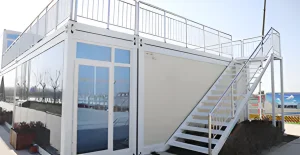
For larger functional spaces, flat-pack container houses can be combined into wider layouts. They can support dining, storage, offices, and service rooms in one planned area.
Safe Public Gathering Zones
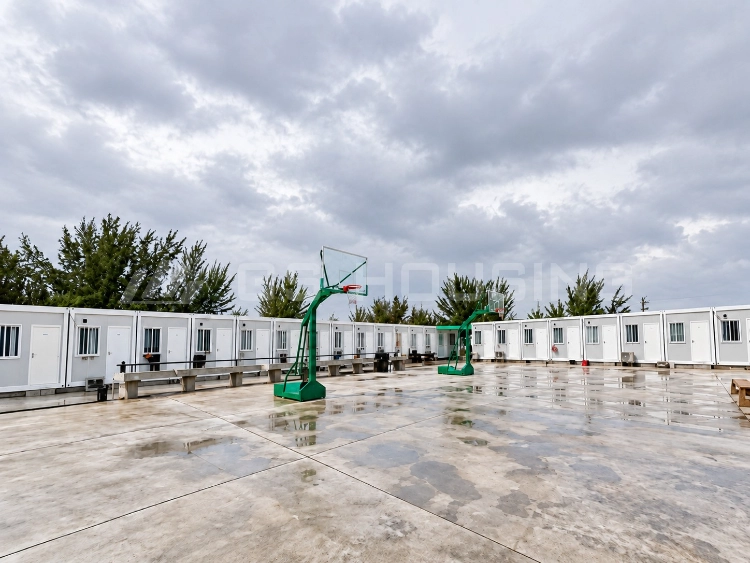
Open gathering zones help camp managers share notices, organize aid distribution, and guide people during busy times. These areas need clear entry and exit routes.
They can sit near activity rooms, registration points, or service areas. But they should not cut through family shelter zones, because that will disturb privacy and daily rest.
Why Choose GS Housing for Refugee Camp Housing Projects?
A camp project needs more than separate house units. You need stable supply, layout support, installation guidance, and communication that can keep up with the project schedule.
Folding Container Houses for Fast Emergency Response
For urgent shelter needs, Folding Container Houses are useful when time is tight and site work must stay simple. They can support temporary living, emergency offices, medical support rooms, and other fast-use spaces.
For early-stage response, this helps the project begin sooner and gives people usable shelter faster.
Flat-Pack Container Houses for Integrated Camp Systems
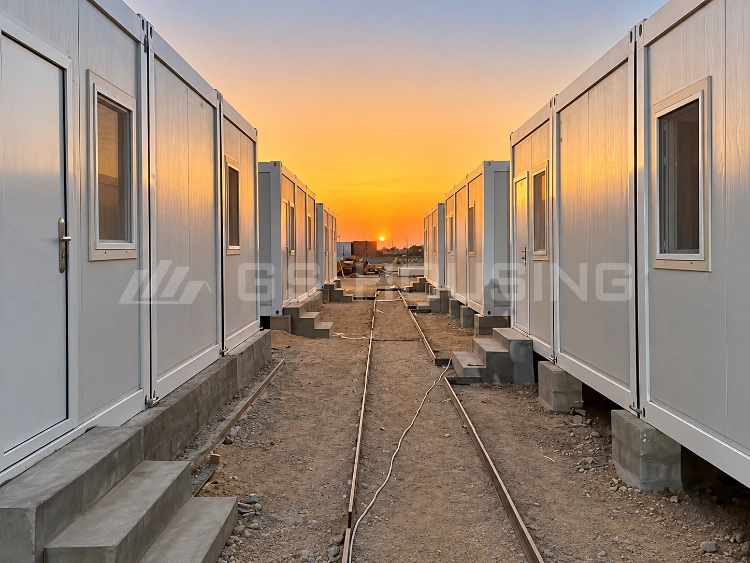
Flat-pack units work well for larger camp layouts because they can support many functions in one system. They let teams combine several tasks inside one structure. They can be configured as accommodation units, bathrooms, shower areas, medical rooms, food preparation areas, dining halls, storage rooms, site offices, and shared meeting rooms.
The main benefit is simple. Teams repeat the same unit type yet still shape each zone around its purpose. This keeps daily operations smoother once residents settle in.
Contact GS Housing for Emergency Shelter and Refugee Camp Housing Solutions
Good refugee camp housing keeps daily routines safer and more organized. It supports sleep, personal care, medical access, meals, and easy movement around the site. When a project requires living units, sanitation blocks, clinic rooms, or shared spaces, GS Housing can review the layout and recommend suitable modular housing options.
Request a Customized Proposal for Your Emergency Shelter or Refugee Camp Housing Project!
FAQ
Q1: What makes refugee camp housing different from regular short-term lodging?
A: Refugee camp housing goes beyond basic sleep areas. It usually covers sanitation zones, clinics, kitchens, staff rooms, clear pathways, and safe gathering spots.
Q2: Which building type works best for refugee camp housing projects that need quick delivery?
A: Folding units help when speed matters most. Flat-pack units fit larger camp systems where many connected functions are required.
Q3: How should refugee camp housing layouts support longer-term use?
A: Leave room for upkeep and future growth. Keep zones clear and separate for shelter, hygiene, healthcare, food service, storage, and public activity.