For a modular building dealer, a promising market is not simply one that needs many buildings. The better opportunities are usually projects where room types can be repeated, several functions are required at the same site, delivery happens in phases, and the buyer may expand the project later. Construction camps, mining sites, infrastructure work, and large workforce facilities often meet these conditions.
GS Housing supports modular project applications ranging from accommodation and site offices to sanitary, dining, medical, storage, and community facilities. Its role can extend beyond factory production to configuration support, delivery coordination, and installation guidance, which matters when a dealer is managing a project rather than selling a single house.
Which Markets Offer the Strongest Opportunities for Modular Building Dealers?
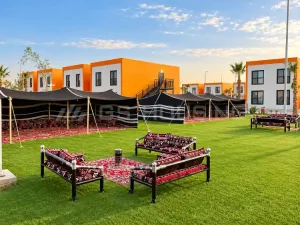
Different markets create different sales patterns. Dealers should compare not only project size but also how quickly a buyer needs buildings, how many functions are required, whether local installation support is necessary, and whether the same customer may have additional phases or sites.
Construction and Infrastructure Project Camps
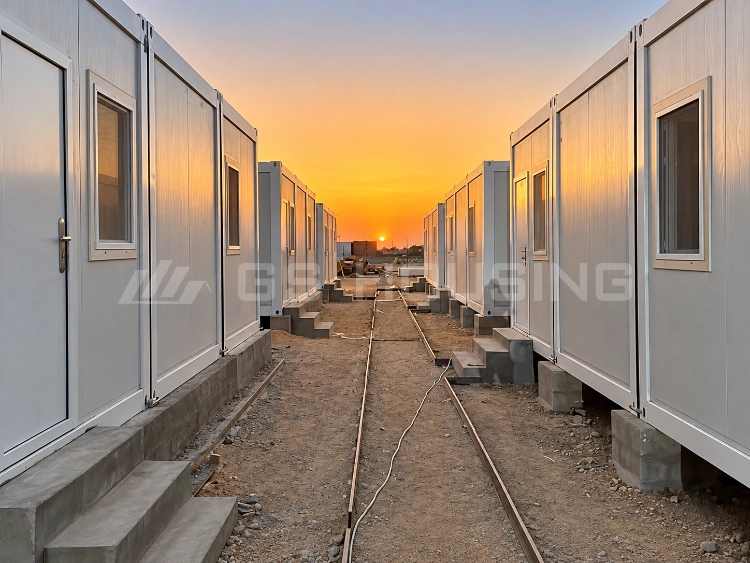
Construction and infrastructure projects often need accommodation, offices, meeting rooms, kitchens, dining areas, sanitary facilities, and storage before the main project reaches full activity.
For these applications, Багатофункціональні контейнерні будинки у розібраному вигляді can serve several functions with one modular system. The structural concept uses standardized top and bottom frames, corner columns, and interchangeable wall panels. Dealers can therefore work from a project room schedule rather than sourcing a different building system for every function.
Construction camps can also be a practical market entry point. The buildings are often required early in the project, the functional requirements are relatively clear, and contractors may repeat similar layouts across later phases or other sites. For a modular building dealer developing contractor accounts, that repeatability can be more useful than a large one-off building with a completely different design each time.
Mining and Remote Workforce Accommodation
Mining and remote industrial operations usually require a broader facility package. Mining camp accommodation may be only one part of the requirement; the same project can also need administration rooms, medical facilities, kitchens, dining areas, laundries, warehouses, and operational buildings.
Збірний табір systems are suitable when these functions need to be planned together. For dealers, the opportunity is not simply selling sleeping rooms. It is coordinating prefab camp solutions around workforce size, shift patterns, shared facilities, site circulation, utility connections, and future expansion.
These projects can offer a wider supply scope than a basic construction camp, but the entry barrier is also higher. Local access, lifting, installation organization, approvals, climate requirements, and communication with the project owner all become more important. Dealers should confirm that they can support these responsibilities before committing significant sales resources.
Large-Scale Workforce Accommodation and Support Facilities
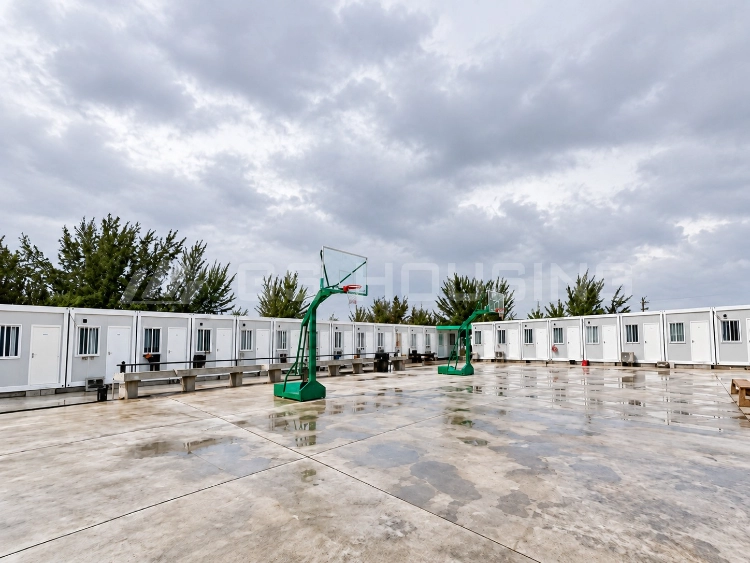
Large workforce developments can combine accommodation with offices, sanitary rooms, dining, recreation, prayer facilities, medical areas, and other shared spaces. This creates opportunities for dealers that can manage workforce accommodation projects as complete functional packages.
For a modular building dealer, these projects can support larger and longer customer relationships, but they often involve longer decision cycles and more coordination between owner, contractor, engineering team, logistics providers, and local installers. The opportunity becomes more attractive when the buyer controls several project phases or expects workforce capacity to change over time.
Dealers should therefore screen opportunities by commercial fit, not only by unit quantity:
| Opportunity Factor | What Dealers Should Look For |
| Repeatability | Repeated room types or building functions |
| Functional Scope | Accommodation combined with offices, dining, sanitary, medical, or storage areas |
| Expansion Potential | Workforce or site capacity likely to change |
| Local Service Need | Buyer requires layout, installation, approval, or coordination support |
| Delivery Complexity | Manufacturer coordination creates value beyond supplying units |
| Project Pipeline | Contractor or developer has multiple phases or sites |
A strong project opportunity usually combines several of these factors. Dealers should also review approval requirements, project duration, installation responsibility, payment terms, and the likelihood of later expansion before deciding where to focus.
Why Do Large Projects Create More Value for Modular Building Dealers?
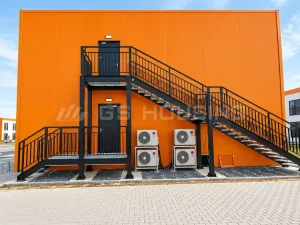
Large projects can create more commercial value because standardization, repeated functions, and project coordination work together. A dealer is able to contribute more when the customer needs a building system rather than a single unit.
Multiple Building Functions in One Customer Account
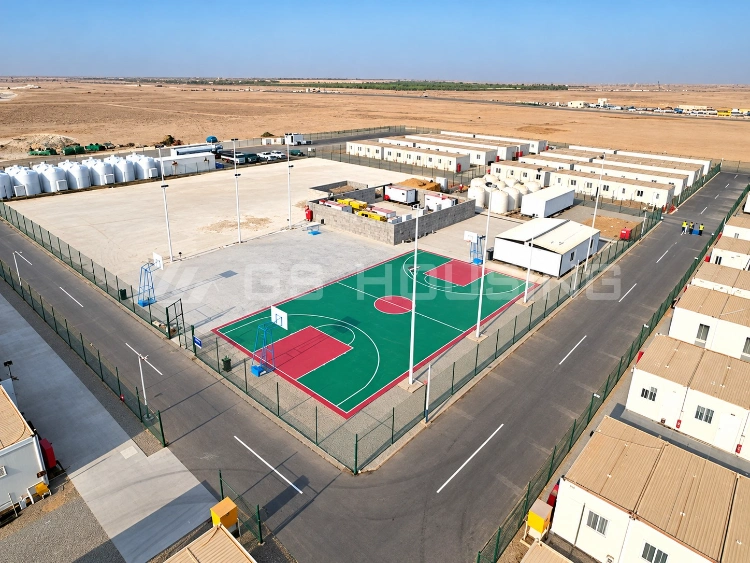
GS Housing’s Saudi Arabia accommodation camp project used 4,480 flat-pack project houses for accommodation, offices, toilets, showers, prayer rooms, restaurants, sports areas, and gyms. Installation and technical guidance were also provided on site.
This illustrates an important dealer business model. One customer account can generate demand across several building functions. Instead of repeatedly acquiring unrelated customers for single units, a dealer may be able to expand within the same project as new functional requirements appear.
For modular building business opportunities, this type of account depth is often as important as the initial order size.
Standardized Modules with Flexible Configurations
Standardization matters because dealers need drawings, quotations, logistics planning, and installation instructions that can be repeated without redesigning every unit from the beginning.
GS Housing flat-pack houses use standardized structural components while allowing modules to be combined into different layouts. This gives a flat-pack container house supplier a consistent base for accommodation, offices, meetings, dining, sanitary rooms, and other functions.
The commercial advantage is not that every building becomes identical. It is that repeated structural logic reduces unnecessary variation while room layouts can still respond to project use.
Faster Deployment Supports Time-Sensitive Projects
Remote construction, mining, and infrastructure projects often need support buildings before the main operation reaches full staffing. Factory production allows building work and site preparation to progress in parallel.
For dealers, the stronger selling point is not simply “fast installation.” It is the ability to align housing delivery with workforce mobilization, equipment arrival, and project phases. Well-planned prefab camp solutions can therefore help contractors avoid having accommodation and support facilities become a bottleneck in the wider project schedule.
Which Modular Building Solutions Fit Different Dealer Opportunities?
The right solution depends on project scale, functional mix, site conditions, and the amount of local coordination required. A modular building dealer should start with the customer’s operating requirements rather than selecting a product first.
Multi-Functional Flat-Pack Container Houses for Project Buyers
Multi-Functional Flat-Pack Container Houses suit projects that need several room functions based on one modular platform.
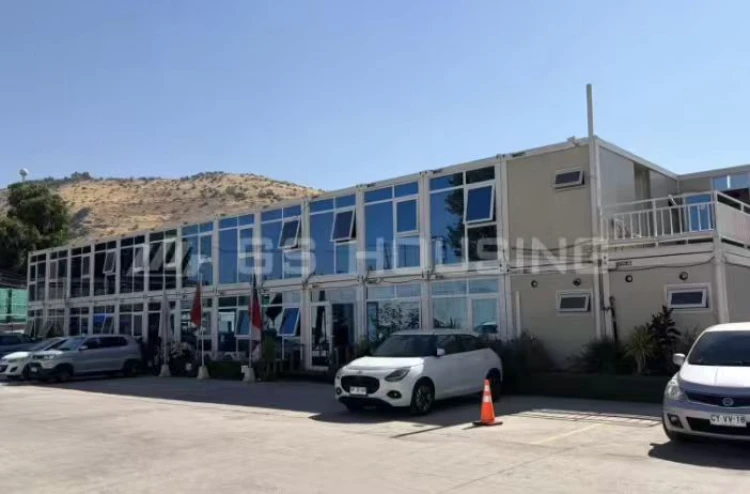
For a modular building dealer serving construction contractors, the same structural system can support accommodation, office, meeting, dining, and sanitary applications. That makes the product easier to integrate into phased construction projects and repeated site layouts.
A flat-pack container house supplier should still confirm transport access, lifting conditions, foundations, local regulations, and final room functions before fixing the configuration.
Prefabricated Camps for Mining and Remote Sites
Mining camp accommodation requires more planning than a simple dormitory block. The dealer should consider workforce capacity, administration, dining, sanitary facilities, clinics, storage, recreation, and circulation as one system.
Цей Indonesia mining camp project provides a practical reference for remote industrial applications. It also shows why workforce accommodation projects benefit from coordinated project planning instead of purchasing unrelated buildings separately.
For dealers, this type of project is attractive when they have strong local customer communication and can coordinate site information, installation resources, and regulatory requirements.
Large Accommodation Camps for High-Volume Projects
Large accommodation camps require repeated modules, functional zoning, delivery sequencing, and installation planning.
Цей 10,000-person accommodation camp project demonstrates how flat-pack units can form a broader workforce community rather than a collection of independent houses.
For modular building business opportunities, project references of this kind are useful because they help contractors see how accommodation, office, sanitary, dining, and recreational functions can be combined within one project system.
What Should Dealers Check Before Choosing a Modular Building Supplier?
Supplier evaluation should go beyond the product catalogue. A modular building dealer needs to know whether the manufacturer can support repeated production, technical coordination, delivery documentation, and the dealer’s responsibilities after the units leave the factory.
Manufacturing Capacity and Product Consistency
GS Housing operates six modular production bases covering about 500,000 square meters, with annual modular house production capacity of about 200,000 units. Production equipment covers panel manufacturing, cutting, bending, roll-forming, welding, and assembly.
For project buyers, capacity matters because large batches must follow consistent drawings and connection logic. Frame geometry, panel interfaces, connection positions, and component identification all affect how efficiently modules can be assembled at the destination.
For a flat-pack container house supplier, consistency is especially important when units are delivered in several batches but must still connect to the same project layout.
Engineering, Installation, and Delivery Support
Dealers should define exactly where manufacturer responsibility ends and local responsibility begins.
The manufacturer may support engineering drawings, production, packing information, installation instructions, and technical guidance. The local dealer may still need to handle customer communication, approvals, inland transport, lifting coordination, subcontracted installation, or after-sales response.
These responsibilities should be agreed before the dealer commits to the project. Otherwise, unplanned local transport, installation work, or site support can consume time and erode the commercial value of the order.
This is why modular construction project support should be evaluated alongside manufacturing capacity.
Local Codes, Climate, and Project Conditions
A configuration that works in one country should not automatically be copied into another.
Building use, climate, wind conditions, foundations, fire requirements, access roads, lifting conditions, utility connections, and local approvals can all affect the final design. Dealers should collect this information early and pass it to the engineering team before drawings are finalized.
The need for this local information also creates a role for dealers. A manufacturer may control factory production, while the dealer can contribute local code knowledge, site access information, customer communication, and coordination with installers.
Marketing Materials and Project References Help Dealers Sell Locally
Dealer support also includes the materials needed before an order is signed.
Product images, videos, brochures, project references, installation documents, frequently asked questions, and configuration information help local customers evaluate whether the system is suitable for their project.
Project references are particularly useful for mining camp accommodation and complex camp projects because buyers need to see how accommodation, dining, offices, medical areas, and support buildings work together. They also help a dealer explain that its role extends beyond reselling a standard house.
How Can Dealers Work with GS Housing from Inquiry to Delivery?
A productive dealer-manufacturer relationship starts with accurate project information. The manufacturer needs enough information to match the building system to the actual site rather than prepare a generic configuration.
Project Matching and Configuration Support
Dealers should prepare the project location, building use, workforce capacity, required rooms, site layout, expected schedule, local regulations, transport access, and installation conditions.
GS Housing can then match Multi-Functional Flat-Pack Container Houses or Prefabricated Camp systems to the project.
For a modular building dealer, this approach also helps qualify sales leads. A customer that can provide clear site information, room functions, project timing, and decision responsibilities is generally easier to develop than an inquiry with no defined application or project schedule.
Production, Shipping, and On-Site Guidance
After the project configuration is confirmed, drawings, manufacturing, packing, delivery sequencing, and installation preparation should follow the same plan.
Dealers need to keep local contractors and project teams informed as production progresses, while the manufacturer provides the technical information required for delivery and assembly. This division of work is especially important for phased modular construction project support, where later batches must remain consistent with earlier installation work.
For dealers deciding where to focus first, projects with repeated rooms, multiple functions, phased delivery, or likely expansion usually provide more room to add value than a small one-off building. Construction camps can provide a practical entry route, while mining and remote industrial projects become more attractive when the dealer can support local approvals, site information, installation coordination, and long-term customer communication.
Contact GS Housing for Modular Building Dealer Solutions
Before discussing the final configuration, prepare the project location, intended functions, workforce capacity, delivery stages, site restrictions, and local responsibilities. This helps separate a basic product inquiry from a project that needs coordinated manufacturer and dealer support.
Зв’яжіться з GS Housing to discuss dealer partnership and project support for worker accommodation, site offices, dining areas, sanitary facilities, medical rooms, storage, and complete camp projects.
Часті запитання
How Should Dealers Choose the Right Project Market?
A modular building dealer should prioritize projects with repeated room types, several functional buildings, clear site requirements, and potential for expansion or additional phases. Construction camps may have a simpler entry path, while mining and remote industrial projects often require more local coordination but can involve a wider facility package.
Dealers should also consider the sales cycle, local approval requirements, installation responsibility, and whether the same contractor operates multiple sites.
What Information Should Dealers Prepare Before Requesting a Project Configuration?
Prepare the project location, intended use, number of occupants, room schedule, site layout, expected delivery stages, local building requirements, climate conditions, access restrictions, and installation responsibilities.
This information helps the manufacturer determine whether individual flat-pack houses or broader prefab camp solutions are more suitable and reduces redesign later in the project.
Which GS Housing Solution Fits Mining or Construction Camp Projects?
Multi-Functional Flat-Pack Container Houses suit construction projects that need several functions based on one standardized building system. Prefabricated Camp systems are more appropriate when accommodation, administration, dining, sanitary, medical, storage, and other facilities need to be coordinated as one project.
The final selection should depend on project scale, site conditions, required functions, delivery stages, and the local services the dealer can provide.