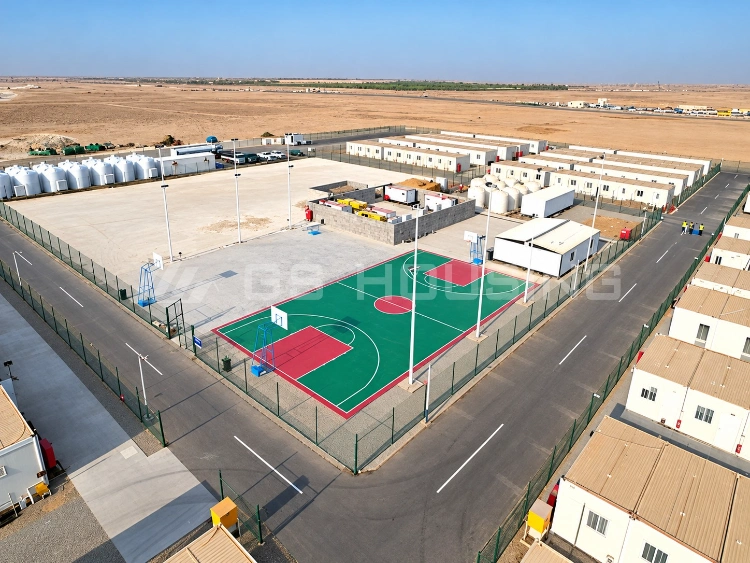
서론
For many oil and gas projects, the first real deadline isn’t drilling.
It’s housing.
Before equipment arrives, before production starts, hundreds of workers often need somewhere to sleep, eat, meet, shower, and operate from.
That’s where oilfield camp accommodation becomes critical.
And this is usually where projects start feeling pressure.
Not because housing is technically complicated.
Because remote energy projects rarely happen in easy locations.
A site in Saudi Arabia may face extreme heat and blowing sand.
A project in Iraq may struggle with logistics and long transport routes.
Some African oilfield developments operate hundreds of kilometers from major cities.
By the time workforce numbers reach 500, 1,000, or even several thousand people, accommodation stops being a temporary facility.
It becomes operational infrastructure.
That’s one reason modular oil and gas camp systems have become standard across many energy projects. They allow camps to be deployed faster, expanded later, and operated more predictably in regions where traditional construction often becomes difficult to manage.
Over the past two decades, projects delivered by GS 주택 have shown that accommodation planning often influences project schedules much earlier than many contractors expect.
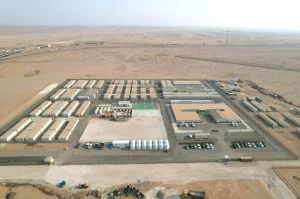
Why Oilfield Camp Accommodation Often Determines When a Project Can Actually Start
Many project schedules assume workforce accommodation will simply be ready when needed.
Reality is usually messier.
Delays often appear long before production begins:
- Local labor shortages
- Material delivery issues
- Extreme weather
- Remote transportation routes
- Limited construction infrastructure
A project may have drilling equipment on-site and still be unable to mobilize workers properly because accommodation facilities are unfinished.
That situation is more common than many procurement teams expect.
For remote energy developments, housing is often one of the first facilities that must become operational.
Not the last.
This explains why many contractors now prioritize modular oilfield housing during early planning instead of treating accommodation as a secondary package.
The logic is simple.
A drilling schedule can only move as fast as the workforce supporting it.
Why Standard Workforce Housing Usually Struggles in Oil and Gas Environments
People often assume an oilfield camp is simply a larger worker camp.
In practice, the requirements are very different.
Oil and gas projects frequently operate in environments that place constant pressure on buildings:
- Temperatures above 45°C
- Sandstorms
- High UV exposure
- Corrosive coastal environments
- Remote desert locations
- Long operational cycles
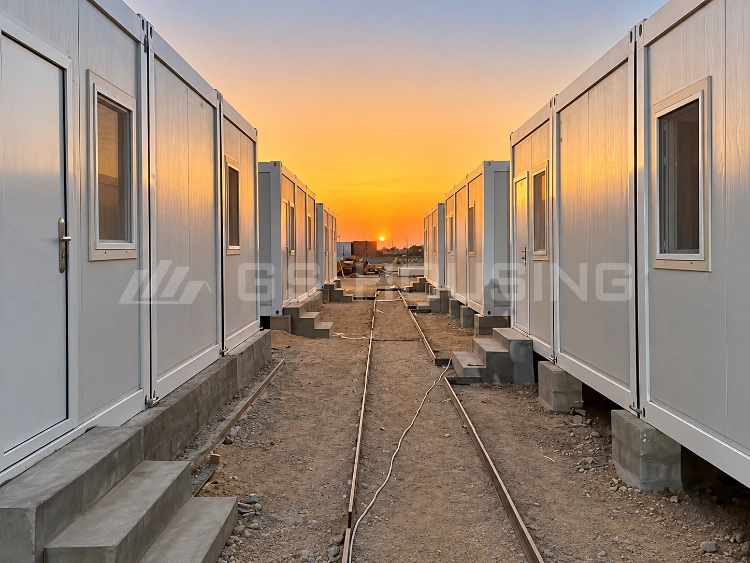
That’s why modern oilfield container house systems typically include:
- Enhanced insulation
- Corrosion-resistant coatings
- Reinforced steel structures
- Integrated HVAC systems
- Dust-resistant ventilation designs
Interestingly, durability is rarely the first complaint workers make.
Comfort usually is.
Workers living in remote oilfield accommodation often spend weeks on-site during each rotation. If indoor temperatures fluctuate constantly or common facilities are poorly planned, productivity and workforce retention can become management issues surprisingly quickly.
What a Complete Oil and Gas Camp Usually Includes Beyond Dormitories
First-time buyers often focus heavily on accommodation units.
Experienced project managers usually look at support facilities first.
Because dormitories are rarely the first part of a camp to fail operationally.
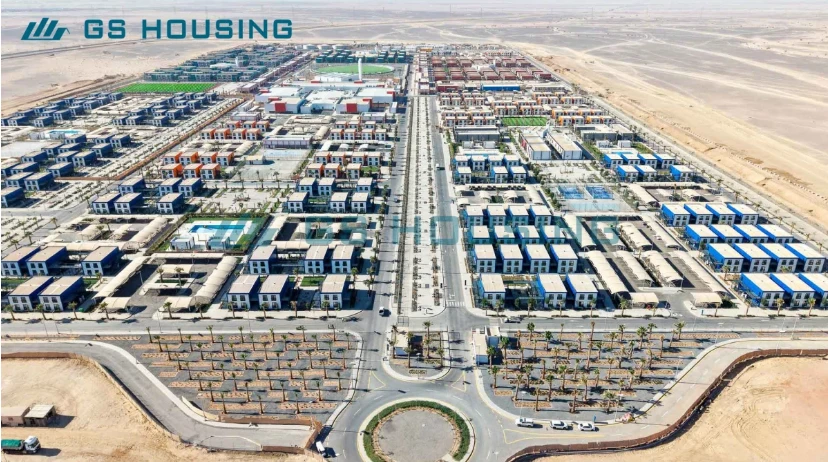
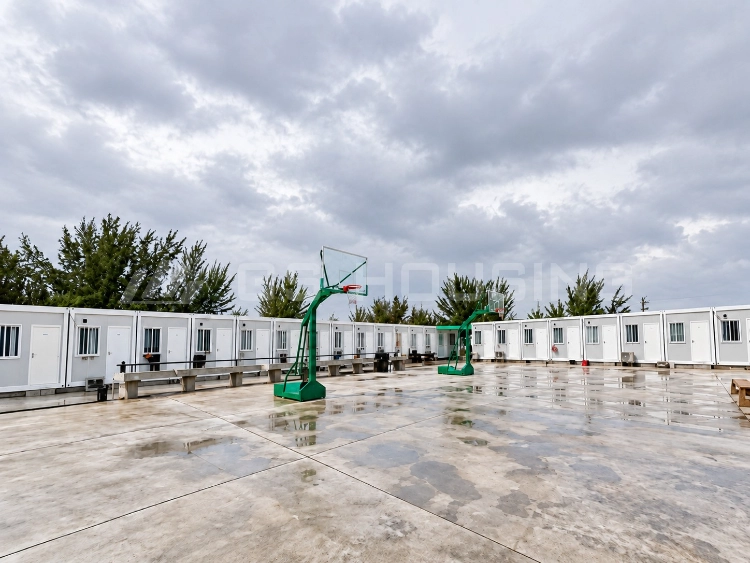
A typical oilfield camp accommodation layout may include:
Accommodation Zones
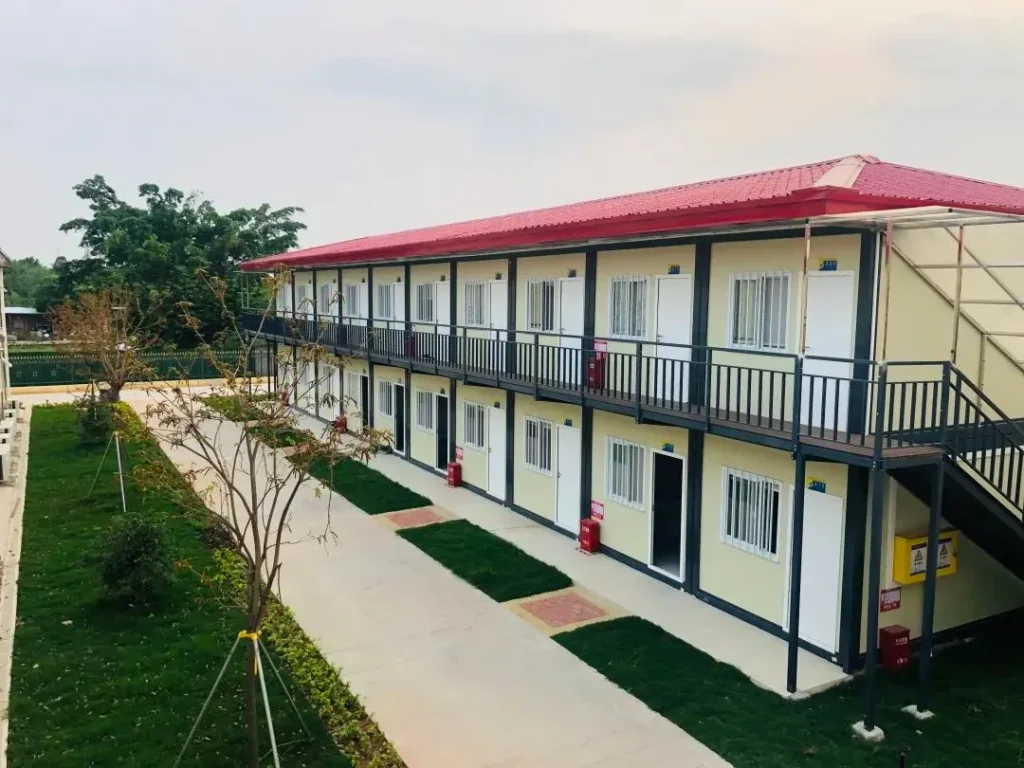
- Shared worker rooms — our modular worker accommodation units are built for oilfield conditions.
- 감독관 숙소
- Management housing
- Isolation rooms
Office Facilities
- 프로젝트 관리 사무소
- 공학부
- 회의실
- Document control rooms
Dining Infrastructure
- 산업용 주방
- Refrigerated storage
- 식당
- Waste handling areas
Welfare Facilities
- 세탁 시설
- Prayer rooms
- 휴게 구역
- Gyms
Medical Support
- First-aid stations
- 임시 진료소
- Emergency response rooms
One overlooked area is laundry.
On paper, it seems minor.
In reality, workers operating in dusty desert environments may require daily uniform cleaning. Underestimating laundry capacity can create surprisingly large operational bottlenecks.
Once accommodation, dining facilities, office space, and welfare buildings all need to operate together, many project teams start comparing different prefabricated camp layouts for large remote sites before finalizing their camp plans.
A 12,000-Person Indonesia Energy and Mining Camp That Prioritized Deployment Speed
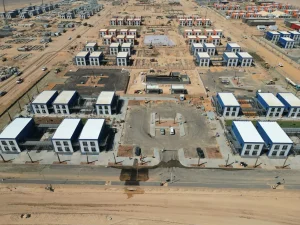
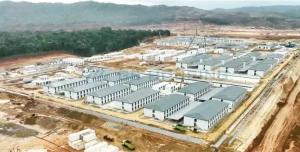
A useful example comes from GS Housing’s Huayou Cobalt mining workforce accommodation project in Indonesia.
The project ultimately supported living and working facilities for more than 12,000 personnel using over 3,000 modular accommodation units.
The challenge was not simply housing workers.
The challenge was deploying a large-scale camp fast enough to keep pace with project development.
The final solution included:
- 숙박 시설
- 사무실 시설
- 식당
- Prayer rooms
- 여가 공간
- Retail and support facilities
The camp was designed specifically for Indonesia’s tropical climate, with roofing systems and protective coatings adapted for high humidity and heavy rainfall.
More importantly, most construction work happened before shipment.
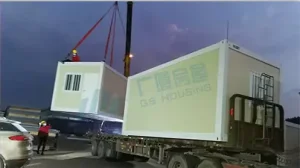
Modules were prefabricated in factories, transported to the project site, and assembled locally.
That reduced pressure on site resources and allowed accommodation capacity to expand alongside workforce growth.
A more detailed overview can be found in the Huayou Cobalt workforce accommodation development in Indonesia.
Why Modular Oilfield Housing Has Become Common Across Saudi Arabia, UAE, Qatar, Iraq, Kazakhstan and Africa
Although project conditions vary, the reasons buyers choose modular systems tend to be remarkably similar.
더 빠른 배포
Most modular accommodation units arrive with:
- Electrical systems installed
- Interior finishes completed
- Insulation integrated
- Plumbing prepared
For many projects, workforce accommodation becomes operational weeks earlier than conventional building methods.
Better Transportation Efficiency
Transportation often becomes one of the largest hidden costs in remote projects.
Benefits include:
- Easier loading
- Predictable logistics planning
- Reduced material waste
- Simpler relocation
더 쉬운 확장
Workforce numbers rarely remain stable.
An oil and gas camp initially designed for 800 workers may eventually support 1,500 or more.
Modular systems make it easier to:
- Add accommodation units
- Expand dining capacity
- Increase office space
- Adjust camp layouts
without disrupting existing operations.
What Buyers Often Miss When Comparing Oilfield Container House Suppliers
Most procurement discussions start with pricing.
That makes sense.
But experienced project teams usually evaluate several other factors before making a final decision.
예를 들어:
- Can the supplier coordinate international logistics?
- How quickly can replacement materials be delivered?
- Are HVAC systems designed for desert environments?
- Can the camp expand later without major redesign?
- Has the supplier delivered similar workforce accommodation projects before?
The lowest quotation on paper does not always translate into the lowest project cost.
In remote oilfield developments, those can be very different numbers.
마무리 말
The biggest challenge in oilfield accommodation is rarely the buildings themselves.
It’s everything around them.
Transportation.
Climate.
Workforce growth.
Remote logistics.
Long-term operations.
That’s why successful oilfield camp accommodation planning usually starts much earlier than many project teams expect.
By the time hundreds of workers arrive on site, major layout decisions have already been made.
Changing them later is expensive.
Sometimes impossible.
The camps that perform best over the long term are usually not the cheapest camps.
They are the camps designed around operational reality.
For project teams still estimating future workforce numbers, it can be useful to explore how remote workforce accommodation is typically configured for industrial projects before locking in camp capacity and facility requirements.
Every project faces different constraints, and there is rarely a universal solution. The experience accumulated through projects delivered by GS Housing can provide useful reference points when planning accommodation, logistics, and phased camp expansion strategies.
If preliminary workforce numbers, site conditions, or deployment schedules are already available, you can share your project details with our team .