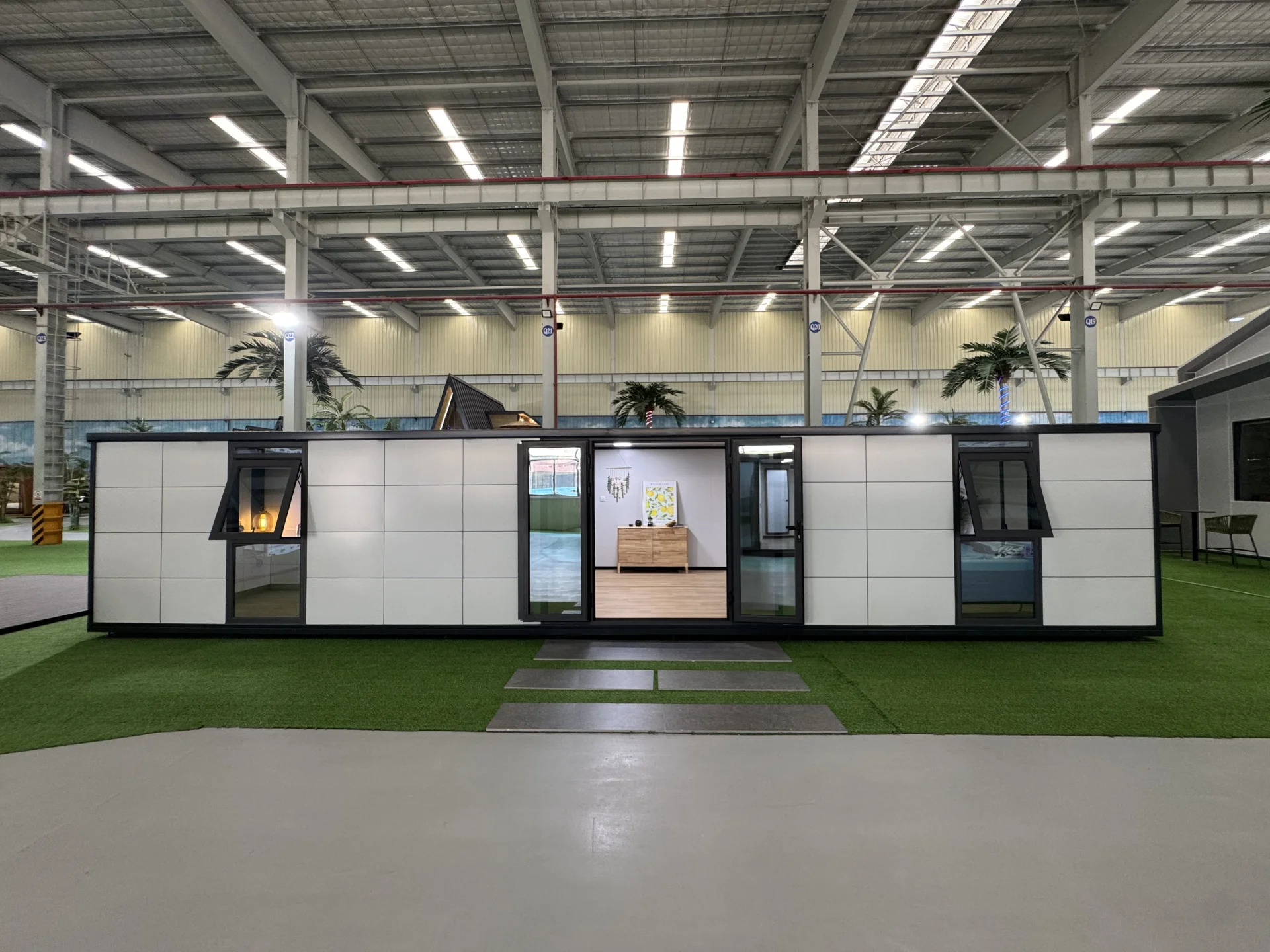
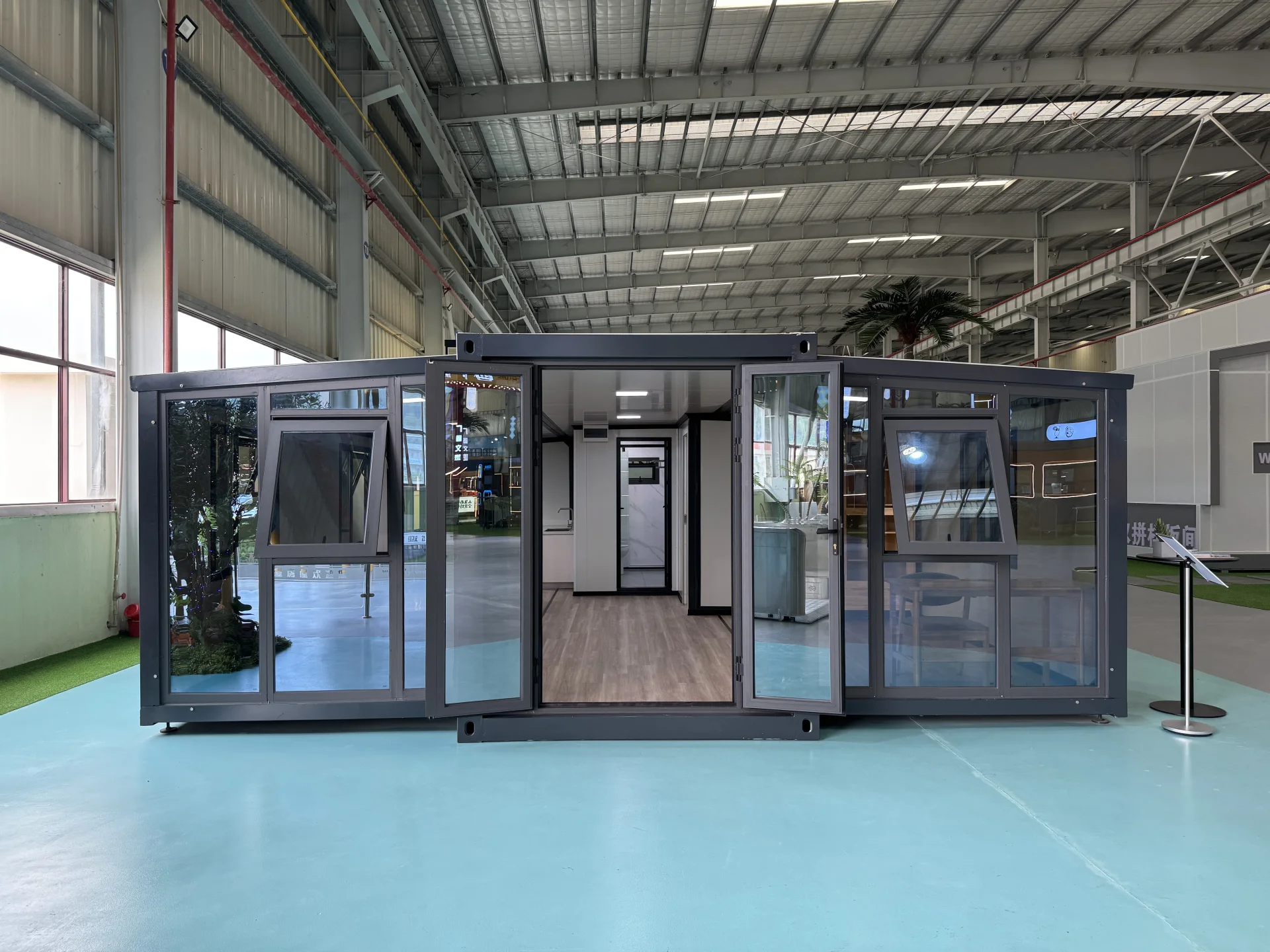
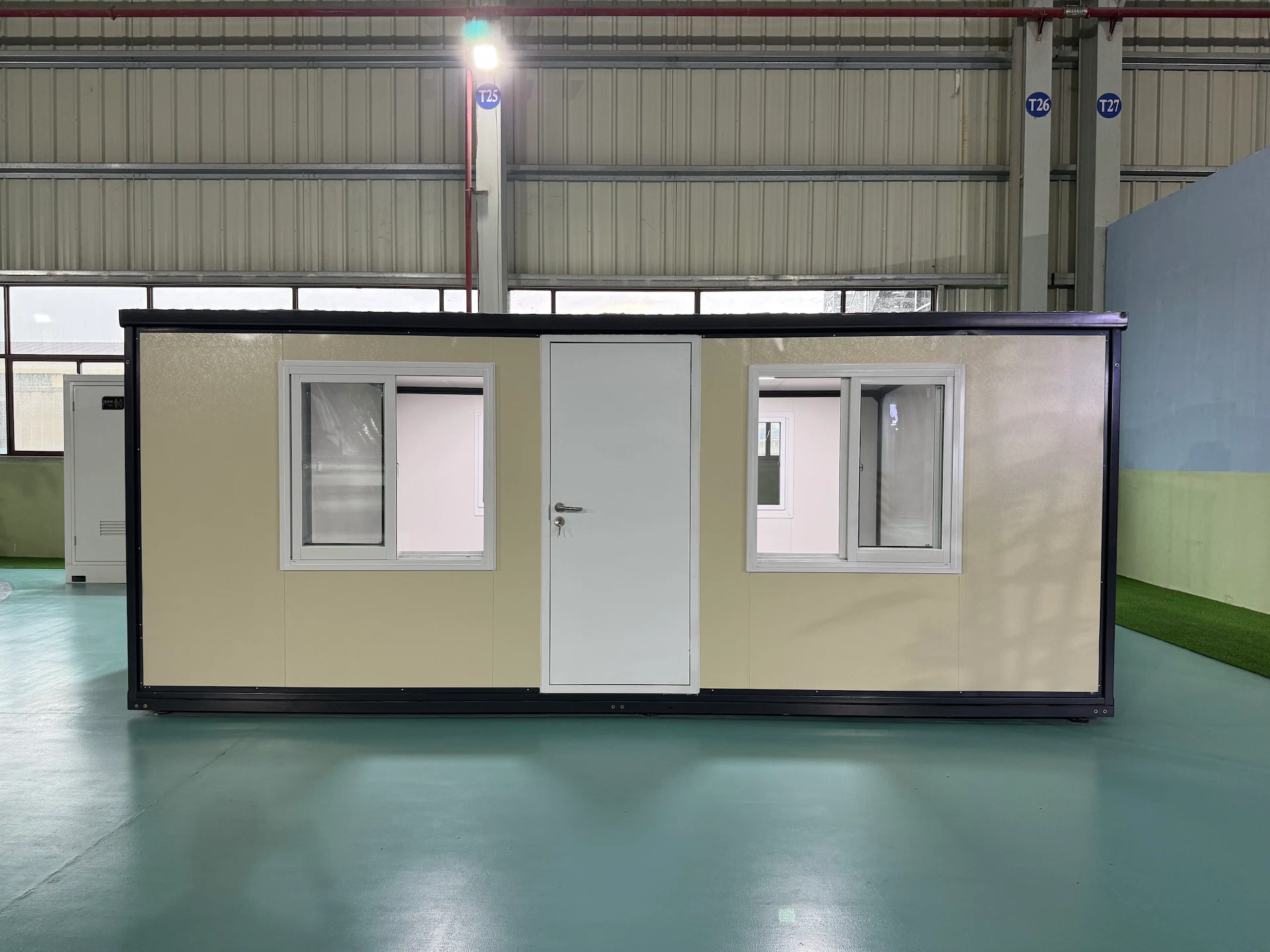
MAISON MODULAIRE EN KIT
Maison modulaire en kit de type A
A durable flat-pack container house designed for fast installation, efficient transportation, and flexible use across accommodation, office, and project applications.
Two-Story Design · Strong Steel Structure · Fast Installation · 20+ Years Lifespan
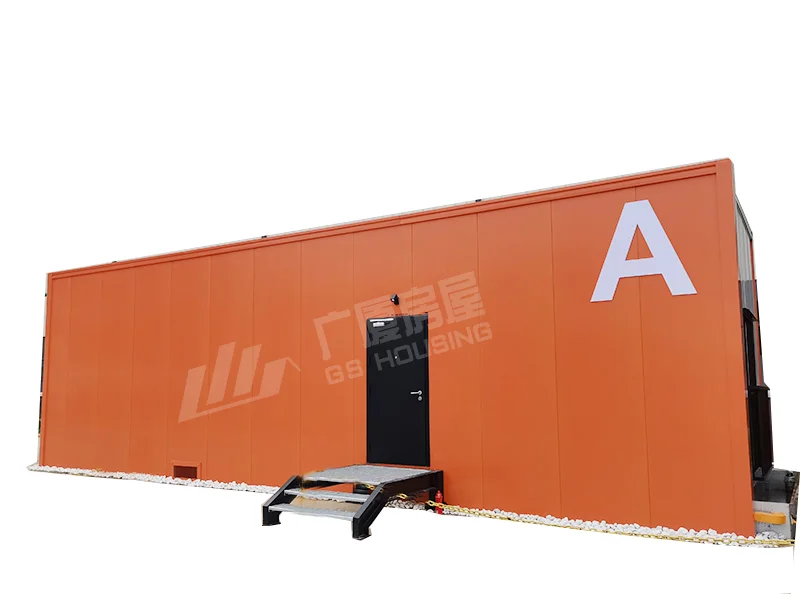


Maisons modulaires en kit —— Type A
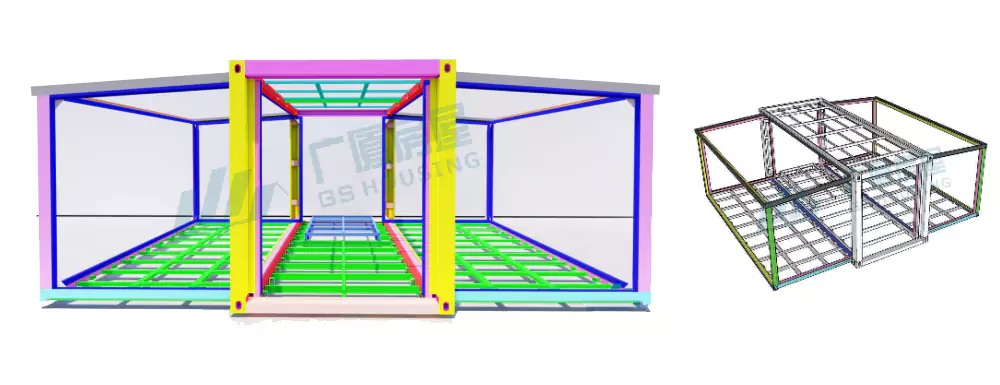
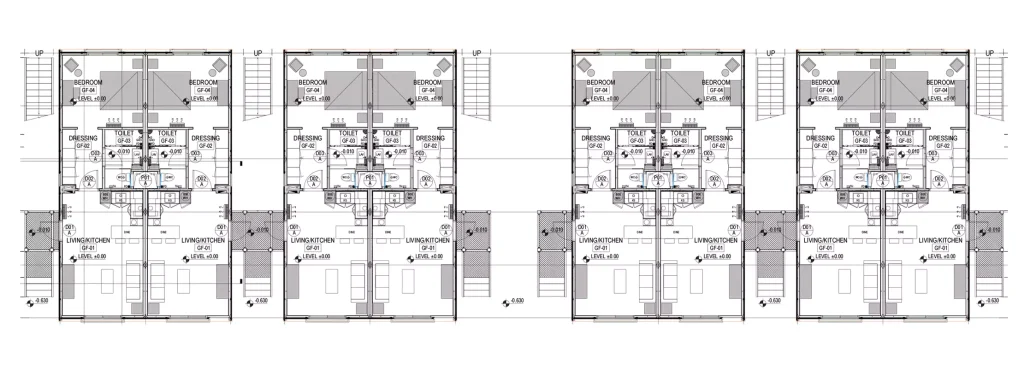
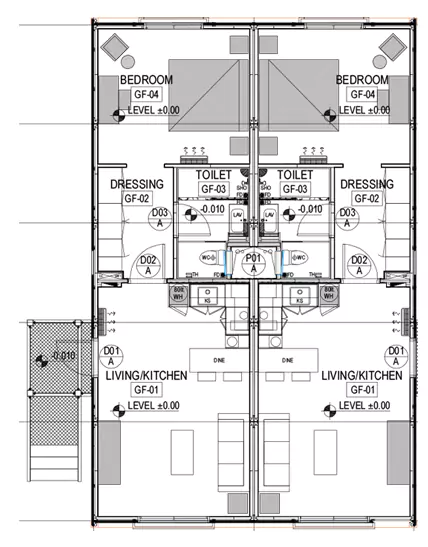
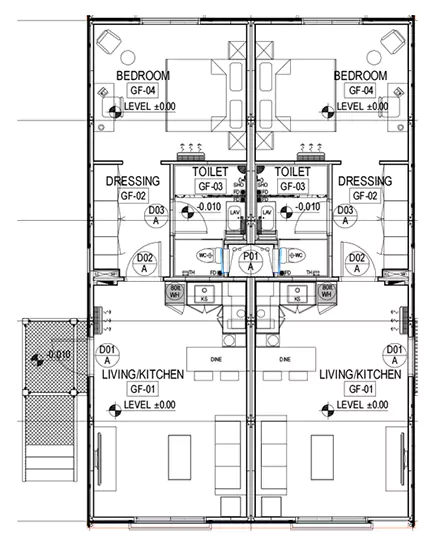
GS Housing presents Type-A flat pack container houses, a two-story modular home.
Built with high-strength galvanized steel (Q355B) and fireproof rock wool insulation, these prefab homes offer earthquake resistance (magnitude 8), wind resistance (level 12), and a 20+ year lifespan.
Adaptées à votre projet : faites votre choix parmi des agencements et des dimensions modulables, le tout avec la rapidité et l'efficacité d'une construction modulaire en acier de type « maison-conteneur ».
Certifications : ISO / CE / ASTM / SGS / SASO / GOST-R / UL / BUREAU VERITAS
Utilisation et avantages
With the ongoing development of the global housing market, container houses, with their multiple advantages, have gradually become a popular alternative housing solution in some developed countries.
1. Cost-Effective
● Low Cost: Compared to traditional housing, container housing offers significantly lower construction and maintenance costs.
● Recycling and Reuse: Utilizing second-hand containers further reduces construction costs while promoting environmental sustainability.
2. Quick Construction
● Prefabricated Structures: Containers are prefabricated, requiring only basic modifications and installation for use. They are particularly suitable for temporary or emergency housing needs.
● Efficient Production and Installation: The components of container housing are produced in factory assembly lines, ensuring a short construction period. GS Housing provides easy-to-install container solutions along with detailed installation instructions, drawings, and videos. For specific projects, engineers can be dispatched to the site for installation guidance.
3. High Flexibility
● Mobility: Container structures can be easily relocated, making them ideal for people who need frequent location changes.
● Modular Design: Containers can be freely combined or stacked based on specific needs, creating diverse and adaptable spaces.
4. Environmentally Sustainable
● Réduction des déchets de chantier: Compared to traditional construction methods, container housing reduces construction waste by approximately 70% and saves around 50% in energy consumption.
● Resource Reuse: Containers can be reused multiple times without damage, providing a fast and cost-effective solution.
5. Strong Adaptability
● Adaptable to Various Environments: Container housing is well-suited for urban, rural, or remote areas.
● Specialized Applications: Frequently used as temporary shelters in response to natural disasters or emergencies, such as earthquake relief housing.
6. Long Service Life
● Durable and Reliable Structure: Container housing offers earthquake resistance up to magnitude 8 and wind resistance up to level 12. With a service life exceeding 20 years, it also features earthquake resistance, compression resistance, insulation, soundproofing, fire resistance, water resistance, and wind resistance.
| NON. | NOM | CARACTÉRISTIQUES TECHNIQUES |
| 1 | Poutre principale du châssis supérieur | Matériau : Q355B, t = 3,0 mm, acier laminé à froid galvanisé, épaisseur de la couche de galvanisation : 275 g/m² |
| 2 | Poutre principale du châssis inférieur | Matériau : Q355B, t = 3,5 mm, acier laminé à froid galvanisé, épaisseur de la couche de galvanisation : 275 g/m² |
| 3 | Chronique | Matériau : Q355B, t = 4,0 mm, acier laminé à froid galvanisé, épaisseur de la couche de galvanisation : 275 g/m² |
| 4 | Poutre secondaire pour le cadre supérieur | Matériau : Q355B, t = 1,5 mm, acier laminé à froid galvanisé, épaisseur de la couche de galvanisation : 275 g/m² |
| 5 | Poutre secondaire pour le châssis inférieur | Matériau : Q355B, t = 2,0 mm, acier laminé à froid galvanisé, épaisseur de la couche de galvanisation : 275 g/m² |
| 6 | Matériau isolant pour les cadres supérieur et inférieur | Feutre de laine de roche d'une épaisseur de 100 mm, recouvert d'une feuille d'aluminium sur une face, masse volumique apparente ≥ 60 kg/m³, classe de réaction au feu A (incombustible) ; |
| 7 | Panneaux muraux extérieurs | Panneau sandwich en acier coloré de 50 mm d'épaisseur, composé d'une couche extérieure en acier coloré galvanisé ondulé de 0,5 mm, d'une couche intérieure en acier coloré aluminium-zinc de 0,5 mm et de laine de roche d'une densité de 100 kg/m³. |
| 8 | Panneau mural intérieur | Panneau sandwich en acier coloré de 70 mm d'épaisseur, composé d'une couche extérieure en acier coloré galvanisé ondulé de 0,5 mm, d'une couche intérieure en acier coloré aluminium-zinc de 0,5 mm et de laine de roche d'une densité de 80 kg/m³. |
| 9 | Plaque de plâtre | plaques de plâtre standard, plaques de plâtre résistantes à l'humidité, plaques de plâtre ignifuges |
| 10 | Toit en pente | Dalles en tôle colorée V-840 blanc-gris d'une épaisseur de 0,5 mm, système 2C KZ, avec un revêtement en zinc de 275 g/m² ; les corniches et les colonnes sont en tôle colorée de 0,8 mm d'épaisseur. |
| 11 | Porte | Noir, résistance au feu de 60 minutes, clé passe-partout |
| 12 | Fenêtre | Le vitrage est constitué d'un verre isolant feuilleté trempé transparent à faible émissivité, doté d'un revêtement 8lov-e+16A+6+0,76pvd+ et à faible transmittance. |



| Service après-vente | |
| 1 | Proposez-vous un service d'installation sur place ? Nous fournissons des schémas et des vidéos d'instructions de montage très détaillés pour chaque projet. Pour les projets de grande envergure, nous mettons à disposition sur place à la fois des installateurs et des chefs de chantier. Le tarif de cette prestation sur site doit être négocié avec les clients. |
| 2 | Quels sont vos délais de livraison ? En règle générale, le délai de livraison est de 7 à 10 jours à compter de la réception de l'acompte. Pour les commandes importantes, le délai de livraison doit faire l'objet d'une négociation. |
| 3 | Comment contrôler la qualité de votre produit ? 1. Qualité de la conception : anticipez les problèmes éventuels et proposez une solution de conception de grande qualité. 2. Qualité de la matière première : choisir une matière première conforme aux normes 3. Qualité de la production : techniques de fabrication précises, personnel expérimenté, contrôles qualité rigoureux. |
| 4 | Comment gérer les problèmes de qualité ? La garantie est valable 1 an. Pendant la période de garantie, GS Housing prendra en charge tous les problèmes de qualité liés à notre production. |
| 5 | Vos produits ont-ils une durée de vie bien définie ? Si oui, quelle est-elle ? Dans des conditions climatiques et environnementales normales, la durée de vie de la charpente métallique d'une maison conteneur est de 20 ans. |
| 6 | Quels modèles proposez-vous pour différents climats (comment vos produits s'adaptent-ils aux différents climats) ? Régions exposées à des vents violents : améliorer la résistance au vent de la structure interne. Régions froides : augmenter l'épaisseur des murs ou utiliser un matériau isolant de qualité, améliorer la résistance à la pression de la structure. Régions à forte corrosion : utiliser des matériaux résistants à la corrosion ou appliquer un revêtement anticorrosion. |
Laissez votre message
Pour plus d'informations, veuillez remplir le formulaire ; nous vous répondrons par e-mail dans les 24 heures.