Introduction
A camp designed for 300 workers.
A workforce that suddenly grows to 700.
An accommodation plan that looked perfect six months ago—but no longer fits the project today.
Situations like this are more common than many EPC contractors expect.
The challenge is not poor planning.
It’s that workforce forecasts are rarely fixed.
At tender stage, a project team may estimate one number.
After mobilization, subcontractors increase.
Additional work packages are awarded.
Construction accelerates.
And workforce requirements change.
The problem is that camp decisions are often made long before workforce numbers stabilize.
Build too much too early, and large sections of the camp may sit empty while capital remains tied up.
Build too little, and expansion becomes urgent precisely when the project is gaining momentum.
This uncertainty is one reason phased delivery has become standard practice across many Modular EPC projects.
The objective is not simply to build accommodation.
The objective is to keep camp capacity aligned with how real projects actually grow.
Why Modular EPC Projects Rarely Build the Entire Camp at Once
Many first-time buyers assume building the full camp immediately is the safest option.
It sounds logical.
If the project may eventually require 1,000 workers, why not build for 1,000 workers from the beginning?
Because real projects rarely grow in a straight line.
Workforce numbers increase gradually.
Schedules shift.
Contract packages change.
And construction priorities evolve.
Building for ultimate capacity on day one often creates problems that remain hidden during procurement.
Unused accommodation still requires maintenance.
Oversized facilities remain underutilized.
Infrastructure gets installed years before it is actually needed.
Most importantly, large amounts of capital become tied up in assets that may sit partially empty for months.
For many contractors, the question is no longer:
“Can we build the whole camp now?”
It’s:
“Do we actually need to?”
Phase 1 of a Modular EPC Camp: Only Build What You Need to Get Started
The first stage of a modular camp project is usually focused on operational readiness rather than workforce capacity.
The goal is simple:
Make the project functional as quickly as possible.
For most EPC developments, Phase One typically includes:
Site Office
Project management offices, engineering coordination spaces, HSE meeting rooms, and document control facilities.
Core Worker Accommodation
Enough worker accommodation to support the initial workforce and key project personnel.
Sanitation Facilities
Toilets, showers, water supply systems, and wastewater connections.
Dining Facilities
A kitchen and dining area capable of supporting daily operations.
What Gets Added in Phase 2
As workforce numbers grow, the second phase of deployment typically adds:
- Additional worker dormitories
- Warehousing and material storage facilities
- On-site medical clinic
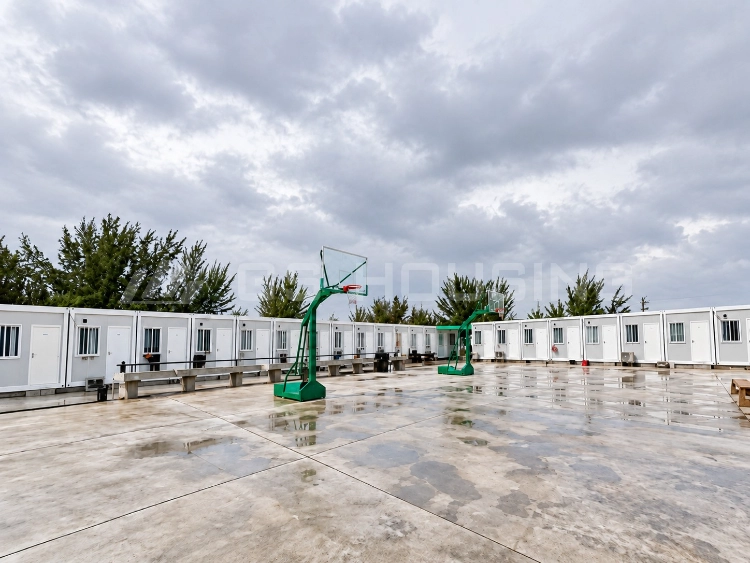
- Recreation and common areas
- Expanded dining and sanitation capacity
Without these core Phase 1 facilities, construction activities become difficult regardless of how much accommodation is available.
This is why many contractors choose flat pack container houses for phased workforce accommodation projects, allowing critical facilities to become operational quickly while preserving flexibility for future expansion.
How to Plan for Modular Camp Expansion Before You Need More Space
One of the biggest misconceptions about temporary camp expansion is that it begins when the second batch of buildings arrives.
In reality, successful expansion starts during the first layout design.
Experienced planners reserve:
- Future accommodation zones
- Expansion roads
- Utility corridors
- Additional power capacity
- Future dining hall extensions
- Water and wastewater reserves
Interestingly, expansion challenges are rarely caused by a lack of land.
More often, they stem from infrastructure limitations.
A camp may have space for additional dormitories but lack sufficient power, drainage, or dining capacity to support more workers.
That’s why the best modular camp expansion strategies focus on infrastructure planning just as much as accommodation planning.
The Indonesia Project That Demonstrated Scalable Modular Camp Expansion
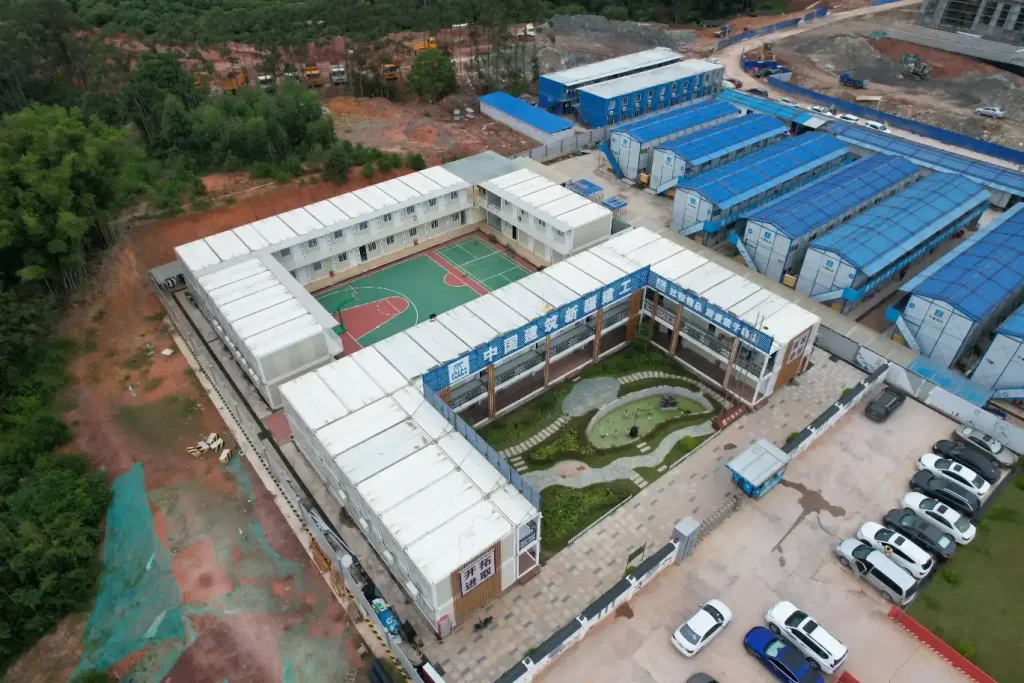
A useful example comes from GS Housing’s 5,000-person workforce accommodation project using 1,081 modular units.
The scale was impressive.
The delivery strategy was even more important.
Supporting more than 5,000 personnel requires far more than simply manufacturing buildings.
The real challenge is determining which facilities need to arrive first—and which can arrive later without affecting project operations.
Site offices, sanitation facilities, and core accommodation often become immediate priorities.
Additional dormitories, support buildings, and public facilities can be expanded as workforce demand increases.
This is where phased deployment creates real value.
Rather than treating the camp as a one-time delivery, production, shipping, and installation can be coordinated around actual project progress.
The development ultimately included:
- Worker accommodation
- Office facilities
- Dining halls
- Public service buildings
- Sanitation infrastructure
As workforce demand increased, camp capacity expanded alongside it.
The result was a more flexible deployment strategy that reduced unnecessary early investment while maintaining operational continuity throughout construction.
The project remains a strong example of how large-scale accommodation developments benefit from phased planning rather than fixed assumptions made months earlier.
Why Modular Camp Expansion Starts in the Factory, Not on Site
Many buyers assume camp expansion begins when additional buildings arrive at the project site.
Actually, it starts much earlier.
It starts in the factory.
Phased production allows manufacturers to prioritize critical facilities first while preparing future building batches according to project schedules.
This approach offers several advantages:
- Reduced storage requirements
- More flexible delivery schedules
- Better production planning
- Improved cash-flow management
- Lower site congestion
For large EPC developments, manufacturing flexibility often becomes just as valuable as construction flexibility.
How Phased Delivery Reduces Financial Pressure and Site Risk
One overlooked advantage of phased deployment is financial control.
Instead of investing in maximum camp capacity immediately, contractors can align expenditures with project progress.
This helps reduce:
- Initial capital requirements
- Idle infrastructure
- Storage pressure
- Site congestion
- Procurement risk
Transportation efficiency also improves significantly.
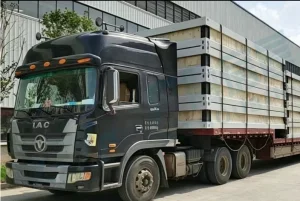
Using modular flat-pack systems, a single 40-foot shipping container can transport approximately 200 square meters of housing components, reducing logistics costs by as much as 30% compared with less efficient transportation methods.
For remote mining, infrastructure, and industrial developments, transportation savings can become substantial.
The further a project moves from major logistics hubs, the more important transportation efficiency becomes.
Will the Second Phase Match the First? What Buyers Often Worry About
This is one of the most common questions raised during procurement.
The answer is usually yes.
Provided the project uses standardized modular systems from the beginning.
With proper planning, future buildings can match existing facilities in terms of:
- Appearance
- Structural systems
- Utility connections
- Interior finishes
- Functional layouts
This consistency is one reason many contractors choose prefabricated camp systems designed for modular EPC expansion instead of combining products from multiple suppliers.
The result is a camp that grows naturally rather than appearing as a collection of unrelated buildings added over time.
FAQ: Phased Modular Camp Delivery
Can a modular camp be expanded after the first phase?
Yes. Most modular camp systems are specifically designed to support future accommodation and facility expansion.
Will additional buildings match the original camp?
If standardized systems are used from the beginning, future buildings can typically match the original design, appearance, and specifications.
Does phased delivery affect overall camp layout?
Not when expansion areas and utility corridors are reserved during the initial planning stage.
Can buildings be shipped according to project progress?
Yes. Many Modular EPC projects coordinate production, container loading, shipping schedules, and installation according to workforce mobilization requirements
Final Thoughts
The biggest advantage of phased camp delivery is not speed.
And it isn’t flexibility alone.
It’s visibility.
Project teams gain more time to understand workforce growth, budget allocation, subcontractor mobilization, and operational requirements before committing to the next stage of development.
That is one reason phased deployment continues to gain traction across mining, infrastructure, energy, and industrial projects worldwide.
The camps that perform best over time are rarely the camps that are built all at once.
They’re usually the camps designed to grow.
A workforce forecast made during tendering may look very different six months later.
Project priorities shift.
Schedules change.
Additional contractors arrive.
Accommodation requirements evolve.
The ability to adapt to those changes often creates more long-term value than simply building for maximum capacity from day one.
Drawing on GS Housing’s global modular camp experience , many large-scale workforce accommodation developments have adopted phased deployment strategies to balance logistics, cash flow, and future expansion requirements throughout the construction cycle.
For project teams currently evaluating camp layouts, workforce forecasts, or future expansion requirements, it may be useful to discuss your project requirements with the GS Housing team before finalizing the first phase of deployment. Early planning decisions often have the biggest impact on future flexibility.
If there is one lesson shared across many successful Modular EPC projects, it is this:
The best camp plan is rarely the biggest one.
It’s the one that can still work when the project changes.