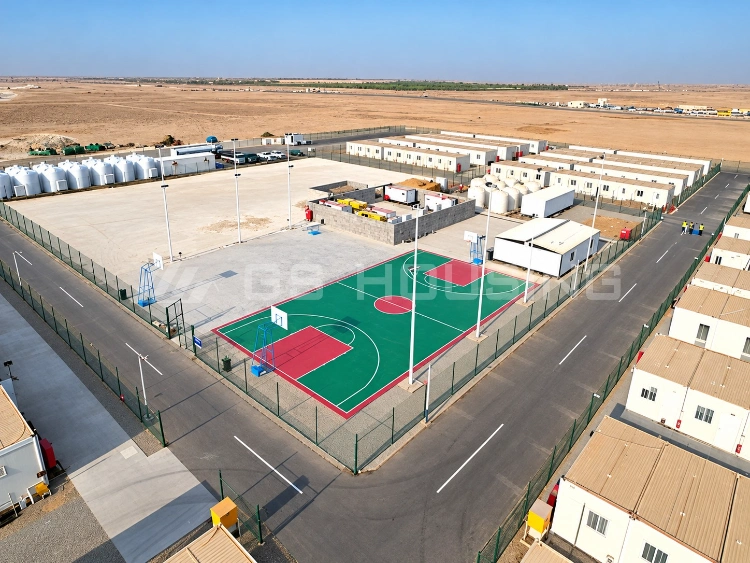
An expandable container house is often chosen when a project needs usable space fast, with less site work and easier relocation later. Prefab houses, on the other hand, are often used to build camps, offices, dormitories, and service facilities in an organized modular system. The right choice depends on project timing, site conditions, transportation requirements, and how the building will be used.
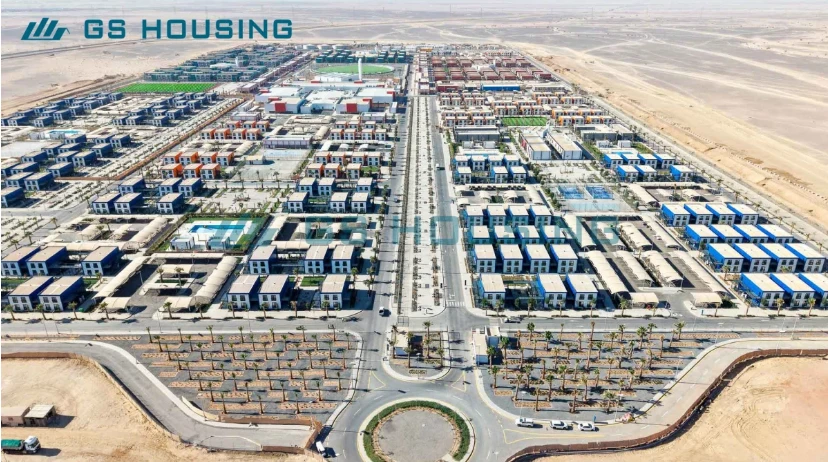
For B2B buyers, you need to think about transport, installation, room layout, local site conditions, and how the building will be used after handover. GS Housing is a modular building supplier that provides end-to-end support, including project-specific layout planning, delivery coordination, and professional installation guidance. Having successfully delivered over 2,000 projects—including large-scale camps like the 4,480-unit NEOM project in Saudi Arabia—the team possess the technical expertise to optimize your camp, office, or remote-site planning
Key Differences Between Expandable Container Houses and Prefab Houses
Before choosing one option, it helps to look at how each type works in real project use. They may both serve as modular buildings, but the project logic is different.
Compact Transport and Fast Expansion
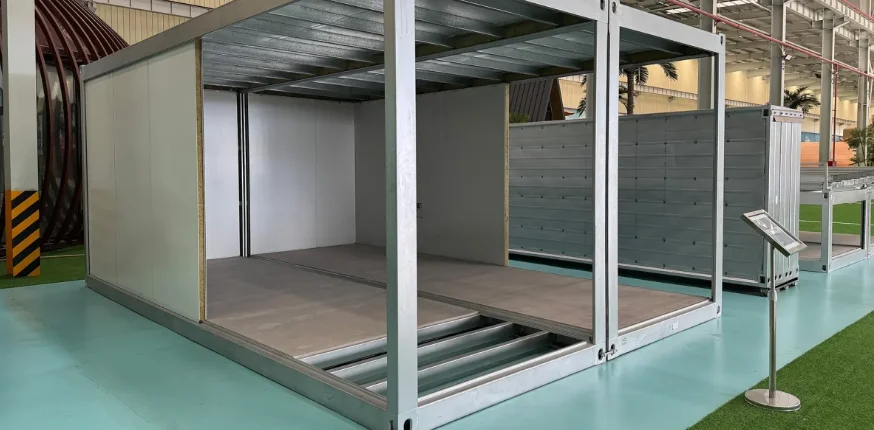
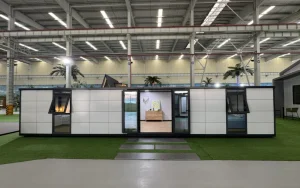
Expandable units are designed to stay compact during transport and open up into larger usable space on site. This makes them useful when the project needs quick rooms for accommodation, office work, or emergency use. The main appeal is: the unit is transported compactly and then expanded on-site to provide usable space into functional indoor space.
For short-term projects or sites that may change later, this can be helpful. You can get rooms ready faster without building every part from separate components.
Modular Assembly and Flexible Combination
Prefab houses are more suitable when the project needs a complete building system. For example, a camp may need offices, dormitories, bathrooms, shower units, and kitchens. These spaces should not be placed randomly.
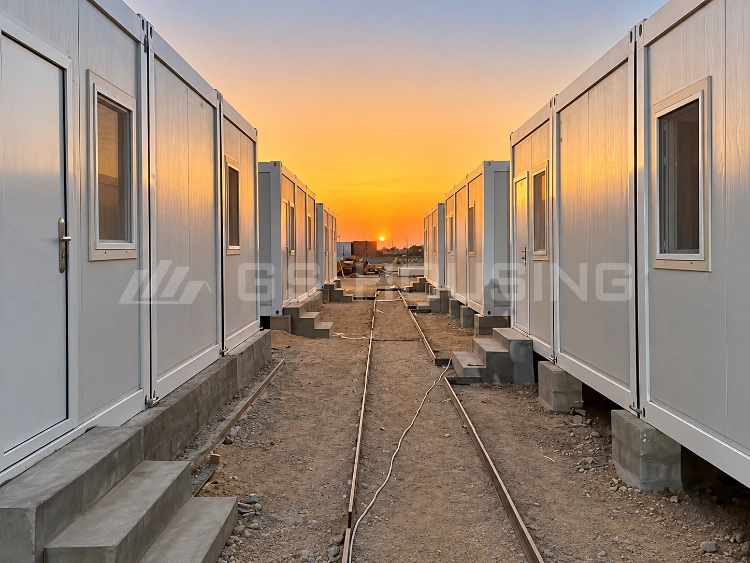
Prefab units can be combined by function. You can make single rooms, long rows, wider public areas, or separate service zones. This is why prefab houses are often used in larger camp projects where order and repeatable layout matter.
Different Priorities for Different Sites
If your site needs speed and simple setup, expandable units may be easier to start with. If your site needs many linked functions and a clear zoning plan, prefab houses may fit better.
| Feature | Expandable Container House | Prefab (Flat-Pack) House |
| Primary Advantage | Rapid expansion, instant usability | Systematic modularity, flexible zoning |
| Installation | Low (Fast on-site unfolding) | Medium (Modular assembly required) |
| Typical Project Scale | Small, urgent, mobile work points | Large-scale camps, offices, dorms |
| Space Flexibility | Limited (Fixed structural footprint) | High (Configurable horizontal/vertical) |
| Durability | Moderate (Best for short-term use) | High (Suitable for long-term sites) |
Which Option Works Better for Fast Deployment?
Fast deployment is not just about how quickly one unit can be installed. It also includes transport preparation, site work, connection work, and how soon people can actually use the space.
Expandable Container House Units for Urgent Accommodation and Office Space
An expandable container house can be useful when the project needs urgent rooms for workers, staff, or temporary office teams. The unit can create living or working space quickly, so the project team can start operations sooner.
This is a good fit for early-stage project sites, emergency shelter areas, temporary command spaces, and mobile work points. When the project is urgent, fewer on-site steps can save time and reduce installation complexity.
Prefab Houses for Organized Camp Systems
Prefab houses work better when the project needs more than a few rooms. A camp system usually has many areas that must connect properly. Dormitories need access routes. Offices need quiet zones. Dining spaces need to stay separate from sleeping areas. Washrooms need maintenance access.
For this type of project, prefab houses can support a more complete plan. They allow the project team to organize different areas with the same modular building logic.
Reduced Site Work for Tight Schedules
Both options reduce the burden of on-site construction compared with traditional methods. But they reduce work in different ways. Expandable units reduce setup steps for individual rooms. Prefab houses reduce repeated site decisions by using standardized components across the project.
If your schedule is tight, the key is not only choosing a product. You also need a clear layout before delivery. That avoids changes after the units arrive.

How Do They Compare in Space Planning and Functional Use?
Space planning is where the difference becomes more obvious. A unit may look fine by itself, but the real test comes after people start using it every day.
Expandable Interiors for Living and Working
The expandable container house works well when the interior needs to serve simple living or working functions. It can be used for sleeping rooms, small offices, temporary rest areas, and on-site service rooms.
Its advantage is speed and usable space. For project managers, this can be useful when the first goal is to provide enclosed space quickly.
Flat-Pack Container Houses for Larger Camp Systems
Flat-Pack Container Houses are more suitable for projects with many linked functions. You can plan different areas by use, such as dormitories, sanitation blocks, dining areas, clinics, offices, and storage rooms.
For larger camp layouts, this helps keep the whole site easier to manage. The same modular system can support different functions without making the camp feel messy.
Custom Layouts for Offices, Dormitories, and Facilities
A B2B project rarely uses one room type only. You may need manager offices, worker dormitories, meeting rooms, security rooms, kitchens, toilets, showers, and equipment storage.
A good modular plan should match the way people actually use the site. That means doors, corridors, public zones, service areas, and maintenance points should all be considered before production and delivery.
Which House Type Fits Different Project Scenarios?
The right choice depends on the project type. Some sites need fast rooms first. Some need a full camp plan from the beginning.
Temporary Housing and Disaster Relief
For urgent temporary housing and disaster relief, speed matters. Expandable units can help create usable space quickly. They are suitable when the first need is shelter, basic office space, or temporary service rooms. Later, other modular units can be added if the site needs.
Construction Camps and Worker Accommodation
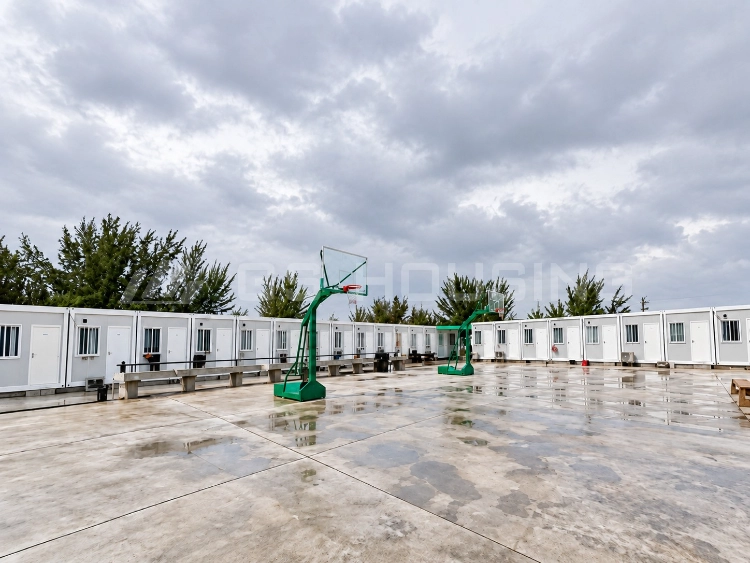
Construction camps usually need a more structured layout. Workers need dormitories, toilets, showers, dining areas, laundry rooms, offices, and rest areas. These functions should be arranged in a way that is easy to operate and maintain.
In this case, prefab houses often make more sense, especially when the camp will serve many people for months or longer.
Tourism Sites and Remote Project Offices
Tourism sites and remote project offices need both function and site flexibility. Expandable units can be used for quick office or accommodation needs. Prefab houses can support larger public areas, staff rooms, reception spaces, and service buildings.
The final choice depends on whether the project values fast setup, larger combined space, or a more fixed site plan.
Why Choose GS Housing for Expandable and Prefab House Projects?
Choosing between these two options is easier when the supplier can help review the project use, not only sell standard units.
Expandable Container Houses for Quick Space Needs
Expandable container houses are suitable when you need fast living or working space with simple site setup. They can support emergency accommodation, temporary offices, remote project rooms, and quick-use service areas. It can help your project move faster.
Prefab Houses for Large-Scale Modular Camp Systems
Prefab houses are suitable for bigger camp systems. They can support dormitories, offices, kitchens, dining rooms, washrooms, clinics, storage, and community spaces.
The project team can use repeatable modular units while still planning each area by function. That makes the camp easier to manage after people move in.
Contact GS Housing for Modular Building Solutions for Camps, Offices, and Remote Projects
Expandable Container House is better for quick space needs, simple setup, and flexible relocation, while Prefab Houses are stronger for larger camp systems that need dormitories, offices, washrooms, kitchens, storage, and other linked functional areas. So the better choice depends on your project size, site condition, and how the space will be used every day.
Request a Customized Proposal for Your Modular Camp or Remote Project!
FAQ
Q: When should I choose an expandable container house instead of prefab houses?
A: Choose it when the project needs fast usable space, simple setup, and flexible use for accommodation, office, or emergency rooms.
Q: Are prefab houses better for large camp projects?
A: Yes, prefab houses are usually better when the project includes many linked areas, such as dormitories, offices, kitchens, washrooms, storage, and staff facilities.
Q: Can one project use both an expandable container house and prefab houses?
A: Yes. Some projects use expandable units for urgent rooms first, then add prefab houses for larger camp systems and long-term functional areas.