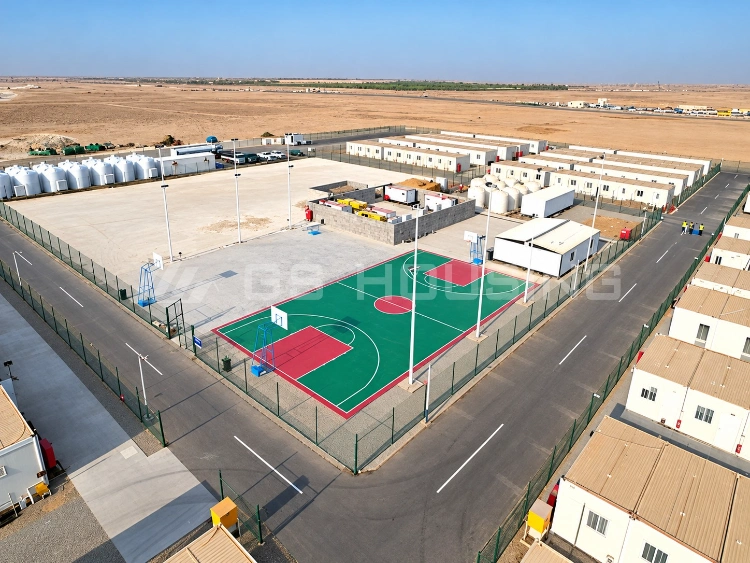
Mining projects often need to accommodate large workforces while keeping management, administration and daily site operations close to the work area. When hundreds or thousands of people are involved, the challenge is not simply providing dormitory rooms. The project also needs offices, dining areas, services and supporting facilities to function as one organized camp.
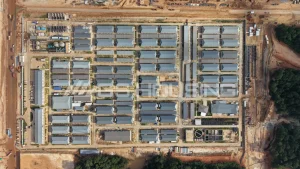
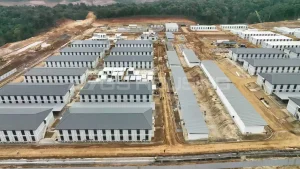
For the 2025 IPIP project in Indonesia, GS Housing supplied 1,158 modular units to support workforce accommodation and project operations. Rather than treating the units as separate buildings, the project used them as components of a large-scale modular mining camp, combining living, working and supporting functions across the site.
This case shows how mining camp accommodation can be developed at scale with prefabricated modular buildings, while allowing different building functions to be arranged according to the requirements of a large mining-related project.
Project Overview
| Project Year | 2025 |
| Location | Indonesia |
| Project | IPIP Mining Project |
| Product | Modular / Flat Pack Container House |
| Quantity | 1,158 units |
| Application | Workforce accommodation and site operations |
| Main Users | Construction workers and project staff |
| Building Type | Large-scale modular mining camp |
| Main Functions | Accommodation, offices, dining and supporting facilities |
| Construction Method | Factory prefabrication + on-site assembly |
| Camp Status | Completed and in operation |
From Workforce Needs to a Large-Scale Modular Camp Solution
The scale of the IPIP project meant that mine site accommodation could not be planned as a small group of temporary dormitories. A large workforce needed mine site accommodation close to the project area, while project teams required on-site spaces for administration, meetings and daily coordination.
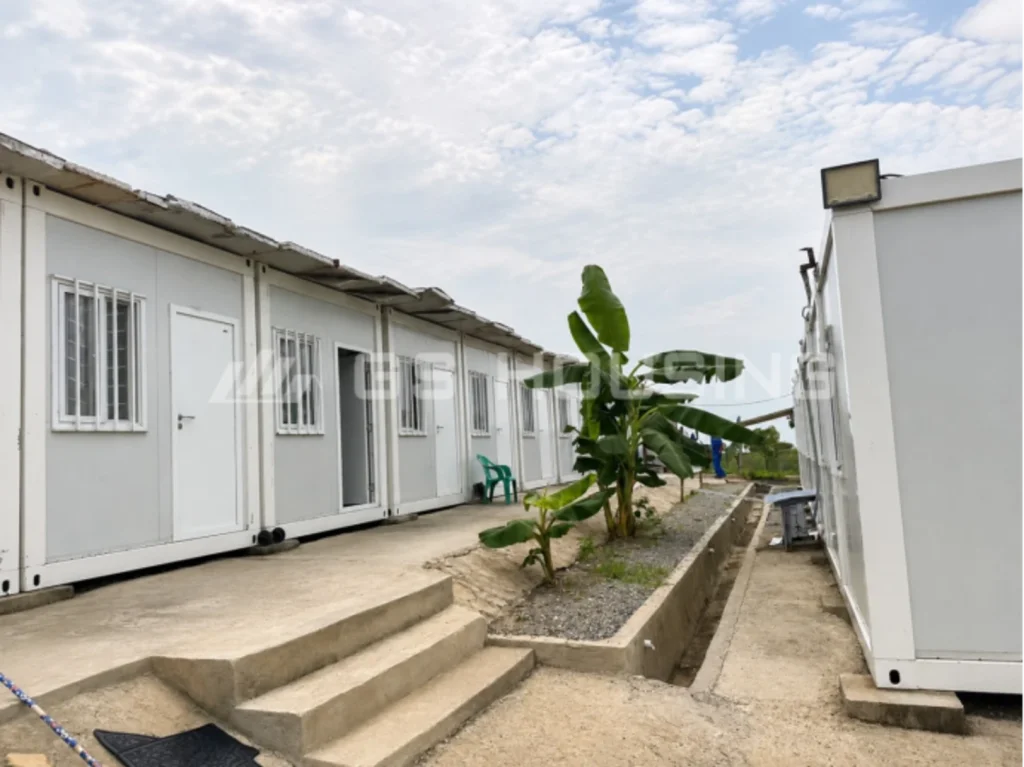
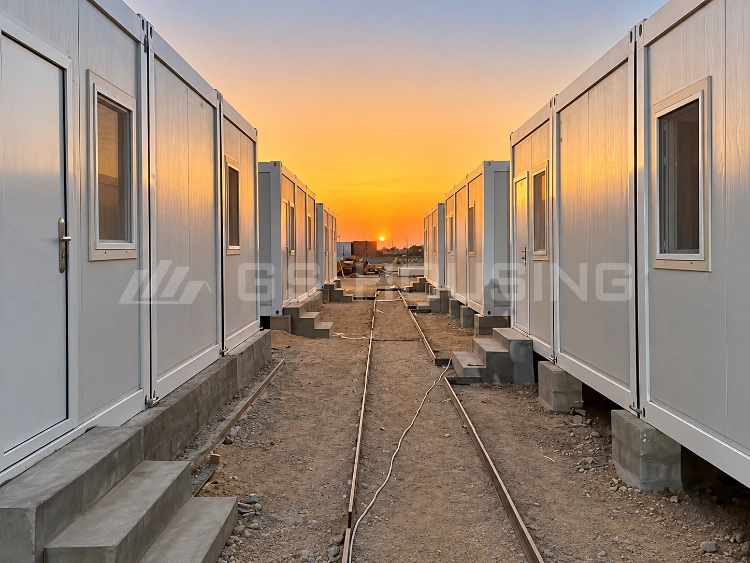
The solution was to use 1,158 modular units as the basic building system for the camp. Instead of constructing one large permanent building, the project was divided into multiple modular buildings and functional areas. Accommodation blocks served workers and project staff, while office and service buildings supported the operational side of the site.
This approach created a complete mining workforce accommodation environment rather than simply supplying individual housing units. Standardized units could be repeated across different parts of the camp, making it possible to establish multiple accommodation and support areas while maintaining a consistent building system.
1,158 Units: Factory Prefabrication and On-Site Assembly
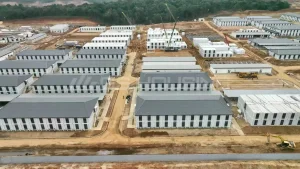
The defining feature of this project is its scale. With 1,158 units, the modular system was used to form a substantial site facility rather than a small temporary accommodation area.
The units were manufactured as prefabricated components before transportation to the project site. After delivery, they were assembled and arranged into different building groups according to their intended functions. The basic sequence followed a typical modular construction process: factory production → batch transportation → on-site assembly and connection → functional layout across the camp.
This is one of the practical advantages of a flat pack container house system for large projects. The basic module remains standardized, while the number and arrangement of units can change according to the required accommodation capacity, site layout and building functions.
For a large modular mining camp, this creates a balance between repetition and flexibility. Standardized modules make large-scale deployment more manageable, while different combinations can be used for accommodation, offices and other site facilities.
The project therefore demonstrates a different way of looking at modular construction: the individual unit is not the final product by itself. It becomes one building block within a much larger camp system.
Combining Accommodation, Offices and Supporting Facilities
A mining camp needs to support both the people who live there and the teams who manage the project.
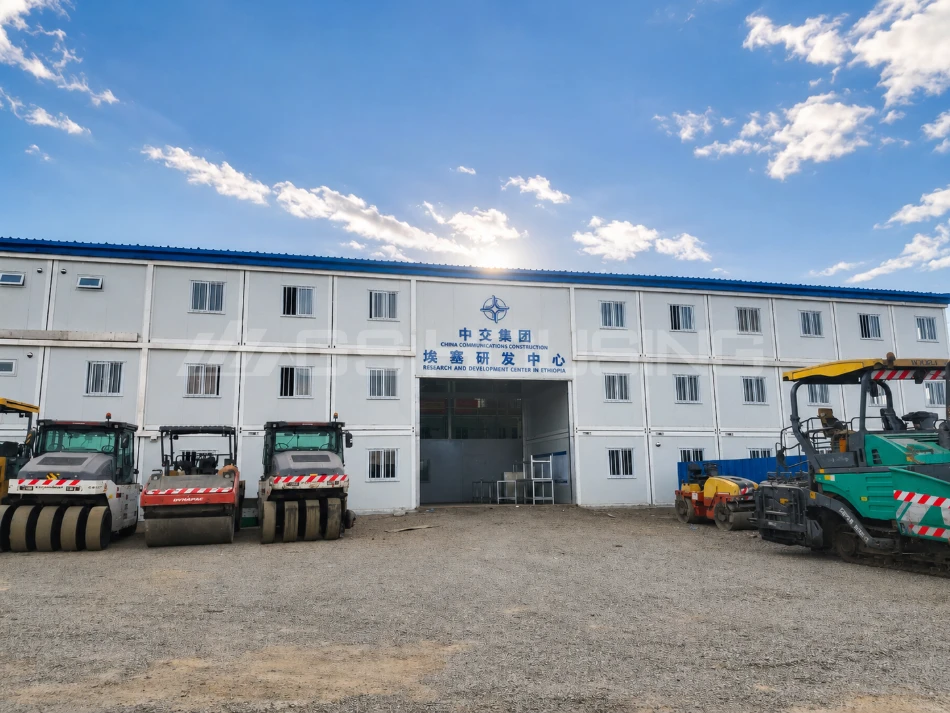
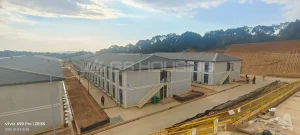
The IPIP camp combined workforce accommodation with office and operational facilities. Staff dormitories provided living space, while modular site office and meeting areas supported project management, coordination and administration.
This combination is particularly relevant to mining and industrial projects where the workforce and management teams need to remain close to the construction or production area. Instead of separating accommodation from site operations, the modular camp brought these functions into one planned environment.
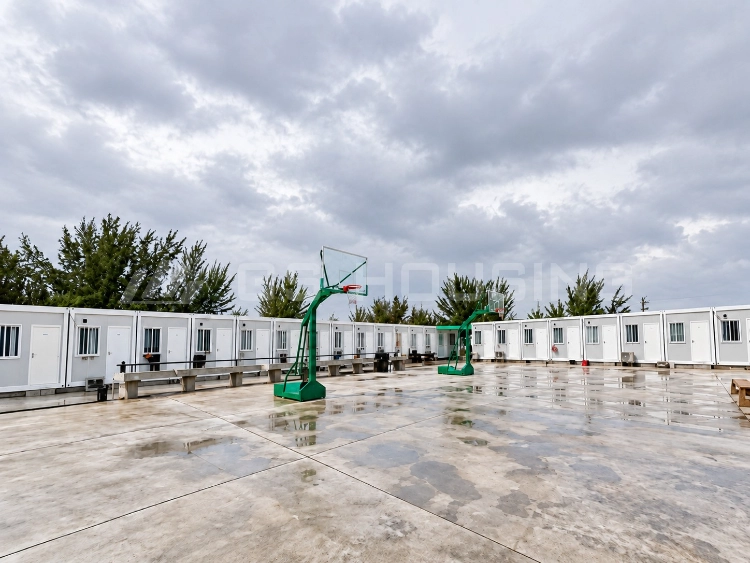
The camp also included dining and daily-service functions such as canteen and supermarket facilities, as well as medical, leisure and logistics support. These functions were arranged around the main accommodation and operational areas rather than being treated as unrelated buildings.
The result was a site environment where workers could live, eat, work, rest and access basic services within the same overall camp.
Why Modular Construction Works for Large Mining Camps
One reason modular construction is suitable for projects of this type is that a significant part of the building production can take place before the units reach the site.
The main components of prefabricated worker accommodation can be prepared in a controlled factory environment and then transported to the project location. On site, the modules are assembled and connected according to the planned layout. For a project involving 1,158 modular units, this approach can help establish a repeatable construction process. Instead of building every accommodation block from raw materials at the destination, standardized components can be produced in batches and deployed across the camp.
This does not eliminate site preparation, foundations, utility connections or other construction work. Those elements still need to be planned according to local conditions and project requirements. However, the modular approach can shift a substantial part of the building production away from the remote project site, which is particularly relevant for large industrial and mining developments.
This approach can also be considered for other large industrial projects requiring mining camp buildings, workforce housing or temporary site facilities.
Project Outcome
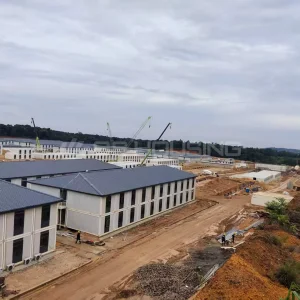
The 2025 IPIP project in Indonesia used 1,158 modular units to support workforce accommodation and site operations during the project construction stage.
The units formed part of a large-scale camp combining accommodation, modular site offices, dining areas, medical facilities, leisure areas and supporting infrastructure. Instead of functioning as isolated temporary buildings, the modules were organized into a coordinated site facility for workers and project staff.
The completed camp provides a coordinated environment for workers and project staff to live, work and access essential daily services close to the project site.
The project provides a practical example of how flat pack container houses and other prefabricated modular solutions can be deployed at large scale for mining-related accommodation.
For projects where a large workforce needs to live and work close to a remote industrial site, the case demonstrates how modular construction can provide a repeatable building system while allowing different functions to be combined within one mining camp accommodation facility.
FAQ
What is mining camp accommodation?
Mining camp accommodation refers to temporary or semi-permanent facilities designed to house workers and project staff close to a mining or industrial site. A complete camp may also include offices, dining, medical, leisure and logistics facilities.
How many units were used in the Indonesia mining project?
The 2025 IPIP project used 1,158 modular units as part of its workforce accommodation and site support system.
What were the 1,158 units used for?
The modular units supported different functions within the camp, including workforce accommodation, offices and other site facilities. The wider camp also included dining, medical, leisure and infrastructure support.
Why use a modular mining camp for a large workforce?
A modular mining camp can use standardized units to create multiple buildings and functional areas across a large site. This can make the system suitable for projects where workforce accommodation needs to be deployed at significant scale.
Can flat pack container houses be used for mining accommodation?
Yes. A flat pack container house can be used as a modular building component for worker accommodation and other temporary site facilities, subject to structural design, local regulations, site conditions and the intended application.
What is the difference between workforce accommodation and a mining camp?
Workforce accommodation normally refers to the living facilities provided for workers. A complete mining camp is broader and may combine accommodation with offices, dining, medical, leisure, logistics and infrastructure facilities.
Looking for Mining Camp Accommodation?
The 1,158-unit IPIP project demonstrates how modular buildings can be organized into a large-scale accommodation and site operations system for a mining-related project.
For workforce accommodation, mine site accommodation, project offices or a complete modular mining camp, GS Housing can develop configurations based on the required quantity, site conditions, building functions and project requirements.
If you are planning a mining or industrial project, share your location, workforce size and required facilities with our team. We can discuss a suitable modular camp configuration for your site.
Contact GS Housing to discuss your mining camp accommodation requirements and available modular building solutions.