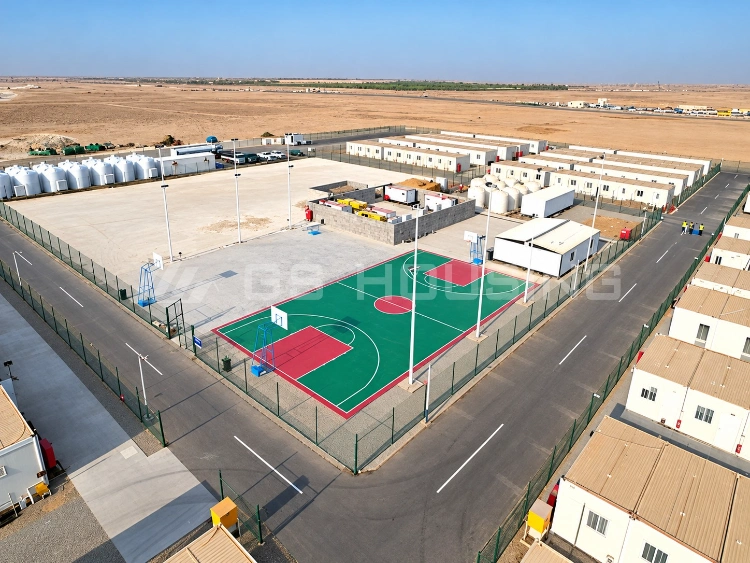
Many European distributors start their portable cabin business by comparing quotations from 10+ suppliers and picking the lowest one.
Many discover supplier limitations after the first order is delivered.
Walls arrive thinner than the sample.
Hardware is missing half a box.
Emails go unanswered when something breaks.
For companies building long-term distribution businesses, the right portable cabin supplier Europe partner matters more than a small difference in the initial quotation.
This checklist breaks down what to verify, what to skip, and how to pick a manufacturing partner that grows with your business.
Why the Wrong Portable Cabin Supplier Costs You More Than You Think
A bad supplier does not just cost you money on one order.
It erodes your reputation with customers.
It creates unexpected after-sales work that eats into your margin.
It delays projects and makes you miss seasonal sales windows.
Many distributors focus only on the unit price when comparing quotations. They forget to calculate the cost of rework, missing parts, delayed delivery and poor after-sales support.
In most cases, the cheapest quotation ends up being the most expensive option over 12 months.
The real cost of cooperation includes quality consistency, delivery reliability, installation efficiency and long-term spare parts availability — not just the number on the first invoice.
Factory vs Trading Company vs Integrator: Which Fits Your Business?
Not every “supplier” owns a factory. Understanding the difference saves you from mismatched expectations.
Working with a direct manufacturer
Direct factories control the full production process, from material purchasing to final inspection.
For distributors, a manufacturer with its own production facilities can also provide better control over repeat orders, product consistency and long-term product development.
They usually offer better pricing for volume orders, more consistent quality, faster technical communication and easier customisation changes.
The downside is higher minimum order quantities, and often a narrower product range focused on their core production lines.
This option works best for distributors with steady order volume and a clear product focus.
Working with a trading company
Trading companies aggregate products from multiple factories. They offer lower MOQs, wider product ranges and more flexible order combinations.
The downside is higher unit prices, less visibility into actual quality control, and slower problem resolution — because they have to go back to the factory for every issue.
This option works best for new distributors testing the market, or companies that need many different product types in small quantities.
Working with a project integrator
Integrators handle full project delivery, from design to installation. They offer turnkey service for large construction or camp projects.
The downside is the highest cost and longest lead times. Most distributors purchasing inventory products do not need this level of service.
If you also work with residential modular products, our previous guide to wholesale prefabricated homes for European dealers covers product selection and market positioning for that segment.
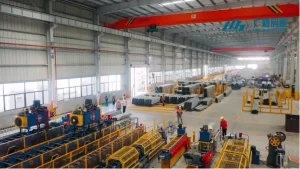
First Check: Verify Real Production Capacity and Delivery Capability
Suppliers all say they have “large production capacity”. Few can prove it.
Do not trust catalogue photos alone. Ask for a live video tour of the factory.
You want to see:
- Raw material storage areas with consistent stock levels
- Active production lines running standard products
- Finished unit storage areas ready for shipment
- Quality inspection stations along the production line
Ask for their monthly output volume, and the largest single order they have delivered in the past 12 months.
Ask whether the production capacity is dedicated to modular buildings or shared across multiple unrelated products.
A supplier whose production capacity does not match your expected order volume will struggle to deliver large or time-sensitive orders on time.
Also confirm their product range. Reliable suppliers should cover both flat pack container systems for standard site use and expandable container houses for flexible space requirements, so you can build a full product portfolio for your market.
Quality Control: What Documents and Processes You Must Audit
You cannot inspect every unit before shipping. Your protection comes from clear documentation and consistent processes.
Technical documentation to request
Before placing an order, ask for:
- Full structural drawings with material specifications
- Detailed wall, roof and floor panel composition
- Fire performance and insulation test reports
- Electrical system specifications matching European standards
Do not accept generic catalogue numbers. Get exact thicknesses, material grades and performance values in writing.
Inspection process to verify
Reputable factories have three layers of quality control:
- Incoming material inspection: Steel, panels, doors, windows and hardware are checked before production starts, not just after the product is finished.
- In-process inspection: Checks at every production stage, including structural assembly, welding quality, panel installation and waterproofing details.
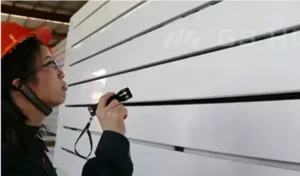
- Final inspection: Full check of appearance, structure, components and electrical systems before packing.
For larger distributor orders, third-party pre-shipment inspection (SGS/TUV) should be available.
Sample consistency is non-negotiable
One of the biggest risks for distributors is receiving a high-quality sample but inconsistent mass production.
The sample you receive must use exactly the same materials and processes as bulk production. Put this in writing in your order contract to avoid quality drops on large orders.
The approved sample and technical specifications should become the reference standard for all future repeat orders.
Logistics, After-Sales and Quotation: Hidden Costs You Can’t Ignore
Many distributor partnerships fail not because of product quality, but because of small details that add up to big costs.
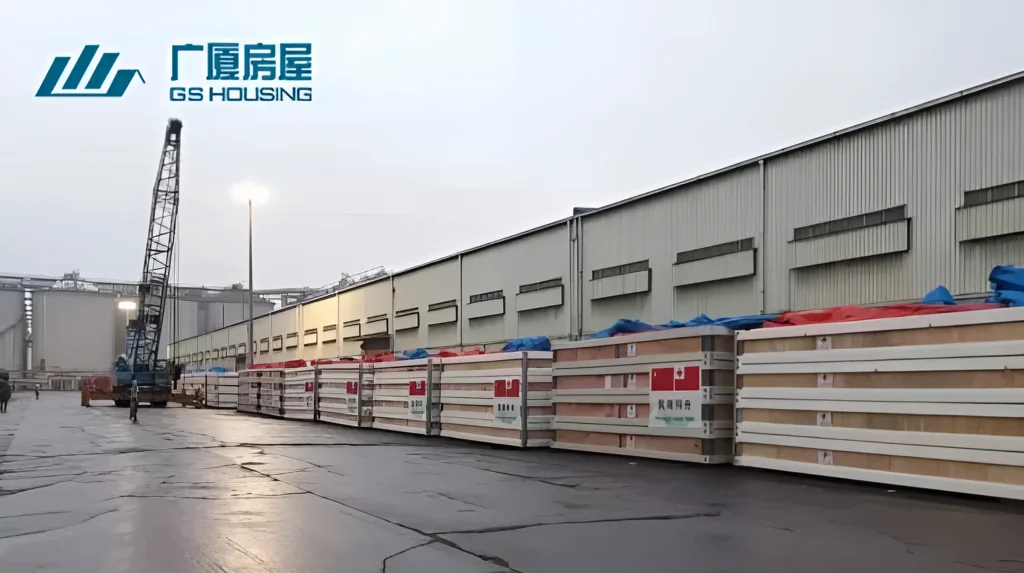
Packaging and shipping protection
Cross-border shipping is rough. Panels get scratched. Hardware gets lost. Doors get dented.
Check if the supplier uses reinforced edge protection for panels, waterproof packaging for hardware kits, and clear labelling for every component. Good packaging can reduce installation delays and simplify on-site assembly.
Clear packing lists and component numbering also help your team manage installation much faster after arrival.
After-sales and spare parts
Ask what spare parts are included for free with each order, and how long they keep spare parts available for older models.
You will need replacement seals, locks and small hardware parts after 2-3 years of use. A supplier that cannot support spare parts after delivery creates long-term headaches for your customers.
Also confirm what technical support they offer: installation manuals, video guides, and direct contact for technical questions.
Never compare FOB prices alone
A lower quotation may exclude important items that affect the final cost.
Always check what is included and what is excluded:
- Product configuration: Does it include the full structural system, wall/roof panels, doors, windows, electrical fittings and flooring?
- Technical differences: Two cabins may look identical but have different steel grades, panel thickness, insulation quality and interior finishes.
- Additional costs: Are export packaging, spare parts, engineering support and modification fees included?
Many low quotations exclude all of these. By the time you add them back, the “cheap” option ends up costing more.
Final Checklist for Evaluating a Portable Cabin Supplier Europe
Use this quick checklist to screen suppliers before moving to detailed quotation discussions:
✅ Production Capability
- Owns full production lines, not just assembly space
- Monthly output matches your 6-month order forecast
- Production capacity is dedicated to modular buildings
- Has track record of delivering large orders to European markets
✅ Quality Management
- Provides full technical drawings and material specifications in writing
- Has three-layer inspection process (incoming, in-process, final)
- Supports third-party pre-shipment inspection
- Guarantees sample and bulk production consistency
✅ Product Range
- Covers flat pack and expandable systems for different use cases
- Can adjust specifications for different European climate zones
- Maintains consistent quality across repeat orders
✅ Logistics Support
- Reinforced packaging for cross-border sea transport
- Clearly labelled components for fast on-site installation
- Provides all required export documentation
✅ Long-Term Cooperation
- Offers spare parts supply for at least 5 years
- Provides installation guides and technical support
- Has dedicated export team for European markets
- Supports OEM and custom branding for distributors
Veelgestelde vragen
What should European distributors check first when choosing a portable cabin supplier?
Start with verifying actual production capacity and quality control processes, not just the unit price. Low quotations often hide hidden costs or quality compromises that cost more long-term.
How can European distributors verify a portable cabin manufacturer?
The most reliable verification methods include live factory video tours, inspection of active production lines, review of historical inspection records, and confirmation of previous export experience to European markets. Avoid suppliers that only provide catalogue photos with no access to actual production facilities.
What is the main difference between a manufacturer and a trading company?
Manufacturers control production quality and cost directly, with better pricing for volume orders. Trading companies offer wider product ranges and lower MOQs, but with higher unit prices and less quality visibility.
Can portable cabins be customised for different European markets?
Yes, reliable suppliers adjust wall thickness, insulation levels, fire performance and electrical systems to match local building regulations and climate conditions across different European regions.
Does GS Housing support distributor and wholesale cooperation?
Yes, we work with distributors across Europe, providing standardised product ranges, OEM support and dedicated account management for long-term partners. As a manufacturer with its own production facilities, we operate 6 factories across China with 20+ years of modular building experience, allowing us to support both small test orders and large-volume fleet expansion.
Afsluitende gedachten
Choosing the right portable cabin supplier Europe partner is one of the most important decisions for distributors building a long-term modular product business.
It is about finding a partner that delivers consistent quality, supports your growth, and solves problems before they reach your customers.
Strong distribution partnerships rely on long-term consistency and reliability. Taking an extra week to verify the right supplier up front saves you years of fixing problems later.
Neem contact op met GS Housing to discuss portable cabin configurations, distributor cooperation and product requirements for your market.