For European companies offering site cabin rental services, expanding a modular fleet is about far more than just purchasing more units.
The key question is which option delivers better long-term value throughout the asset lifecycle.
A used site cabin may appear attractive because of its lower purchase price. It can help rental businesses increase capacity quickly without a large upfront investment.
However, rental assets are different from one-time project purchases. A cabin in a rental fleet needs to be:
- Easy to transport;
- Simple to maintain;
- Reliable after repeated relocation;
- Compatible with existing inventory;
- Profitable throughout its service life.
This is why the decision between new vs used site cabins options should not be based only on the initial purchase price.
For rental businesses, the more important question is:
Which option provides the lowest total cost of ownership while maintaining reliable rental performance?
The calculation should include:
- Purchase price;
- Transportation costs;
- Refurbishment requirements;
- Maintenance expenses;
- Storage costs;
- Downtime between rentals;
- Remaining service life;
- Future resale value.
A cheaper used unit may reduce initial investment, but unexpected repairs, inconsistent specifications and shorter remaining lifespan can affect profitability.
New modular units usually require higher upfront investment but provide better control over quality, maintenance and future deployment.
For companies looking for site cabin rental solutions or site containers for sale Europe, understanding the differences between new and used modular buildings is essential before expanding inventory.
Why European Rental Businesses Compare New and Used Site Cabins
Rental companies operating in the site cabin rental market operate differently from one-time project buyers.
A contractor may purchase cabins for one construction project, while a rental business invests in assets expected to generate income through multiple rental cycles.
Every relocation, installation and customer use affects the actual operating cost.
A site cabin in a rental fleet may experience:
- Multiple transportation cycles;
- Different installation environments;
- Changing weather conditions;
- Frequent customer use;
- Regular maintenance requirements.
Therefore, fleet expansion decisions need to consider long-term operational efficiency.
Used site cabins may still be suitable as supplementary assets in the following scenarios:
- Short-term demand increases;
- Emergency capacity expansion;
- Budget-sensitive projects;
- Temporary market changes.
However, used units may also create hidden costs:
- Previous wear and damage;
- Unknown maintenance history;
- Different specifications between suppliers;
- Difficult spare parts replacement;
- Lower rental attractiveness.
For rental operators, these factors directly affect profitability.
A modular building in a rental fleet is not only a physical asset, but also a long-term operational investment.
New vs Used Site Cabins: Key Differences for Rental Operations
At first glance, new and used site cabins may look similar.
Both can provide:
- 現場事務所;;
- 福祉施設;;
- Storage areas;
- Temporary accommodation.
However, their long-term performance can be very different.
| 因子 | New Site Cabin | Used Site Cabin |
| 初期投資 | Higher upfront cost | Lower purchase price |
| Condition | Factory-new | Depends on previous use |
| Specification consistency | Standardised production | May vary by supplier and year |
| Spare parts | Easier replacement | May require matching components |
| カスタマイズ | Flexible | Usually limited |
| Maintenance uncertainty | Lower | Higher |
| Remaining service life | Longer | Depends on condition |
| Fleet management | Easier standardisation | More complex |
For rental companies managing dozens or hundreds of units, standardisation becomes increasingly important.
A consistent fleet helps simplify:
- Maintenance procedures;
- Spare parts management;
- Staff training;
- Relocation planning;
- Customer service.
This is one reason many professional rental operators choose new modular units as the foundation of their inventory.
Common Problems With Used Site Cabins
Used modules are not always unsuitable.
In some situations, they provide a practical solution, especially for temporary demand or budget-controlled projects.
However, buyers should carefully inspect the actual condition before purchasing.
Structural Condition
The steel structure determines the basic service life of a site cabin.
Common issues include:
- Corrosion on steel components;
- Deformation caused by previous relocation;
- Damaged lifting points;
- Connection problems between modules.
For rental businesses, structural problems can create higher costs because units are frequently transported between projects.
Roof and Exterior Protection
The building envelope directly affects future maintenance requirements.
Used site cabins may have:
- Roof leakage risks;
- Aging waterproof layers;
- Damaged external panels;
- Poor sealing around doors and windows.
Water penetration can damage:
- Interior finishes;
- Insulation layers;
- Electrical systems.
These issues may lead to unexpected refurbishment costs.
Wall Panels and Insulation Performance
Insulation performance is difficult to evaluate from appearance alone.
Older modules may have:
- Damaged sandwich panels;
- Moisture inside wall structures;
- Reduced thermal performance.
For European rental markets covering different climate zones, inconsistent insulation performance may limit future applications.
Electrical and Plumbing Systems
Electrical systems should always be checked before purchasing used modules.
Potential issues include:
- Aging cables;
- Incorrect modifications;
- Different national standards;
- Damaged protection components.
For welfare or accommodation units, plumbing connections and drainage systems should also be inspected for leakage risks.
Repairing these systems after purchase can significantly increase the actual investment cost.
Compatibility Issues in Used Modular Inventory
One of the most overlooked challenges for rental businesses is compatibility.
A used site cabin purchased from another supplier may have differences in:
- External dimensions;
- Connection systems;
- Structural details;
- Spare parts;
- Electrical configurations.
Two cabins that look similar externally may require completely different replacement components.
This can create additional operational challenges:
- Larger spare parts inventory;
- More maintenance procedures;
- Longer repair time;
- Higher management complexity.
For rental businesses, standardisation is not only about appearance.
It directly affects fleet efficiency.
Why Standardised New Modular Units Improve Rental Efficiency
New modular units allow rental companies to build a more consistent fleet instead of managing mixed assets from different suppliers and production years.
Standardised production provides several advantages.
Easier Spare Parts Management
When components follow the same specifications:
- Replacement parts are easier to identify;
- Maintenance teams work more efficiently;
- Repair processes become more predictable.
Consistent Dimensions and Connection Systems
Standardised modules simplify:
- Transportation planning;
- Installation;
- Expansion;
- Combining multiple units on site.
Better Insulation and Market Adaptation
New units can be configured according to different market requirements, including:
- Climate conditions;
- Insulation levels;
- Regional electrical standards;
- Internal layouts.
Lower Maintenance Uncertainty
Rental businesses can better estimate:
- Maintenance requirements;
- Operating costs;
- Expected service life;
- Asset value.
GS Housing modular units use galvanised steel structures and can be customised for different applications, including:
- 現場事務所;;
- 従業員用宿舎;;
- 福祉施設;;
- Rental inventory programs.
Core Fleet Strategy: New Inventory + Supplementary Used Units
Many professional rental businesses adopt a balanced approach:
Core new inventory + supplementary used inventory
New modular units provide the stable foundation, while selected used units can help manage temporary demand changes.
This approach helps balance:
- Investment control;
- Fleet reliability;
- Customer expectations;
- Operational flexibility.
For core rental inventory, new modules provide advantages in standardised specifications and customisation for different markets, making them the more reliable long-term asset.
This strategy also reduces operational risk while allowing rental companies to respond quickly to short-term demand changes.
Site Cabin Total Cost of Ownership: Looking Beyond Purchase Price
For companies managing site cabin rental fleets, the purchase price is only the beginning of the investment.
A lower-cost used site cabin may appear attractive initially, but the real value depends on its performance throughout its operating life.
The site cabin total cost of ownership should include:
- Initial purchase cost;
- Transportation;
- Loading and unloading;
- Refurbishment;
- Spare parts;
- Maintenance;
- Storage;
- Downtime between rentals;
- Relocation costs;
- Future resale value.
A professional rental operator should evaluate:
Cost per rental cycle, not only cost per unit.
A new modular unit with a higher purchase price may achieve better long-term value if it:
- Requires fewer repairs;
- Maintains better appearance;
- Achieves higher rental acceptance;
- Provides more predictable operating costs.
In contrast, a used cabin requiring frequent repairs may create additional costs through:
- Technician labour;
- Replacement materials;
- Delayed delivery;
- Lost rental opportunities.
For companies expanding a modular rental fleet, comparing available ヨーロッパで販売中のモジュラー式建物 options with lifecycle costs provides a more reliable evaluation method.
When Used Site Cabins Still Make Sense
Used modules are not always the wrong choice.
For some rental businesses, they can work as supplementary assets when:
- Initial investment needs to be limited;
- Demand is temporary;
- Inspection results are acceptable;
- Short-term rental opportunities are clear.
代表的な用途としては、次のようなものがあります:
Temporary Demand Increases
Used cabins can provide additional capacity during:
- Seasonal construction demand;
- Temporary infrastructure projects;
- Emergency site requirements.
Budget-Sensitive Customers
Some customers prioritise lower rental costs over premium specifications.
Used units may be suitable for:
- Short-duration projects;
- Basic office requirements;
- Low-comfort applications.
Supplementary Fleet Expansion
For growing rental companies, used cabins can provide flexibility during market expansion.
However, they are usually better used as additional capacity rather than the foundation of a long-term fleet.
Choosing a Supplier for Rental Fleet Modular Units
For rental businesses, choosing a supplier is not only about product price.
The supplier should also provide:
- Stable production capability;
- Consistent quality;
- Customisation support;
- Spare parts availability;
- Technical assistance.
GS Housing focuses on supplying new modular building solutions for contractors, distributors and site cabin rental companies.
The company supports projects ranging from:
- Small batch orders;
- Regional distribution supply;
- Large-scale rental inventory expansion.
Manufacturing Capability and Supply Reliability
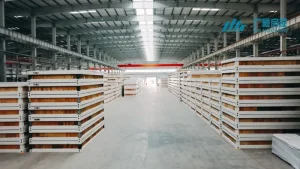
GS Housing operates:
- 6 factories across China;
- Approximately 510,000㎡ total production area;
- More than 20 years of modular building experience.
The company has:
- A professional R&D team of over 200 engineers;
- An international trade team supporting global projects.
This production capability supports:
- Modular accommodation units;
- 現場事務所;;
- 福祉施設;;
- Flat pack container systems.
For rental businesses, stable production capacity helps ensure consistent supply for long-term fleet expansion.
Durable Structure and Corrosion Protection
GS Housing modular units use galvanised steel structures designed for long-term outdoor operation.
The surface protection system includes graphene powder coating technology.
This technology is applied in GS Housing flat pack container production.
The process includes:
- Steel components are polished before coating;
- Powder coating is evenly applied to the surface;
- Components undergo high-temperature curing;
- A protective coating layer is formed.
This process improves corrosion resistance and helps protect modular units during repeated transportation and outdoor use.
OEM and Rental Inventory Solutions
For rental companies and distributors, GS Housing supports:
- Bulk procurement;
- OEM提携;;
- Custom branding;
- Standardised fleet solutions.
The company can provide:
- Different electrical configurations;
- Climate-based specifications;
- Custom layouts;
- Spare parts support.
These options allow rental businesses to develop modular inventories suitable for different regional markets.
Installation Support and After-Sales Service
For international rental businesses, installation support is an important part of supplier selection.
GSハウジングが提供するサービス:
- Technical documents;
- 設置マニュアル;;
- Assembly videos.
For projects requiring additional assistance, engineering guidance can also be arranged.
During the warranty period, GS Housing is responsible for quality issues caused by the manufacturing process according to agreed warranty terms.
This support helps overseas customers reduce uncertainty when importing modular units.
事例研究:サウジアラビアにおける大規模モジュラー式キャンプの導入事例
Large-scale projects demonstrate where modular systems create the greatest value.
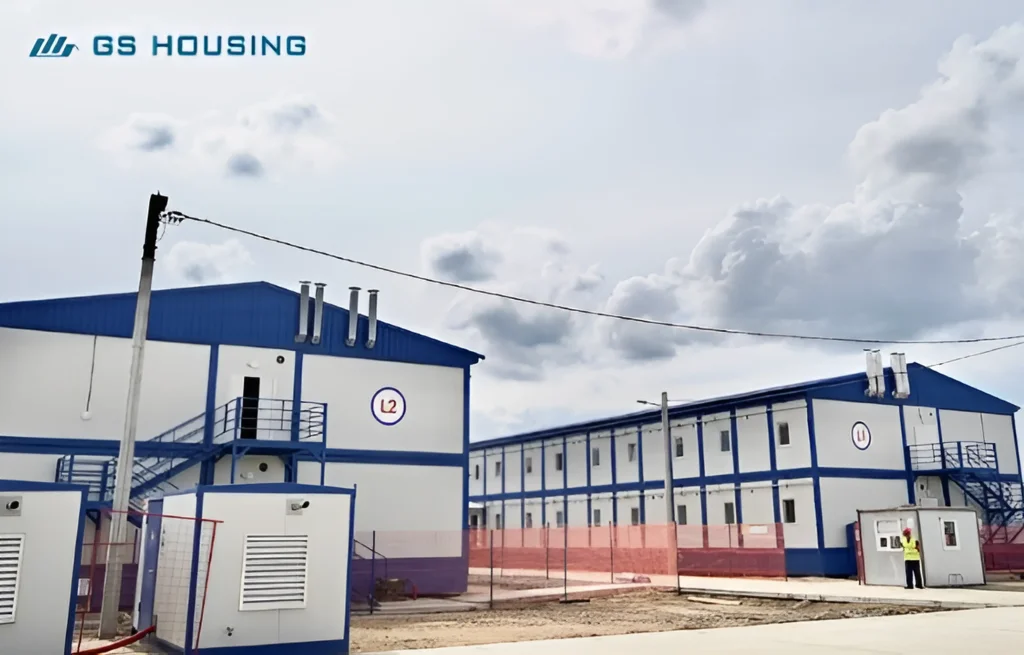
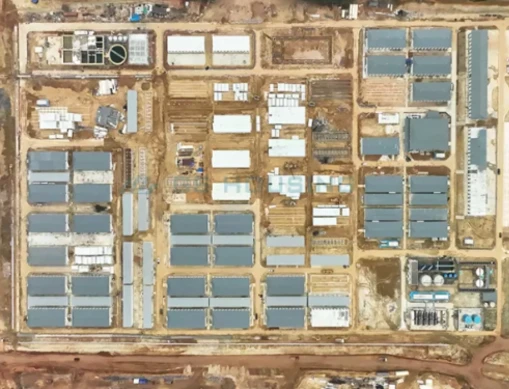
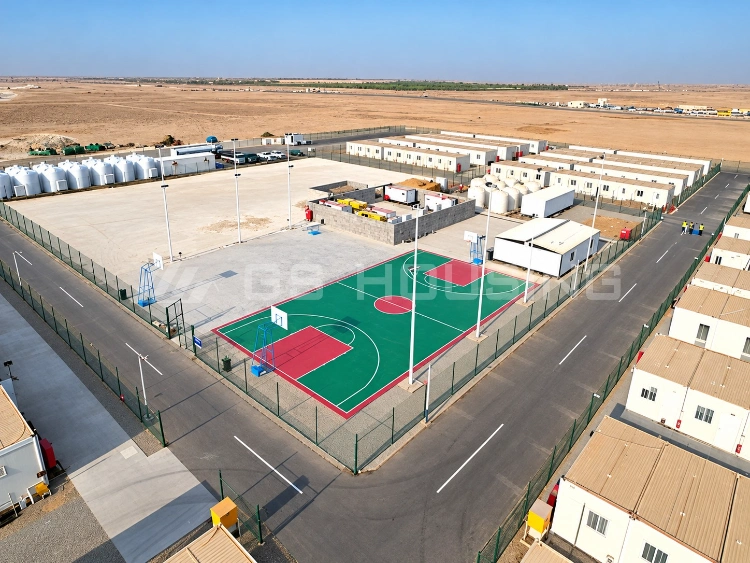
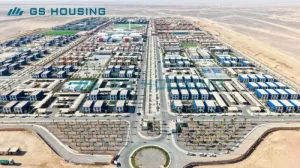
GS Housing provided modular accommodation solutions for a large engineering camp project in Saudi Arabia.
The project required a complete temporary living environment, including:
- 労働者用宿泊施設;;
- 管理施設;;
- ダイニングエリア;;
- 福祉施設;;
- 支援インフラ。.
The challenge went beyond supplying individual buildings.
The project required an organised modular camp system capable of supporting a large workforce.
Through factory production and modular planning, the project achieved:
- Faster site deployment;
- Consistent construction quality;
- Efficient camp organisation;
- Improved project management.
This type of application shows why modular solutions are increasingly used for:
- エネルギー関連プロジェクト;;
- 産業の発展;;
- インフラ整備;;
- Large workforce accommodation.
For European rental companies, the same principle applies:
Standardised, durable units that can be relocated repeatedly create stronger long-term returns.
New vs Used Site Cabins: Final Decision Guide for Rental Businesses
There is no single solution for every company.
The right choice depends on:
- Business strategy;
- Expected usage;
- Rental market demand;
- Fleet management goals.
Choose Used Site Cabins When:
- Initial investment needs to be minimised;
- Demand is temporary;
- Inspection results are acceptable;
- Short-term rental opportunities are clear.
Choose New Modular Units When:
- Building long-term rental inventory;
- Serving multiple markets;
- Requiring consistent specifications;
- Planning repeated relocation;
- Wanting lower maintenance uncertainty.
For many European rental businesses, the most practical strategy is:
Build the core fleet with new modular units and use selected used assets as supplementary capacity.
Final Thoughts: Evaluate Lifecycle Value, Not Only Purchase Price
For rental businesses, modular buildings are long-term operating assets.
The lowest purchase price does not always create the lowest operating cost.
A successful rental fleet depends on:
- Reliable construction quality;
- Standardised specifications;
- メンテナンスが簡単;;
- High reuse value;
- Customer satisfaction.
Used site cabins can provide value in specific situations, but professional operators should evaluate the complete lifecycle cost before purchasing.
For companies looking for site cabin rental solutions, modular rental inventory or site containers for sale Europe, GS Housing provides new modular building solutions designed for repeated use, flexible deployment and long-term value.
GSハウジングへのお問い合わせ for a free rental fleet expansion plan and total cost of ownership evaluation tailored to European rental markets.
よくある質問
Are used site cabins cheaper than new modular units?
Used site cabins usually have a lower purchase price, but the total cost depends on refurbishment, maintenance, remaining lifespan and rental performance.
A lower initial investment does not always mean lower long-term operating costs.
What should rental companies check before buying used site containers?
Important inspection areas include:
- Steel structure;
- Roof waterproofing;
- Wall panels;
- Insulation condition;
- Electrical systems;
- Plumbing;
- Spare parts availability.
Why do rental companies choose new modular units for fleet expansion?
New modular units provide consistent specifications, easier maintenance, longer service life and better control over repeated rental operations.
Does GS Housing support rental fleet procurement?
Yes. GS Housing supports small batch orders, OEM cooperation and large-scale rental inventory supply, including customised solutions, spare parts support and installation guidance.
What type of modular units are suitable for site cabin rental businesses?
Site cabin rental businesses usually require modular units with standardised specifications, durable structures, easy maintenance and efficient relocation capability. New modular systems are often preferred for core rental fleets because they provide consistent quality and predictable operating costs.