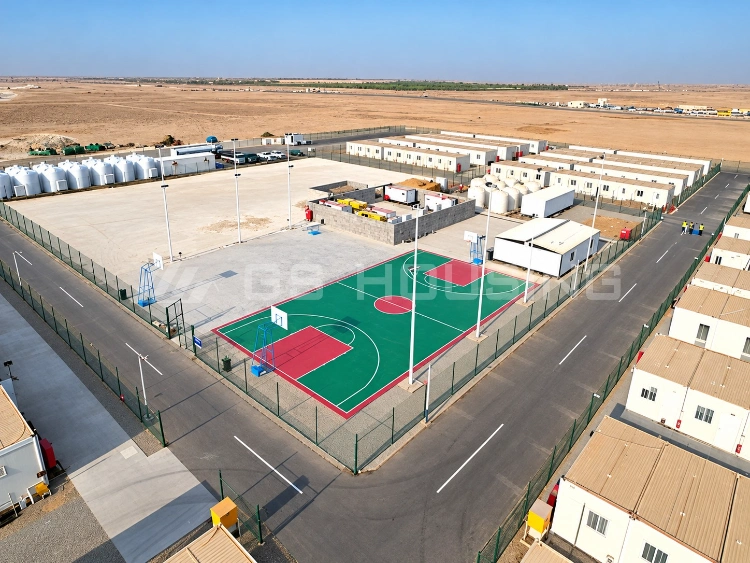
A mining project in northern Chile can spend millions of dollars preparing equipment, processing facilities, and infrastructure before the first tonne of copper or lithium is produced.
Yet many projects encounter the same problem much earlier.
Not underground.
Not in the processing plant.
Not in logistics.
In accommodation.
In regions such as Antofagasta and the Atacama Desert, project teams often discover that workforce housing becomes a bottleneck long before production begins.
The nearest town may be several hours away.
Existing hotels are already occupied by mining contractors.
Local housing supply is limited.
Traditional construction can take months.
Meanwhile, workers are arriving next month.
For EPC contractors and mining developers, this is exactly why demand for mining camp accommodation Chile continues to grow.
Across copper and lithium projects, accommodation is increasingly being treated as critical project infrastructure rather than temporary housing.
Because workers can start a mine before a town exists.
But they cannot start a mine without somewhere to live.
For many Chilean projects, accommodation delays are more common than equipment delays.
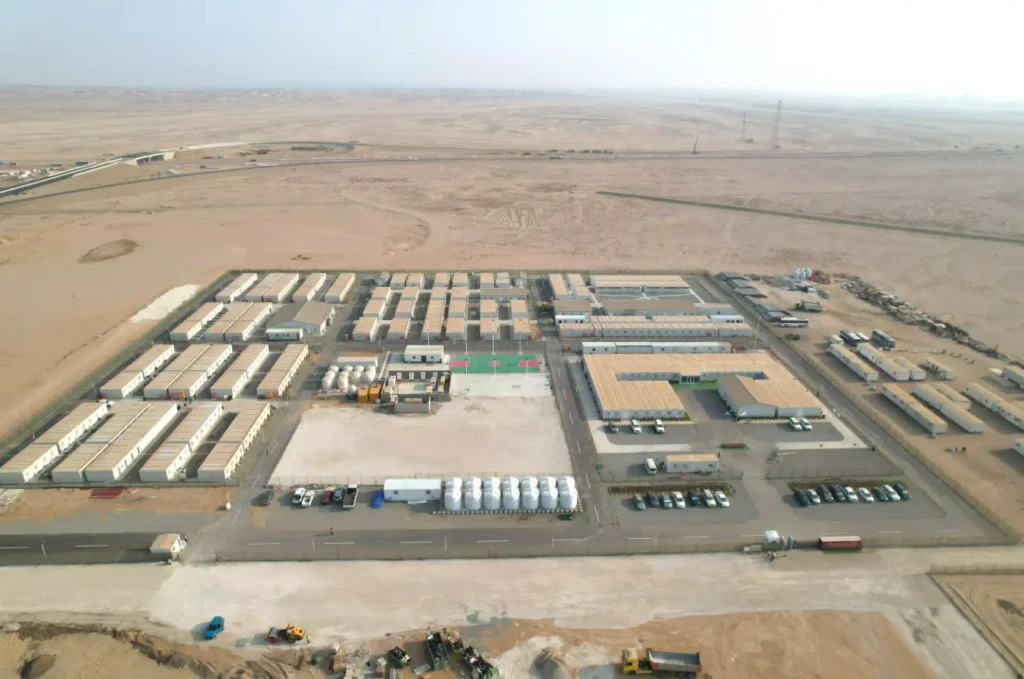
Large modular workforce camps designed for remote desert projects. Similar planning principles are increasingly being adopted by copper and lithium developments in northern Chile.
Why Finding Mining Camp Accommodation in Chile Can Be Harder Than Building the Mine Itself
Chile remains the world’s largest copper producer and one of the most important lithium suppliers globally.
Yet the challenge facing many new mining developments is not resource availability.
It’s location.
Many new copper and lithium deposits are situated far from major population centers.
Projects often require hundreds of workers before permanent infrastructure exists.
This creates three immediate challenges.
Workforce Housing
Workers need accommodation from day one.
Construction Capacity
Remote areas frequently lack enough contractors and labor resources.
Logistics Pressure
Every shipment, every delivery, and every construction activity becomes more expensive as distance increases.
For many developers, workforce accommodation becomes one of the first major infrastructure decisions in the project lifecycle.
The Atacama Desert Doesn’t Forgive Poor Mining Camp Accommodation Planning
When evaluating lithium mining accommodation Chile projects, environmental conditions matter just as much as layout design.
The Atacama Desert is among the driest regions in the world.
Workers may experience:
- Intense solar radiation
- High daytime temperatures
- Significant temperature drops at night
- Dust-heavy conditions
- Strong winds
- Long distances from urban services
A building that performs adequately in a city environment may struggle in these conditions.
This is why mining developers increasingly prioritize:
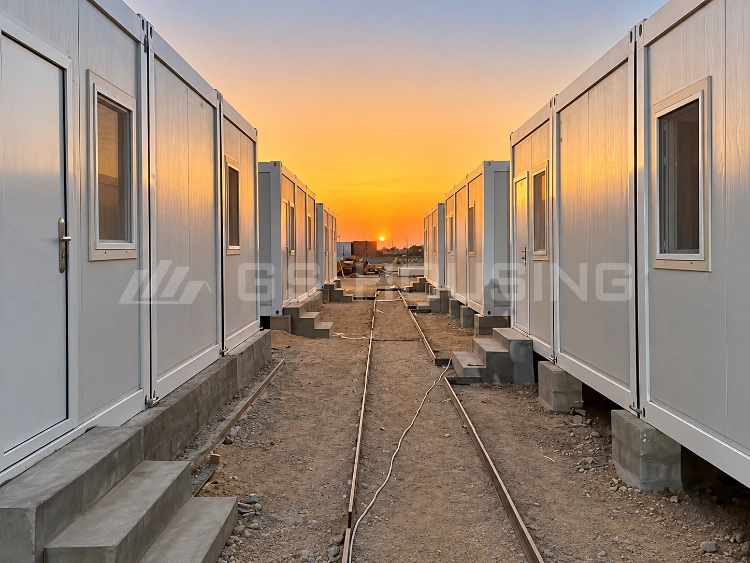
- insulated modular buildings
- dust-resistant accommodation
- weather-resistant wall systems
- durable steel structures
- thermal performance
Because workers experience the building every day.
And poor accommodation quality quickly becomes a workforce issue.
For many operators, remote mining accommodation Chile is no longer viewed as a temporary construction package.
It is part of the mining camp infrastructure Chile projects depend on to attract and retain skilled workers in isolated regions.
This is particularly true for workforce housing for copper mines and lithium project workforce accommodation, where employees often spend extended rotations on site.
This is one reason accommodation demand continues growing throughout Chile and across the broader 南米の鉱山キャンプ市場.
Copper and Lithium Projects Need More Than Just Worker Dormitories
Many first-time developers assume a mining camp is simply a collection of sleeping quarters.
In reality, a modern modular mining camp Chile project functions more like a temporary town.
This is especially true for large copper mining camp Chile projects where workforces can scale to thousands of people.
Unlike some lithium developments that may expand rapidly during exploration and early production stages, copper mines often operate for decades.
That makes future camp expansion an important consideration from the beginning, especially when accommodation requirements are expected to grow alongside the project.
Many mining camps include dedicated worker accommodation designed for long-rotation personnel.
Site Offices
Project management and engineering coordination.
飲食施設
Industrial kitchens and canteens.
Bathrooms and Shower Blocks
Supporting workforce hygiene requirements.
洗濯設備
Essential for long-rotation workforces.
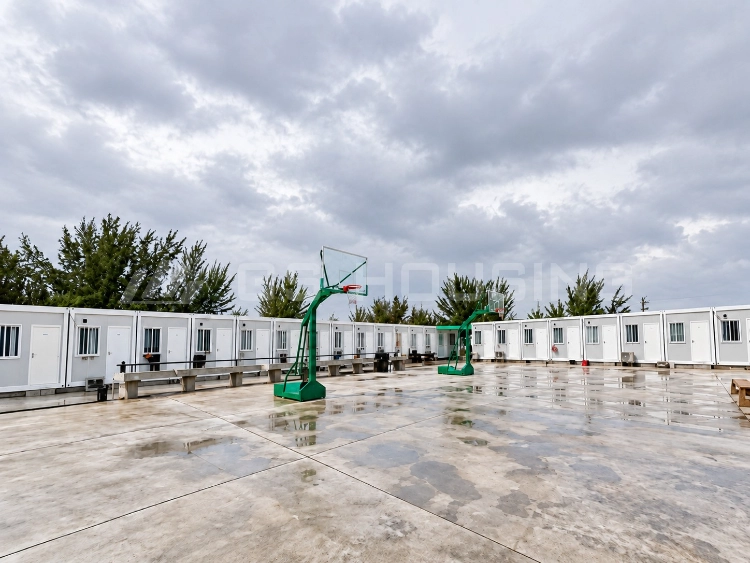
Recreation Areas
Helping improve worker retention and camp satisfaction.
The larger the workforce becomes, the more important these supporting facilities become.
Why Modular Camps Solve Chile’s Biggest Remote Mining Bottleneck
Modular mining camps directly solve the three biggest challenges facing remote Chilean mining projects: housing shortages, limited construction capacity, and rising logistics costs.
Traditional construction works well when labor, materials, and infrastructure are readily available.
Remote mining projects rarely enjoy those conditions.
Modular systems reduce dependence on local construction resources by shifting most production into the factory.
Most components are manufactured under factory-controlled conditions before being transported to site, helping maintain quality consistency and delivery reliability for remote mining developments.
For mining projects, that creates several practical advantages:
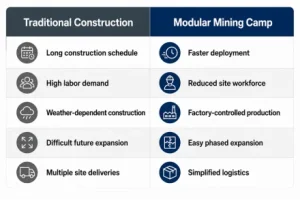
The ability to manufacture while site preparation is underway often shortens overall project timelines significantly.
Why Transportation Is the Hidden Cost Killer for Chilean Remote Mining Camps
The further a project moves into the desert, the more important transportation efficiency becomes.
Accommodation systems must travel hundreds of kilometers before reaching site.
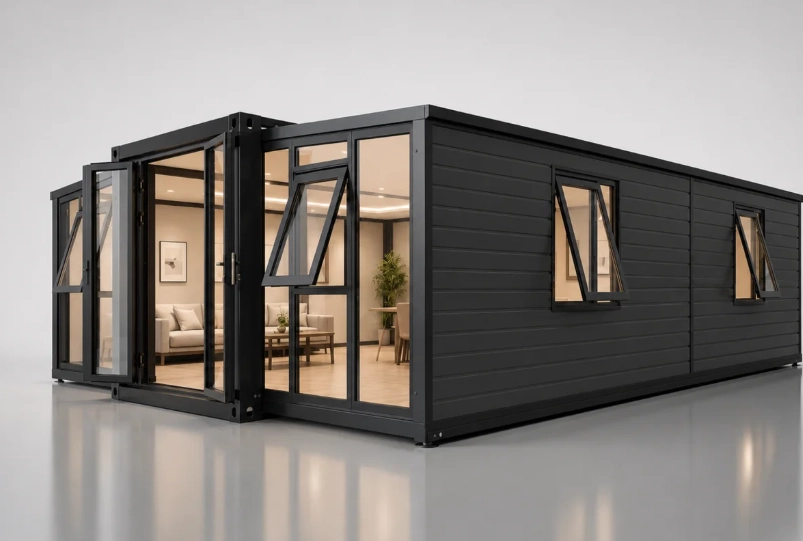
This is where flat-pack systems create meaningful advantages, and why many prefab camp Chile projects increasingly rely on this approach.
Components can be packed efficiently into standard shipping containers and assembled after arrival.
For mining developers, that often means:
- Lower freight costs
- Fewer shipments
- Easier site logistics
- Reduced transportation risk
For remote copper and lithium projects, transportation efficiency frequently has a direct impact on project budgets.
What Chilean Mining Projects Can Learn From the Saudi NEOM Development
A useful comparison comes from the Saudi NEOM project.
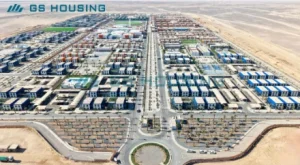
Although not a mining development, the environmental challenges are surprisingly similar.
- Remote desert conditions
- Large workforce requirements
- Limited local infrastructure
- Strict project schedules
GS Housing supplied 4,480 flat-pack container units for the NEOM project, including accommodation buildings, offices, shower rooms, dining facilities, sports areas, and other supporting infrastructure.
What makes this project relevant for Chile is not its size.
It’s the planning logic behind it.
Accommodation was treated as core infrastructure rather than something to be addressed later.
Because when thousands of workers arrive in a remote desert environment, the camp becomes the foundation that supports every other activity.
The desert-grade material specifications and rapid deployment strategies used in that project translate directly to Chilean mining conditions, from dust-resistant panels to thermal insulation systems.
The same principle applies to copper mining operations in Antofagasta and lithium developments across the Lithium Triangle.
Production facilities may generate revenue.
But workforce accommodation keeps the project operating.
The Best Time to Plan Mining Camp Accommodation in Chile Is Usually Earlier Than Expected
Most accommodation problems don’t start when workers arrive.
They start months earlier when project teams assume housing can be solved later.
In reality, accommodation decisions influence:
- logistics planning
- workforce mobilization
- future camp expansion
- project schedules
- operational efficiency
By the time workforce mobilization begins, accommodation decisions are usually already affecting transportation plans, logistics coordination, and daily site operations.
The question is not whether accommodation will become important.
The question is whether it is planned before workers arrive—or after the first bottlenecks begin to appear.
For copper and lithium developments across Chile, accommodation is no longer just a support facility.
It’s part of project delivery itself.
Before construction begins, many developers evaluate accommodation layouts alongside workforce forecasts and logistics planning rather than treating housing as a separate package.
If you’re planning a new mining camp in Chile, you can contact our team to review desert-adapted layouts, transportation strategies, and phased expansion plans based on your project schedule and workforce requirements.