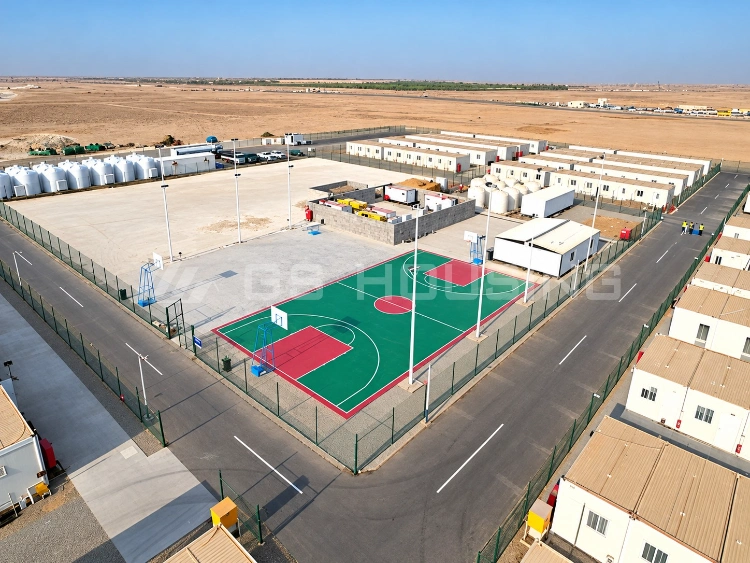
Survey teams have already left the mountain.
Earthworks are underway.
Procurement has started ordering crushers, conveyors and heavy equipment.
Everything appears to be moving according to schedule.
Then, during a weekly coordination meeting, someone opens the workforce mobilisation plan.
“We’ll have 450 people on site in six weeks.”
The room goes quiet for a moment.
Another question follows almost immediately.
“Where are they all going to live?”
That conversation happens more often than many people realise.
Across the Andes, new mining projects are being developed in places where there are no hotels, no rental housing and very little existing infrastructure. A processing plant can be designed months before construction starts, but workforce accommodation often has to be created from scratch.
At elevations above 3,000 metres, every decision becomes more complicated.
Road access is limited.
Transport takes longer.
Construction seasons are shorter.
Even routine maintenance requires more planning than it would at lower elevations.
That is why remote mining accommodation across South America has become one of the earliest planning priorities for mining developers.
Today, the camp is no longer viewed as temporary housing.
It is part of the project’s critical path, influencing workforce mobilisation, construction schedules and long-term operational efficiency.
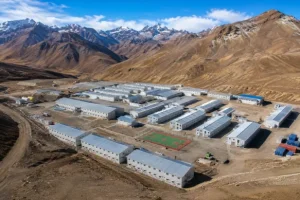
Why Remote Mining Accommodation Becomes the First Bottleneck at High Altitude
When most people picture a mining project, they imagine excavators, haul trucks or processing plants.
Project managers often think about something much simpler.
People.
Before the first tonne of ore is processed, hundreds of engineers, welders, electricians and equipment operators need somewhere to live.
Without accommodation, construction slows before production has even begun.
High-altitude projects make that challenge much harder.
Many mines across the Andes operate well above 3,000 metres, where workers face thinner air, stronger ultraviolet radiation, significant temperature swings and dry, dusty conditions. A building that performs well in a city environment may struggle after months of continuous exposure in the mountains.
Accommodation therefore has to provide much more than shelter.
It needs to remain comfortable during long work rotations.
It needs to protect workers from demanding weather.
It also needs to continue operating reliably when replacement materials or maintenance crews are several hours away.
For many EPC contractors, planning high altitude mining accommodation now happens alongside power systems, processing facilities and logistics planning rather than after them.
Design decisions made at this stage often determine whether future camp expansion will be straightforward—or unnecessarily expensive.
To improve long-term performance, many mining camps now incorporate:
- 50 mm or thicker rock wool insulation for thermal stability
- Galvanized steel structures designed for demanding environments
- Graphene-enhanced powder coatings that improve UV and corrosion resistance
- Factory-installed electrical and plumbing systems to reduce work on site
These features are not simply product upgrades.
They reduce maintenance requirements in locations where repairs are far more difficult than initial installation.
Why Mountain Logistics Often Matter More Than Mountain Weather
Ask a logistics manager about delivering accommodation into the Andes.
Weather is rarely the first topic they mention.
Roads usually come first.
One mountain pass may be open this week and restricted the next.
Some bridges have strict weight limits.
Sharp bends prevent oversized trailers from reaching the final destination.
On several Andean mining projects, large trailers unload their cargo at lower elevations before smaller trucks complete the final climb to site.
Every transfer adds time.
Every transfer introduces another opportunity for delays.
Traditional construction depends on hundreds of separate deliveries.
Steel.
Concrete.
Mechanical equipment.
Interior finishes.
Electrical materials.
If one shipment arrives late, multiple trades may end up waiting for work that cannot continue.
That is one reason many mining developers are changing how they approach remote workforce accommodation.
Instead of trying to accelerate construction after materials arrive, they focus on reducing the number of deliveries in the first place.
Fewer deliveries usually mean fewer variables.
In remote mountain regions, that often has a greater impact on project schedules than increasing the number of workers on site.
Why Factory-Built Remote Mining Accommodation Makes More Sense at High Altitude
Several years ago, an EPC manager involved in a mining project made a comment that perfectly captured how camp construction has changed.
“We’re not trying to build faster anymore.”
“We’re trying to build less on site.”
That shift explains why modular mining camps have become the preferred solution for many high-altitude developments.
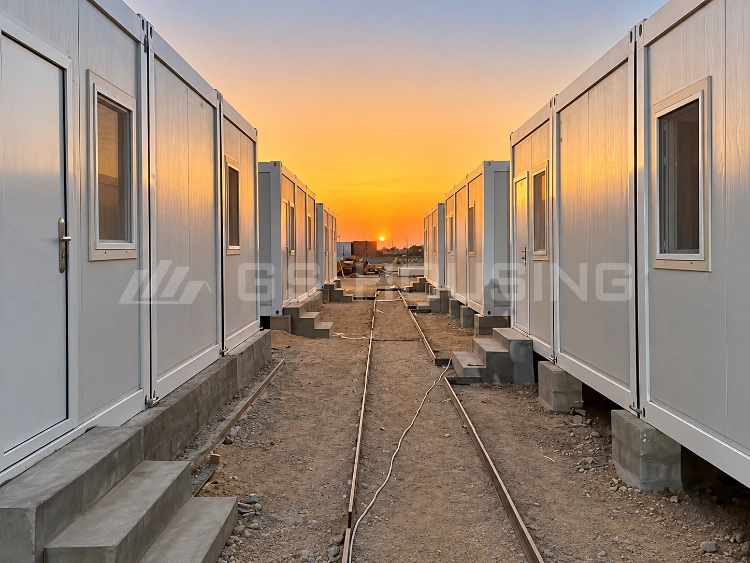
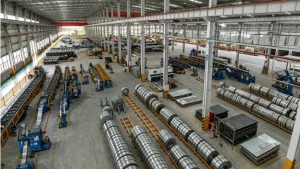
Instead of transporting thousands of individual construction materials into the mountains, most of the work is completed long before the first truck leaves the factory.
Structural frames are manufactured under controlled conditions.
Wall panels are installed.
Doors and windows are fitted.
Electrical systems, plumbing and insulation are completed before shipment.
When the buildings finally reach site, the job is no longer traditional construction.
It becomes planned assembly.
For EPC contractors, that changes the entire delivery process.
Factory production continues while foundations are still being prepared.
Transportation follows the installation sequence rather than the manufacturing sequence.
Installation crews spend less time exposed to difficult mountain conditions.
Fewer skilled trades are required on site.
The result is not simply a shorter construction programme.
It is a programme with fewer uncertainties—something every project manager values when the nearest supplier may be several hours away.
Moving Modular Camps Through the Andes Requires More Than Good Transportation
Getting a modular camp to a high-altitude mine is only half the job.
Getting it there in the right order is what keeps a project on schedule.
A modular accommodation unit may travel hundreds of kilometres on highways before reaching the foothills. From there, the logistics plan often changes completely.
Mountain roads become narrower.
Bridge load limits become stricter.
Sharp bends reduce the size of vehicles that can continue the journey.
On some projects, deliveries are intentionally divided into several smaller shipments because there simply isn’t enough space on site to unload everything at once.
Experienced EPC teams don’t see this as a problem.
They build the delivery plan around it.
Accommodation blocks usually arrive first so construction crews have somewhere to stay. Site offices, dining facilities and sanitation buildings follow. Laundry rooms, recreation areas and additional dormitories can be delivered later as workforce numbers increase.
Instead of waiting for every building to arrive before work begins, the camp grows alongside the project itself.
For remote mining accommodation, that phased approach offers two important advantages.
It reduces transportation pressure in difficult mountain terrain.
It also avoids investing in facilities that won’t be needed until later stages of the project.
What a Remote Mining Project in Indonesia Can Teach High-Altitude Operations
Indonesia and the Andes have very different landscapes.
The construction challenge, however, is surprisingly similar.
Workers usually arrive before permanent infrastructure does.
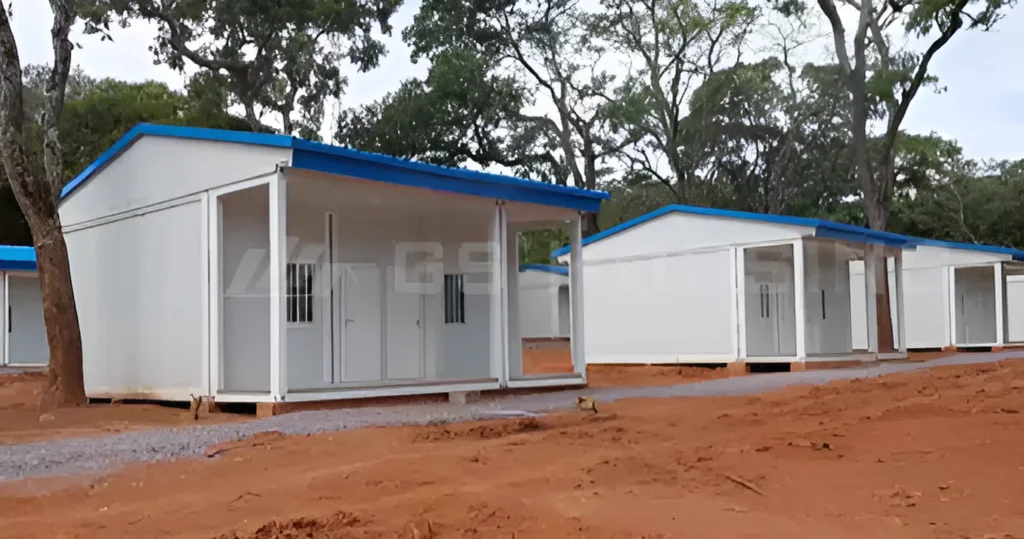
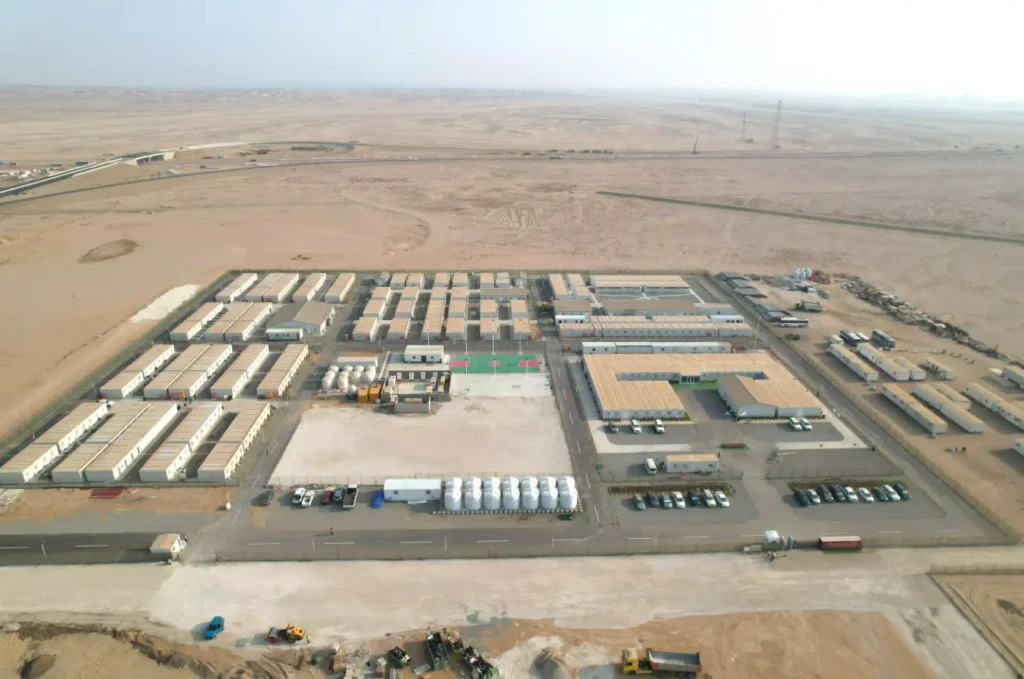
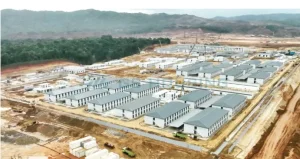
One example is GS Housing’s Huayou Cobalt mining camp project.
The objective wasn’t simply to deliver accommodation buildings. The camp had to be ready quickly enough to support a growing workforce without slowing mine development.
Dormitories.
Site offices.
Dining halls.
Sanitation facilities.
Public service buildings.
Everything had to come together according to the construction schedule.
Rather than waiting for site work to finish before manufacturing began, factory production and site preparation moved forward at the same time. Buildings were shipped according to the installation sequence, allowing completed sections of the camp to become operational while work continued elsewhere.
That approach reduced idle time, simplified logistics and helped workforce mobilisation stay on track.
The Andes present different transportation conditions, but the planning principle remains the same.
Projects that coordinate accommodation early usually spend far less time solving operational problems later.
Why Scalable Remote Mining Accommodation Matters More Than Initial Capacity
One question appears in almost every supplier meeting.
“How many people can the camp accommodate?”
Experienced project managers usually ask something different.
“What happens if our workforce doubles two years from now?”
Mining projects rarely stay exactly as planned.
Exploration programmes move into commercial production.
Processing plants expand.
Additional contractors arrive during new construction phases.
Accommodation that cannot grow alongside the project often becomes another expensive problem to solve.
That is why many owners now evaluate a modular mining camp as a complete operating system rather than a collection of individual buildings.
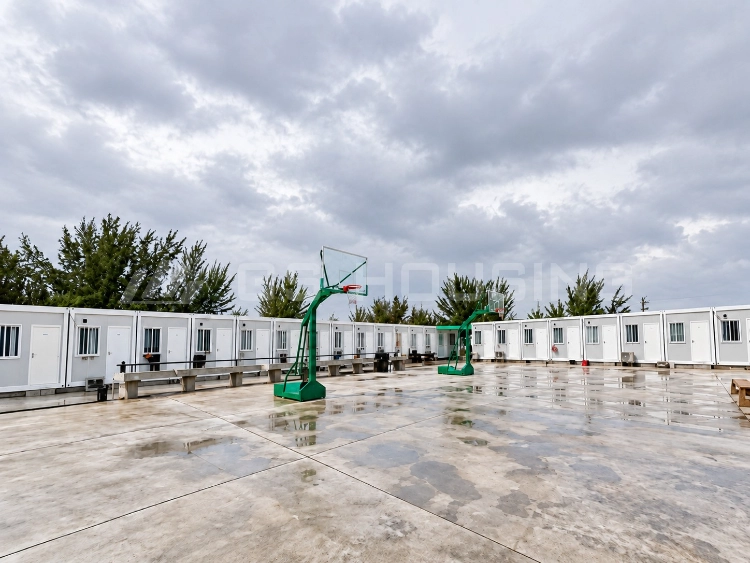
A typical high-altitude mining camp may include:
- Logement des travailleurs
- Bureaux de chantier
- Kitchens and dining halls
- Shower and sanitation facilities
- Salles de buanderie
- Medical clinics
- Espaces de loisirs
- Security buildings
Planning these facilities together simplifies utility connections, transportation planning and future expansion.
More importantly, it reduces the number of suppliers an EPC contractor needs to coordinate throughout the project.
Building Remote Mining Accommodation Is Really About Reducing Risk
The best mining camps are rarely the most noticeable.
Workers move in on schedule.
Utilities operate normally.
Meals are served.
Construction continues.
Nobody spends the morning discussing accommodation because the camp simply works.
That is usually the result of planning that started months earlier.
High-altitude projects already face enough uncertainty.
Weather changes.
Road conditions change.
Construction schedules change.
Accommodation should not become another variable.
Over the past two decades, GS Housing has supported mining, infrastructure and industrial projects in environments where transportation, installation and workforce accommodation all have to be planned together.
With six manufacturing bases, integrated engineering support and international installation experience, our team helps EPC contractors coordinate design, factory production, transportation and on-site assembly through one streamlined delivery process.
The goal isn’t simply to manufacture modular buildings. It’s to remove one major uncertainty before construction reaches the mountain.
At high altitude, solving accommodation early isn’t simply about giving workers a place to sleep.
It’s about removing one of the biggest risks before the real work begins.
If you’re planning an Andes mining project,discuss your project requirements with our team before your construction schedule is locked in. Early planning creates more flexibility, reduces coordination pressure and makes future camp expansion much easier.
Frequently Asked Questions
Can modular camps really be transported to high-altitude mine sites?
Yes. Most projects use detailed transport planning before production even begins. Modules are designed around road conditions, bridge limits and available lifting equipment, and deliveries are often phased so buildings arrive in the order they’re needed.
What happens if the workforce grows after the camp is already operating?
A well-designed modular camp can expand alongside the project. Additional accommodation blocks, offices or support facilities can usually be connected to the existing layout without interrupting day-to-day operations, provided expansion has been considered during the initial planning stage.
Do high-altitude mining camps need different building specifications?
Usually, yes.
A camp built for a coastal project isn’t automatically suitable for a mine at 3,500 metres.
Large day-night temperature swings, stronger UV exposure and difficult maintenance access all influence the way the buildings are designed. That’s why many high-altitude camps use thicker insulation, galvanized steel structures and long-life protective coatings that require less maintenance over time.
The goal isn’t to create a different type of building. It’s to make sure the camp continues performing reliably after months—or even years—of operation in a demanding environment.