For contractors, EPC teams, and project developers, transportation for prefabricated houses is not only a logistics issue. It affects module design, factory preparation, installation sequence, and overall project coordination. A practical delivery plan needs to consider the destination location, road access, unloading conditions, lifting requirements, and site schedule before production begins.
GS Vivienda focuses on modular building solutions for accommodation camps, offices, sanitation facilities, dining areas, medical spaces, and other project facilities. Its flat-packed modular house system uses factory-produced structural components and integrated building parts that can be transported and assembled at the project site. For large-scale projects, design, manufacturing, delivery, and installation need to work together as one process.
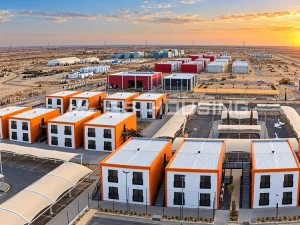
How Are Prefabricated Container Houses Usually Transported?
The suitable delivery method depends on the house type, project distance, route conditions, and final-site environment. For international and remote projects, buyers usually need to evaluate different prefabricated house shipping methods instead of choosing a transport option only based on distance.
Road Transport for Inland and Last-Mile Delivery
Road transport is usually the final connection between a factory, logistics hub, port, or railway station and the project location. Although this stage may cover a shorter distance, it often creates the most practical challenges.
Before delivery, buyers should confirm road width, turning radius, bridge limitations, entrance conditions, ground stability, and unloading space. For prefabricated house delivery, last-mile conditions can determine whether units should arrive flat-packed or assembled.
For remote construction camps, a suitable route plan can reduce unnecessary movement after arrival. A module that reaches the site but cannot be positioned directly may require additional handling, which affects both schedule and labor arrangement.
Rail and Sea Freight for Long-Distance Routes
Long-distance projects often combine sea freight, rail transportation, and inland trucking. The transport route should be considered together with the module design because different house formats have different requirements for loading, protection, and site handling.
Good logistics planning should consider protection against moisture, vibration, impact, and repeated handling. Factory preparation, packaging methods, and unloading procedures should match the entire delivery chain.
For international projects, shipping prefabricated houses also requires early coordination between production schedules and destination arrangements. Delays at one stage can affect installation teams, storage areas, and overall project progress.
Multimodal Delivery for Remote Project Sites
Remote projects in mining, energy, infrastructure, and construction often require more than one transport method. A typical route may include factory loading, international freight, regional transfer, inland transportation, and final-site installation.
For remote site modular house delivery, the key is not only moving the units but ensuring that every stage supports the next step. Delivery batches should match the installation sequence so that modules arrive when the site is ready.
Which Shipping Method Fits the House Form and Project Route?
The transport format should match the project route. A module that performs well during installation may not be suitable if the transportation conditions create repeated handling problems.
Flat-Pack Units for Long-Distance Delivery
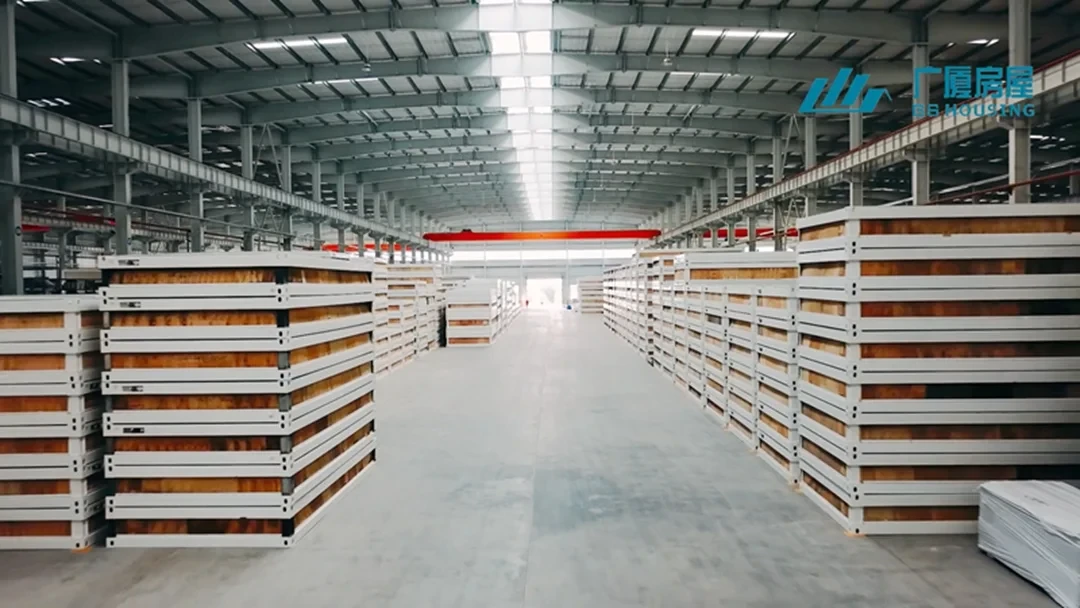
Flat-packed systems separate the main structural and enclosure components, allowing more efficient transportation for projects involving long distances or multiple transfer stages.
GS Housing flat-packed houses use modular components including top frames, bottom frames, corner posts, and interchangeable wall panels. Structural parts, insulation materials, water supply, drainage, and electrical systems, and interior functions can be prepared before reaching the site, reducing the amount of work required during installation.
For large accommodation projects, the prefabricated camp solution can integrate different functional spaces, including accommodation rooms, offices, dining facilities, sanitary areas, storage spaces, and other supporting facilities.
Flat-pack delivery is usually a practical starting point for:
- projects requiring large quantities of units;
- international routes with several transfer stages;
- locations where transport space needs careful planning.
Assembled Units Support Relocation and Reuse
Assembled modules can be suitable when route dimensions allow direct delivery and faster site installation is a higher priority.
GS Housing modular units can be where approved structural design and local regulations permit to create different layouts. If future relocation is expected, lifting methods, structural protection, weather protection, and internal fittings should be considered during design.
For modular house transportation, the right choice depends on the balance between transport efficiency, installation speed, and future project requirements.
Route Conditions Determine the Final Transport Plan
There is no universal delivery format for every project. Road conditions, lifting availability, storage space, project timeline, and local regulations all influence the final decision.
As a practical rule, flat-pack delivery is usually more suitable for large quantities, long international routes, or projects involving several transfer stages. Assembled modules become more attractive when the route can accept their dimensions, installation speed is more important than transport density, and the number of units is manageable.
Remote projects using sea freight combined with inland trucking should be evaluated as one multimodal route. The final road, unloading area, crane access, and storage capacity can change which module format creates better project efficiency.

What Makes Transportation Costs Rise on Remote Projects?
Remote delivery costs are influenced by more than the main freight charge. Distance matters, but handling requirements, site conditions, and delivery coordination often have a direct impact on the final project budget.
Distance, Shipping Volume, and Double Handling
Long-distance transportation usually involves more transfer points. Each additional movement creates another loading, unloading, inspection, and protection requirement.
Large projects also need careful shipment planning. If too many units arrive before the site is ready, additional storage and secondary movement may be required. If deliveries arrive out of sequence, installation efficiency can be affected.
Compare Total Delivered Cost, Not Freight Alone
Buyers should compare total delivered cost rather than the main freight quotation alone. A transport budget can be divided into factory packing, long-distance freight, terminal or port handling, customs-related handling where applicable, inland trucking, crane and unloading work, temporary storage, rehandling, and site installation.
A lower freight quotation can still result in a higher project cost if the modules require extra lifting, storage, or secondary movement after arrival.
For tender comparison, buyers should ask each supplier to clarify which transport and site-handling items are included and which remain the buyer’s responsibility. This approach provides a clearer view of the actual project delivery requirement.
Inland Access, Unloading, and Crane Requirements
Site access is one of the most important factors in remote projects. Narrow roads, uneven ground, limited working areas, or restricted crane positions can affect unloading efficiency.
Crane unloading for modular houses should be planned according to lifting points, safe working areas, and the final installation sequence. If units cannot be placed directly and require additional relocation, handling time and labor requirements may increase.
Installation Sequence and Storage Planning
Transportation planning should connect directly with installation planning. Modules arriving too early may require temporary storage and protection. Modules arriving too late may delay site progress.
For prefabricated house logistics planning, shipment schedules, module identification, storage arrangements, and installation teams should follow the same project plan. This reduces confusion during large-scale deliveries.
How Can Flat-Pack Planning Reduce Logistics and Delivery Risk?
Flat-pack planning is not only a transport arrangement. It is a method that connects product design, factory production, delivery sequence, and site installation. For remote projects, a well-planned modular system can reduce unnecessary site work and make the delivery process easier to manage.
Factory Prefabrication Reduces Work at Remote Sites
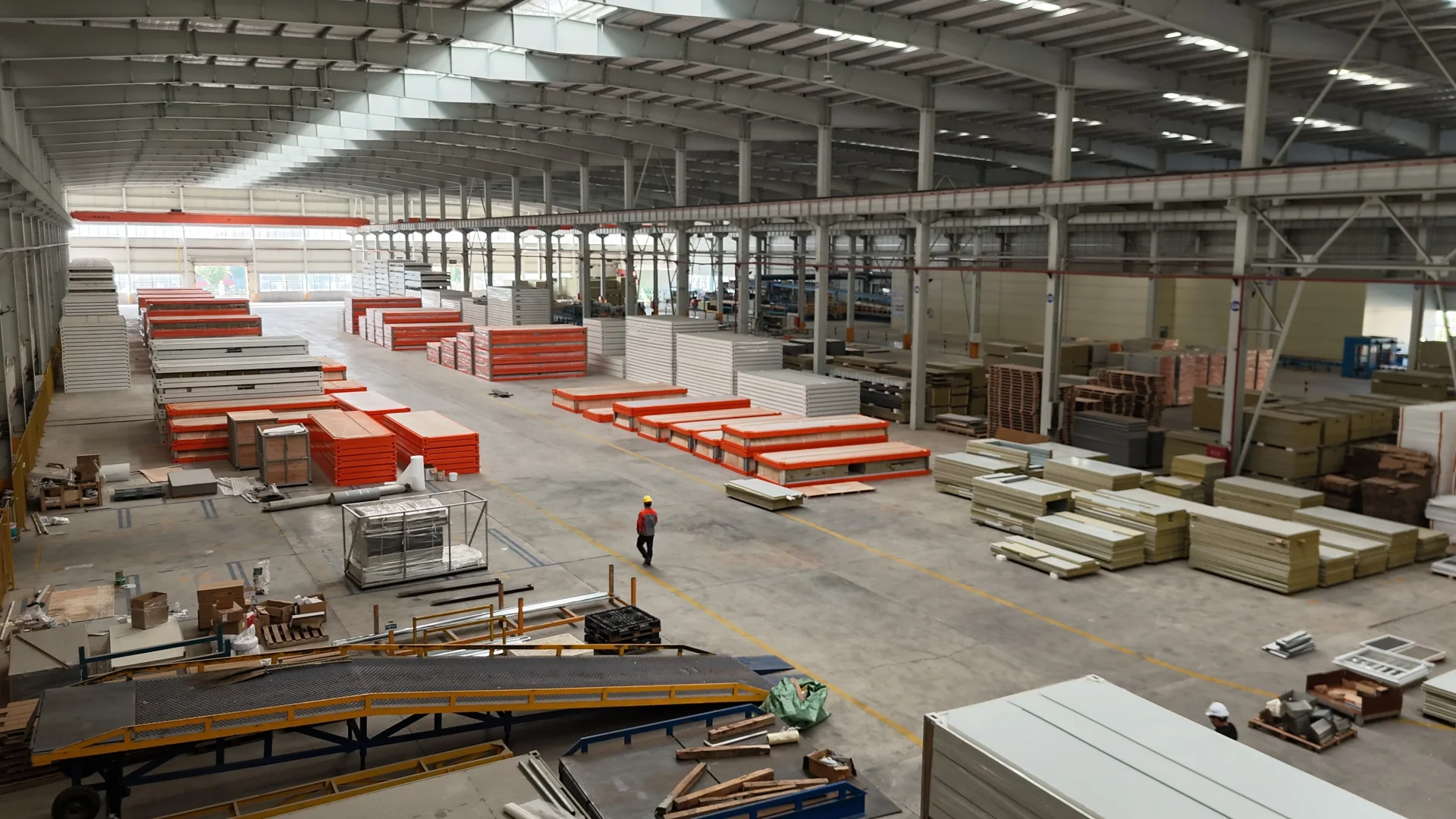
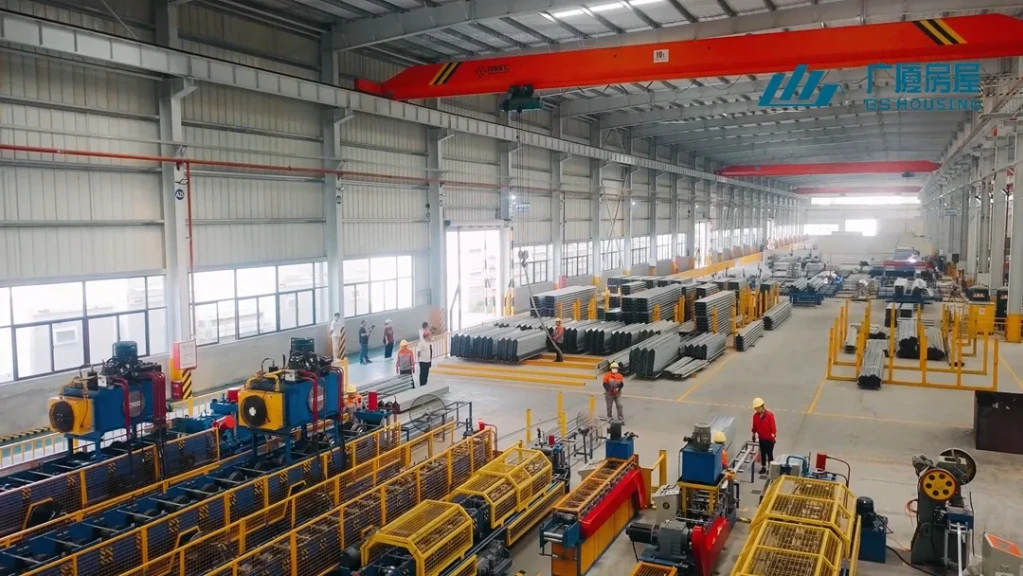
Factory production allows more building processes to be completed before modules arrive at the project location. GS Housing flat-packed houses move structural production, enclosure preparation, and integrated functions into a controlled factory environment.
The flat-packed system is built with modular components, including top frames, bottom frames, corner posts, and interchangeable wall panels. The structure uses cold-formed galvanized steel components, while insulation, water and electrical systems, interior finishing, and related functions can be prepared before transportation.
This approach helps reduce the amount of complex work required at remote locations. Instead of carrying out many separate construction activities in difficult environments, project teams can focus on assembly, connection, and final commissioning.
Factory preparation also makes transport protection more important, because completed components need to arrive ready for installation. Proper handling during loading, delivery, storage, and placement helps maintain the intended performance of the building system.
Flexible Modules Support Phased Delivery and Future Reuse
Many large projects do not require all facilities at the same time. Accommodation may be needed first, followed by offices, dining areas, medical rooms, storage facilities, or other supporting spaces.
Modular planning allows buyers to arrange delivery according to operational priorities. For example, a construction camp can receive essential accommodation units first and expand other functions as the project develops.
GS Housing modular houses can be combined in different layouts to create spaces for accommodation, offices, meeting rooms, kitchens, dining halls, sanitary facilities, and other project needs. The modular approach also supports future adjustment when project requirements change.
For projects considering relocation or repeated use, the design stage should include lifting, protection, connection methods, and possible future movement requirements.
The Saudi NEOM Project Shows High-Volume Delivery Coordination
Large accommodation projects require coordination between manufacturing capacity, logistics planning, and installation management.
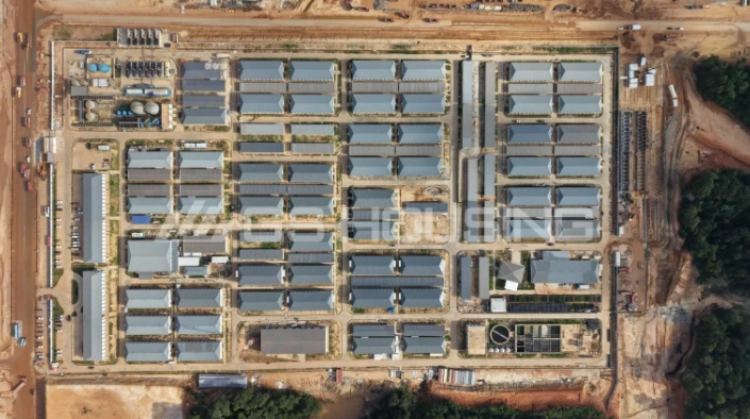
GS Housing supplied 4,480 flat-packed units for an accommodation camp project in Saudi Arabia. The facilities included offices, accommodation areas, toilets, showers, prayer rooms, restaurants, sports fields, and gyms. GS Housing also provided an engineering team for on-site installation guidance.
For projects of this scale, successful delivery depends on more than producing enough units. Shipment sequence, site preparation, unloading organization, and installation coordination all need to work together.
For large accommodation camp projects in Saudi Arabia, delivery planning must coordinate worker accommodation, supporting facilities, shipment sequence, site preparation, and installation conditions.
What Should Buyers Confirm Before Ordering and Shipping?
Before production begins, buyers should provide sufficient project information so that the supplier can match the house format with the delivery route.
Buyer Checklist Before Shipping Prefabricated Houses
| Artículo | What Buyers Should Confirm |
| Product type | Flat-pack, assembled, or expandable unit |
| Cantidad | Number of modules and required functions |
| Destination | Country, port, and final project location |
| Transport route | Long-distance freight, inland trucking, or multimodal delivery |
| Site access | Road width, crane area, unloading space |
| Schedule | Delivery timing, installation sequence, and storage requirements |
Transport and Installation Requirements Should Be Defined Early
Transport planning should begin before manufacturing, not after production is completed.
Los compradores deben confirmar:
- final project location and access conditions;
- unloading area and lifting arrangement;
- temporary storage requirements;
- installation order;
- connection requirements between modules.
For crane unloading for modular houses, the available lifting equipment and working area should match the module design. Early coordination helps prevent situations where delivered units cannot be installed immediately because the site is not prepared.
Integrated Design, Manufacturing, Transport, and Installation Support
Prefabricated-house delivery works best when design, factory production, logistics, and installation are managed as one chain.
A supplier’s responsibility is not limited to producing modules. Project teams also need support in selecting the suitable house format, preparing delivery plans, coordinating installation requirements, and adapting the solution to different site conditions.
For remote camps, infrastructure projects, and industrial facilities, this integrated approach can reduce uncertainty between factory output and final-site operation.
Contact GS Housing for Prefabricated House Transportation Solutions
If your project involves remote access, phased delivery, limited unloading space, or complex accommodation requirements, preparing the route information and project layout early can help identify a suitable modular solution.
Ponte en contacto con GS Housing to discuss customized mining camp housing solutions for worker accommodation, site offices, dining areas, sanitary facilities, medical rooms, storage, and other camp support needs.
Preguntas frecuentes
What is the best transport method for prefabricated houses?
The suitable transport method depends on project distance, route conditions, house format, unloading capability, and installation requirements. Flat-pack systems are often suitable for large quantities and long routes, while assembled modules may work better when direct delivery and faster installation are priorities.
How can buyers reduce transportation risks for modular houses?
Buyers should confirm transport routes, unloading areas, crane access, storage space, and installation schedules before production. Good coordination between factory preparation, delivery sequence, and site installation can reduce additional handling and delays.
What costs should be considered when shipping prefabricated houses?
A complete transport budget should consider more than freight. Buyers should review factory packing, long-distance transport, terminal handling, inland delivery, unloading work, temporary storage, rehandling, and site installation requirements.
Can prefabricated container houses be shipped by sea?
Yes. Prefabricated container houses can be shipped by sea, especially for international or long-distance projects. Flat-pack systems are often suitable because they can improve loading efficiency. Buyers should confirm the destination port, inland transport route, unloading space, crane access, and installation schedule before shipment.
What information should buyers prepare before requesting a transportation plan?
Buyers should prepare the destination country, nearest port, final site location, quantity, module type, building functions, site access conditions, and expected delivery schedule. For remote projects, road conditions, crane availability, storage space, and installation sequence should also be confirmed early.