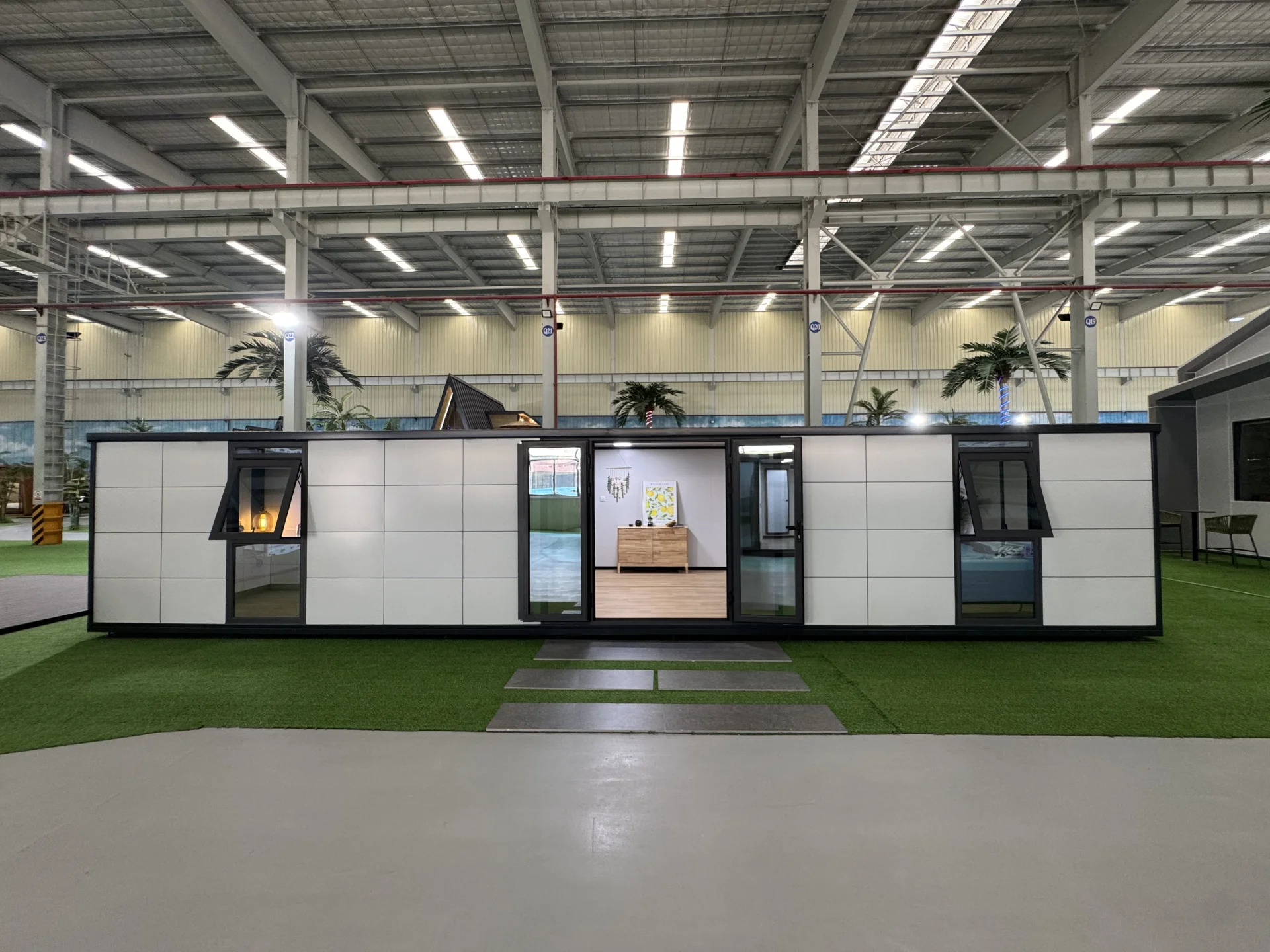
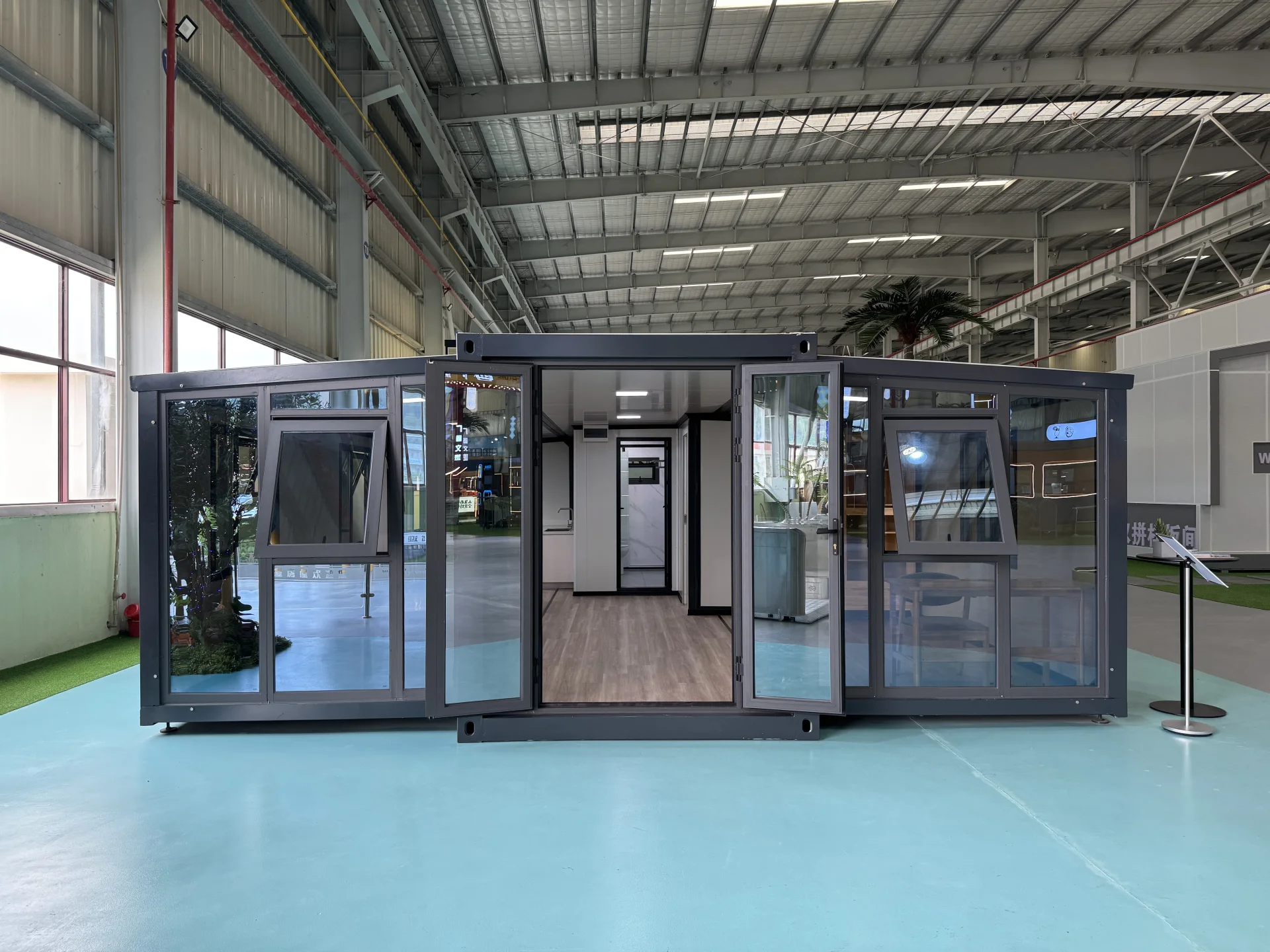
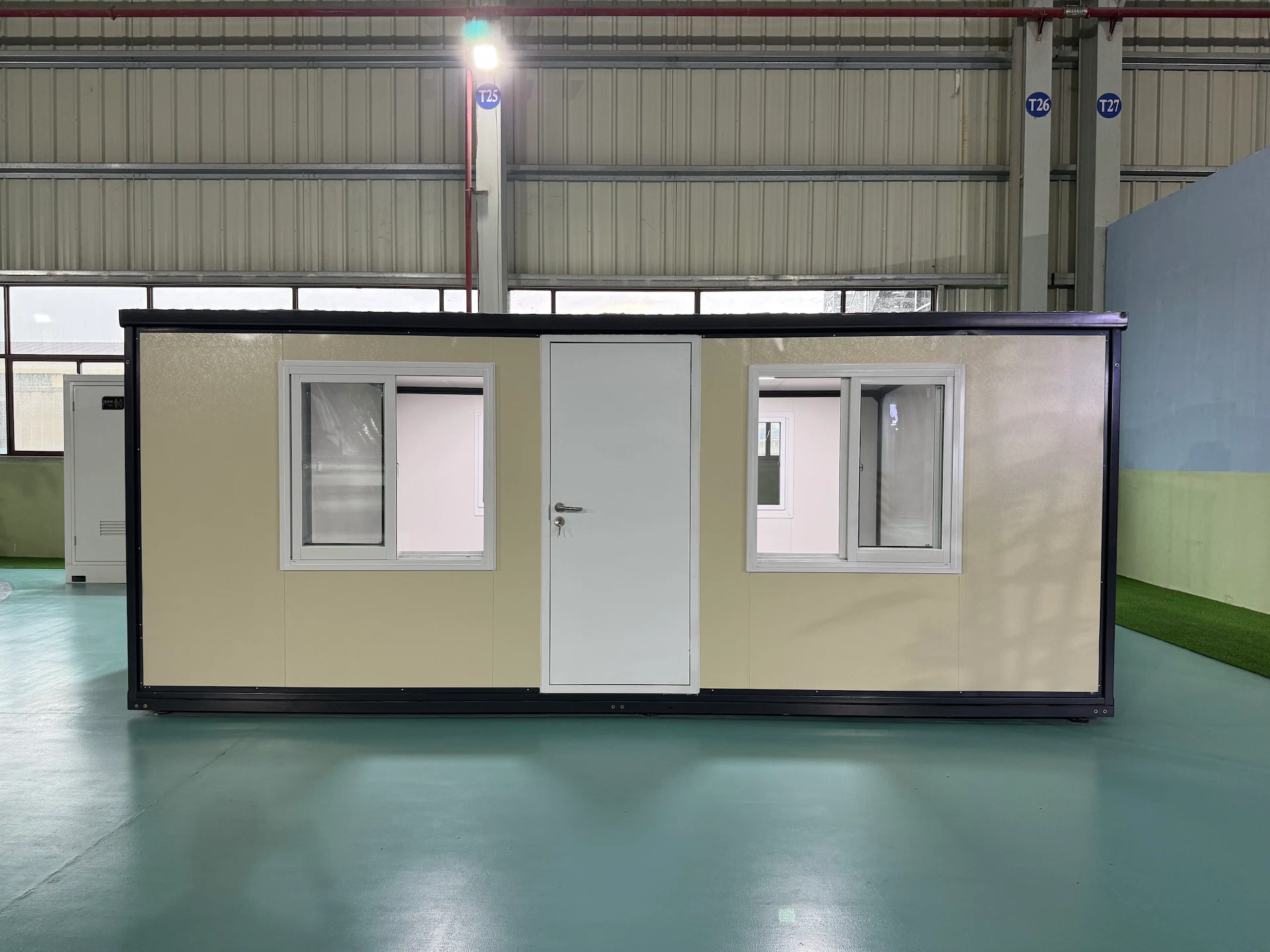
FLAT PACK CONTAINER HOUSE
Type-A Flat Pack Container House
A durable flat-pack container house designed for fast installation, efficient transportation, and flexible use across accommodation, office, and project applications.
Two-Story Design · Strong Steel Structure · Fast Installation · 20+ Years Lifespan
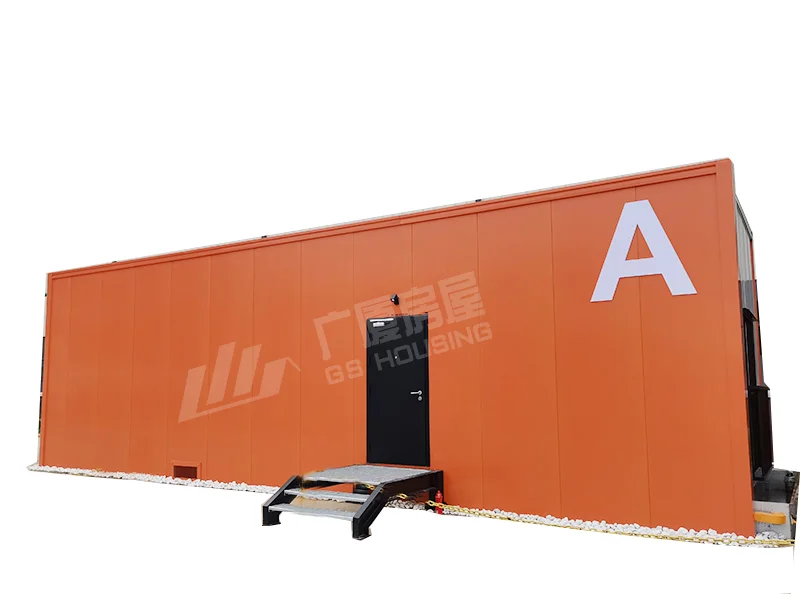


Casas prefabricadas en kit ——Tipo A
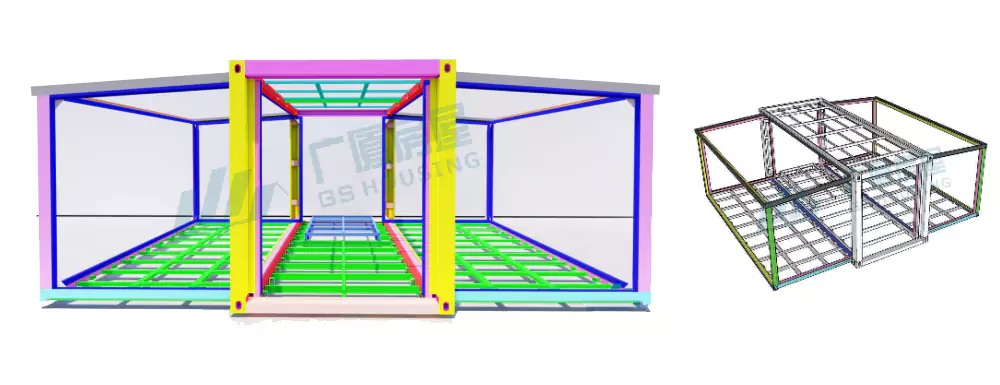
GS Housing presenta las casas contenedor desmontables Tipo A, una vivienda modular de dos plantas.
Fabricadas con acero galvanizado de alta resistencia (Q355B) y aislamiento ignífugo de lana de roca, estas viviendas prefabricadas ofrecen resistencia a los terremotos (magnitud 8), resistencia al viento (nivel 12) y una vida útil de más de 20 años.
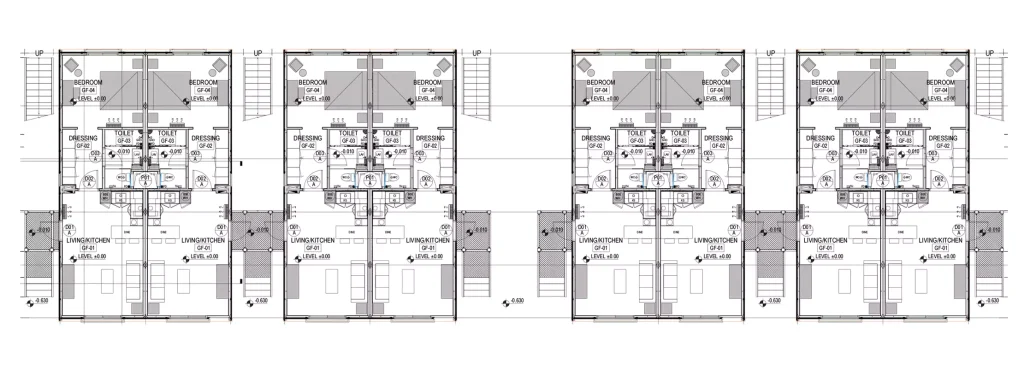
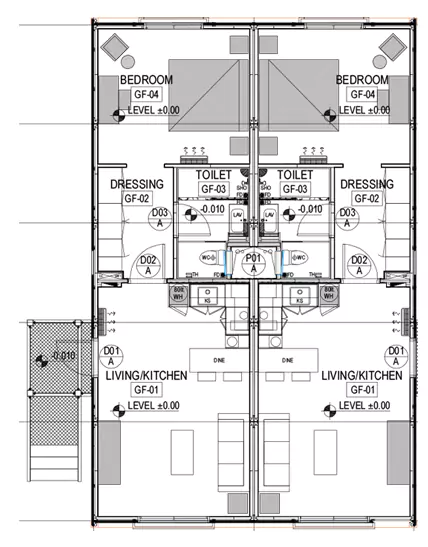
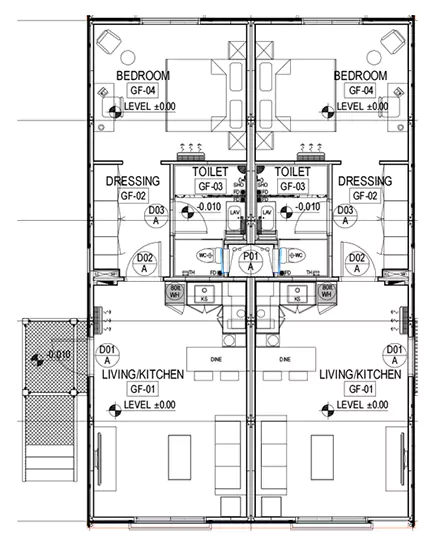
Adaptadas a tu proyecto: elige entre diferentes distribuciones y tamaños flexibles, todo ello con la rapidez y la eficiencia de la construcción modular de casas prefabricadas de acero.
Certificaciones: ISO / CE / ASTM / SGS / SASO / GOST-R / UL / BUREAU VERITAS
Aplicaciones y ventajas
Con el continuo desarrollo del mercado inmobiliario mundial, las casas prefabricadas a partir de contenedores, gracias a sus múltiples ventajas, se han ido convirtiendo poco a poco en una solución de vivienda alternativa muy popular en algunos países desarrollados.
1. Rentabilidadctivo
● Bajo coste: En comparación con las viviendas tradicionales, las viviendas en contenedores ofrecen unos costes de construcción y mantenimiento considerablemente más bajos.
● Reciclaje y reutilización: El uso de contenedores de segunda mano reduce aún más los costes de construcción y, al mismo tiempo, fomenta la sostenibilidad medioambiental.
2. Construcción rápida
● Estructuras prefabricadas: Los contenedores son prefabricados, por lo que solo requieren modificaciones básicas y su instalación para poder utilizarlos. Son especialmente adecuados para necesidades de alojamiento temporal o de emergencia.
● Producción e instalación eficientes: Los componentes de las viviendas modulares se fabrican en líneas de montaje industriales, lo que garantiza un plazo de construcción reducido. GS Housing ofrece soluciones modulares fáciles de instalar, junto con instrucciones detalladas de montaje, planos y vídeos. Para proyectos específicos, se puede enviar a ingenieros a la obra para que orienten en la instalación.
3. Gran flexibilidad
● Movilidad: Las estructuras de contenedores se pueden trasladar fácilmente, lo que las hace ideales para quienes necesitan cambiar de ubicación con frecuencia.
● Diseño modular: Los contenedores se pueden combinar o apilar libremente en función de las necesidades específicas, creando espacios variados y adaptables.
4. Sostenible desde el punto de vista medioambiental
● Reducción de los residuos de la construcción: En comparación con los métodos de construcción tradicionales, las viviendas a partir de contenedores reducen los residuos de construcción en aproximadamente 70% y suponen un ahorro de alrededor de 50% en el consumo energético.
● Reutilización de recursos: Los contenedores pueden reutilizarse varias veces sin sufrir daños, lo que supone una solución rápida y rentable.
5. Gran capacidad de adaptación
● Adaptable a diversos entornos: Las viviendas modulares son ideales tanto para zonas urbanas como rurales o remotas.
● Aplicaciones especializadas: Se utilizan con frecuencia como refugios temporales ante desastres naturales o situaciones de emergencia, como las viviendas de emergencia tras un terremoto.
6. Larga vida útil
● Estructura resistente y fiable: Las viviendas modulares ofrecen resistencia sísmica de hasta magnitud 8 y resistencia al viento de hasta nivel 12. Con una vida útil superior a 20 años, también destacan por su resistencia sísmica, resistencia a la compresión, aislamiento térmico, insonorización, resistencia al fuego, impermeabilidad y resistencia al viento.
| NO. | NOMBRE | ESPECIFICACIONES |
| 1 | Viga principal del bastidor superior | Material: Q355B, t = 3,0 mm, acero laminado en frío galvanizado, cantidad de galvanizado: 275 g/m² |
| 2 | Viga principal del bastidor inferior | Material: Q355B, t = 3,5 mm, acero laminado en frío galvanizado, cantidad de galvanizado: 275 g/m² |
| 3 | Columna | Material: Q355B, t = 4,0 mm, acero laminado en frío galvanizado, cantidad de galvanizado: 275 g/m² |
| 4 | Viga secundaria para el marco superior | Material: Q355B, t = 1,5 mm, acero laminado en frío galvanizado, cantidad de galvanizado: 275 g/m² |
| 5 | Viga secundaria para el bastidor inferior | Material: Q355B, t = 2,0 mm, acero laminado en frío galvanizado, cantidad de galvanizado: 275 g/m² |
| 6 | Material aislante para el marco superior e inferior | Fieltro de lana de roca de 100 mm de espesor con lámina de aluminio en una de sus caras, densidad aparente ≥ 60 kg/m³, comportamiento frente al fuego: clase A (incombustible); |
| 7 | Paneles para paredes exteriores | Panel sándwich de acero color de 50 mm de espesor, con una capa exterior de acero color galvanizado ondulado de 0,5 mm, una capa interior de acero color de aluminio-zinc de 0,5 mm y lana de roca con una densidad de 100 kg/m³. |
| 8 | Inner wall panel | 70mm thick color steel sandwich panel, with a 0.5mm corrugated galvanized color steel outer layer, a 0.5mm aluminum-zinc color steel inner layer, and rock wool density of 80kg/m³. |
| 9 | Gypsum board | ordinary gypsum board 、 moisture-proof gypsum board、 fireproof gypsum board |
| 10 | Sloping roof | 0.5mm thick V-840 white-gray color steel tile, 2C KZ system, with a zinc coating of 275g/㎡; cornices and columns are made of 0.8mm color steel plate. |
| 11 | Puerta | Black, fireproof for 60 minutes, master key |
| 12 | Ventana | The glass is made of transparent low-emissivity 8lov-e+16A+6+0.76pvd+ coated low-transmittance tempered laminated insulating glass |



| Servicio posventa | |
| 1 | ¿Ofrecéis servicio de instalación a domicilio? Proporcionamos planos y vídeos con instrucciones de instalación muy detalladas para cada proyecto. En el caso de proyectos de gran envergadura, contaremos con personal de instalación y supervisores in situ. La tarifa por el servicio in situ deberá negociarse con los clientes. |
| 2 | ¿Cuál es el plazo de entrega? Normalmente, el plazo de entrega es de 7 a 10 días tras la recepción del pago. En el caso de pedidos grandes, el plazo de entrega deberá negociarse. |
| 3 | ¿Cómo controlar la calidad de tu producto? 1. Calidad del diseño: piensa con antelación en los posibles problemas y ofrece una solución de diseño de alta calidad. 2. Calidad de la materia prima: elige materia prima de calidad 3. Calidad de la producción: técnica de fabricación precisa, trabajadores con experiencia y un riguroso control de calidad. |
| 4 | ¿Cómo abordar los problemas de calidad? La garantía es de 1 año. Durante el periodo de garantía, GS Housing se hará cargo de todos los problemas de calidad derivados de nuestra fabricación. |
| 5 | ¿Tienen sus productos una vida útil definida? En caso afirmativo, ¿cuánto dura? En condiciones climáticas y ambientales normales, la vida útil de la estructura de acero de una casa contenedor es de 20 años. |
| 6 | ¿Qué modelos tenéis para distintos climas (cómo se adaptan los productos a los distintos climas)? Zonas con vientos fuertes: mejorar la resistencia al viento de la estructura interna. Zonas frías: aumentar el grosor de las paredes o utilizar un buen material aislante, y mejorar la resistencia a la presión de la estructura. Zonas con alta corrosión: utilizar materiales resistentes a la corrosión o aplicar un recubrimiento anticorrosivo. |
Deja tu mensaje
Para obtener más información, rellena el formulario y te responderemos por correo electrónico en un plazo de 24 horas.