Introduction
Two suppliers submit quotations for the same workforce camp.
The layout looks identical.
The number of rooms is identical.
The floor area is identical.
Even the renderings look almost the same.
Yet one quotation is 20% cheaper.
For many procurement teams, the decision seems obvious.
Until six months after installation.
Workers start complaining that rooms are too hot during the day and too cold at night.
Air-conditioning systems run longer than expected.
Wall panels begin showing signs of wear.
Maintenance costs start increasing.
Suddenly, the “cheaper” camp is no longer the cheaper option.
For a large workforce camp, small differences in material quality can create major differences in maintenance costs, energy consumption, and long-term performance.
What caused the difference?
In many cases, it wasn’t the layout.
It wasn’t the room count.
It wasn’t the appearance.
It was the materials.
The steel structure hidden behind the walls.
The insulation inside the panels.
The fire-rated components that were never discussed during procurement.
For EPC contractors, mining companies, and project developers, understanding prefab camp material standards is often more important than comparing building prices alone.
Because when a camp is expected to operate for years in remote environments, material quality determines far more than appearance—it determines performance.
Why Two Identical-Looking Prefab Camps Can Cost 20% More Over Five Years
One of the biggest misconceptions in workforce accommodation procurement is that similar-looking camps deliver similar performance.
They don’t.
A camp built for a mining project in Congo faces very different challenges than one deployed in Northern Europe.
A coastal accommodation camp must resist corrosion.
A desert workforce camp must control heat.
A remote Australian mining camp must balance durability with transportation efficiency.
Yet many buyers still compare quotations using only:
- Building size
- Room quantity
- Unit price
What they often overlook are the prefab camp specifications hidden inside the quotation.
The thickness of the steel.
The type of insulation.
The density of the rock wool.
The fire rating of the wall panels.
Those details rarely appear in marketing renderings.
But they often determine whether a camp performs well five years later.
Why the Cheapest Steel Structure Prefab Camp Often Becomes the Most Expensive One
When people walk through a finished camp, they notice the rooms.
They rarely think about the frame underneath.
But the steel structure is what allows a camp to survive years of transportation, installation, weather exposure, and daily use.
A properly engineered steel structure prefab camp affects:
- Structural stability
- Wind resistance
- Long-term durability
- Transportation reliability
- Building lifespan
That may sound like a technical detail.
In reality, it affects almost everything.
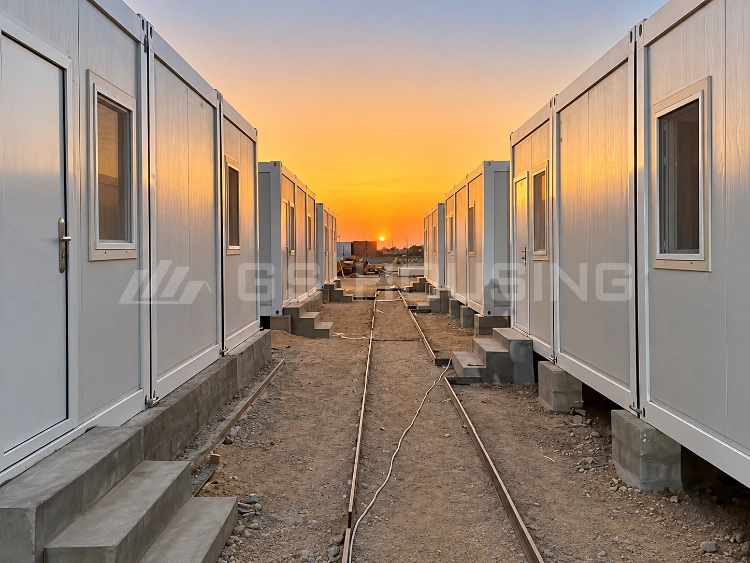
This is exactly why GS Housing’s flat pack container house system uses a galvanized steel frame manufactured under factory-controlled conditions.
Imagine a remote mining project where buildings are expected to remain operational for years
The system uses a galvanized steel frame building manufactured under factory-controlled conditions.
That may sound like a technical detail.
In reality, it affects almost everything.
Imagine a remote mining project where buildings are expected to remain operational for years.
A small reduction in steel quality may save money initially.
But multiplied across hundreds of buildings, it can significantly increase maintenance costs later.
Wall Panels Are Not Just Walls—They Determine How Workers Actually Live
Most worker complaints do not come from steel structures.
They come from indoor comfort.
Rooms that are too hot.
Rooms that are too noisy.
Rooms that feel uncomfortable after a long shift.
That’s where prefab home walls become important.
The wall system influences:
- Thermal insulation
- Acoustic performance
- Fire resistance
- Energy consumption
- Living comfort
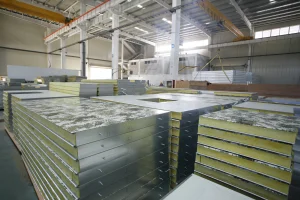
Many modern insulated modular buildings use rock wool sandwich panel systems to balance comfort, energy efficiency, and fire performance.
When evaluating suppliers, buyers should review:
- Insulation type
- Density
- Fire classification
- Thermal performance
Because workers don’t experience steel specifications.
They experience the walls every day.
Roofs, Floors, Doors and Windows: Small Details That Create Big Maintenance Costs
When buyers compare prefab camp quotations, attention usually goes to steel structures and wall panels.
But many long-term maintenance problems start elsewhere.
A leaking roof.
A damaged floor system.
Poorly sealed windows.
Doors that no longer close properly after years of daily use.
Individually, these may seem like minor issues.
Across a camp with hundreds of rooms, they quickly become operational concerns.
Key areas include:
Roof Systems
Roof materials affect weather resistance, insulation performance, and long-term durability.
Flooring Systems
Worker accommodation buildings experience constant foot traffic.
Durable flooring systems help reduce maintenance costs.
Doors and Windows
Doors and windows influence:
- Thermal insulation
- Noise reduction
- Security
- Indoor comfort
Electrical Systems
Electrical systems directly affect operational safety and long-term reliability.
A camp is only as reliable as its weakest component.
The Fire Safety Question Many Buyers Ask After the Camp Arrives
Interestingly, fire safety is often discussed late in the procurement process.
Sometimes too late.
Then someone asks:
“What fire rating do these panels have?”
For large worker accommodation projects, that question should be asked from the beginning.
Fire safety influences:
- Project approval
- Insurance requirements
- Worker protection
- Operational risk
When comparing suppliers, buyers should review:
- Fire-rated wall systems
- Fire test reports
- Fire-resistant doors
- Electrical protection systems
- Fire safety certifications
A quotation that appears 10% cheaper may simply include a lower specification.
Why Material Standards Change from Congo to Saudi Arabia
There is no universal material specification for every prefab camp.
The right configuration depends heavily on the environment.
- Middle Eastern projects typically prioritize thermal insulation and heat resistance.
- European workforce camps often focus on heat retention during winter.
- Coastal projects require stronger corrosion protection.
- African mining camps emphasize durability under continuous use.
- Remote Australian sites must balance transportation efficiency with long-term performance.
The environment should influence material selection just as much as building layout.
The Procurement Mistake That Creates Most Material Problems
Many buyers compare quotations using only three numbers:
- Building area
- Room quantity
- Total price
Unfortunately, those are often the easiest numbers to compare and the least useful ones for evaluating long-term performance.
The more important questions are:
- What insulation is inside the wall panel?
- What fire rating is being provided?
- What steel thickness is included?
- What corrosion protection system is specified?
Because once production begins, changing materials becomes expensive.
After installation, it becomes even harder.
This is one reason experienced EPC procurement teams often spend more time reviewing modular camp quality standards and workforce accommodation standards than negotiating discounts.
The Congo Mining Camp: Why Material Standards Matter at an 8,000-Person Scale
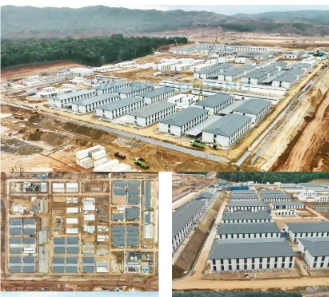
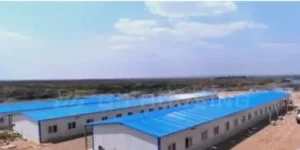
A useful example comes from GS Housing’s 8,000-person mining camp project.
The project included more than 1,100 modular housing units supporting one of Africa’s major copper mining developments.
At this scale, material selection stops being a technical discussion.
It becomes a long-term operational decision.
A workforce camp housing 8,000 people functions more like a small town than a temporary construction site.
Buildings operate continuously.
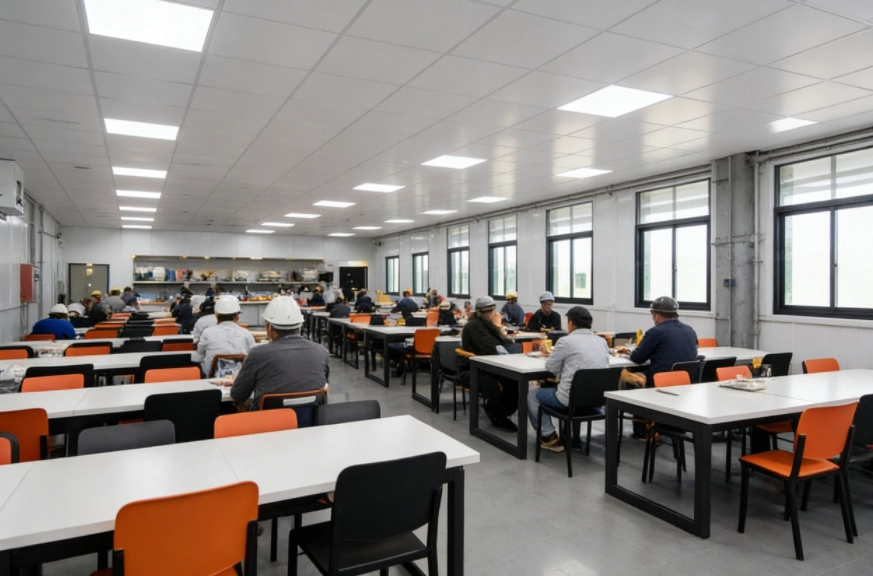
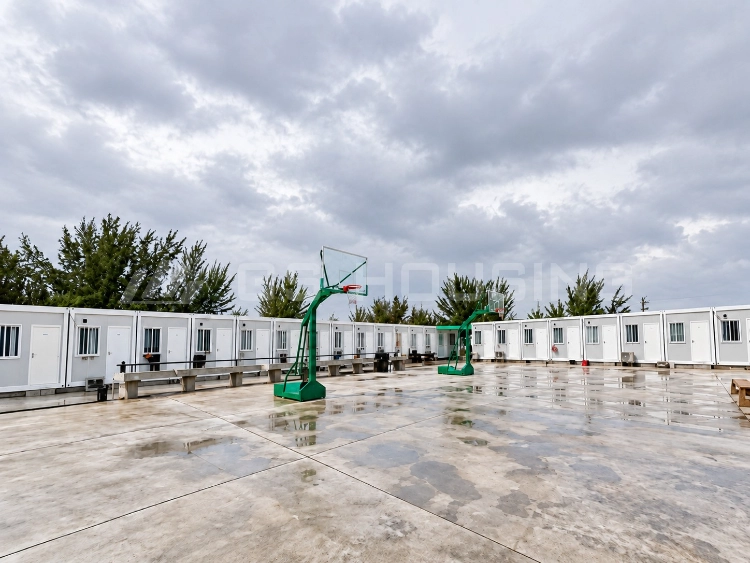
Workers use accommodation, offices, dining facilities, and public areas every day.
Under those conditions, even minor material deficiencies become amplified.
A wall panel issue affecting ten rooms is manageable.
The same issue affecting hundreds of rooms is not.
A small reduction in insulation performance may seem insignificant during procurement.
Across a large mining camp accommodation project, it can influence cooling costs, indoor comfort, and maintenance requirements for years.
The same principle applies to structural steel, corrosion protection, roofing systems, doors, windows, and electrical components.
For large mining operators managing remote workforce housing, material standards are not simply about compliance.
They are about reducing operational risk throughout the life of the project.
What Material Documents Should Buyers Request Before Signing a Contract?
Before approving production, buyers should request:
Structural Documents
- Steel grade specifications
- Structural calculations
- Wind-load reports
Fire Safety Documents
- Fire test reports
- Fire classification certificates
- Fire-rated door specifications
Insulation Documents
- Panel thickness
- Insulation material type
- Thermal performance data
Quality Certifications
- ISO certifications
- CE certificates
- SGS inspection reports
- BV inspection reports
Reliable suppliers are usually willing to explain material specifications in detail rather than relying only on product photos.
FAQ
Why can two prefab camps with the same layout have very different prices?
Because steel grades, insulation density, fire ratings, corrosion protection, roofing systems, and electrical components may differ significantly even when buildings appear identical.
Are insulated modular buildings necessary in hot climates?
Yes. High-quality insulation can significantly reduce cooling demand while improving worker comfort.
What documents should buyers request before approving production?
Structural specifications, fire test reports, insulation data, quality certifications, and material testing reports are among the most important documents.
Final Thoughts
When a camp is first installed, almost every building looks good.
The rooms are ready.
The walls are clean.
Everything performs exactly as expected.
That’s why material decisions rarely feel important during procurement.
The differences usually appear later.
Not in the first week.
Not in the first month.
But after years of daily use, changing weather conditions, and continuous occupancy.
At that point, the quality of the steel structure, insulation, fire protection, and corrosion treatment becomes much easier to see.
And much harder to change.
For most project teams, material specifications are not the most exciting part of camp planning.
Most buyers never notice material quality when the camp is delivered.
They notice it when maintenance costs start appearing.
If you’re currently comparing specifications for an upcoming project, you can contact our team to review material options based on your climate conditions, project requirements, and deployment environment.