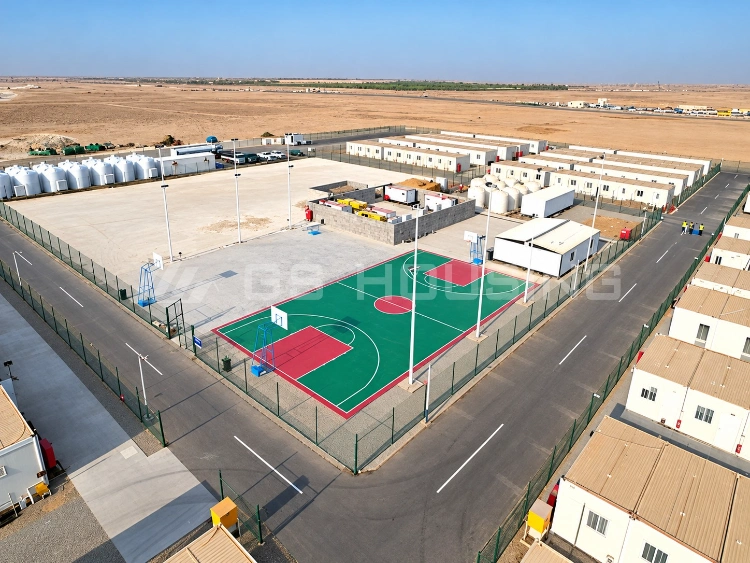
Mining projects often start before the site is ready for stable daily operation. Roads may still be rough, utility supply may be incomplete, and permanent buildings may not yet be possible. For project managers, prefabricated mining camp housing can help set up worker accommodation, site offices, dining areas, bathrooms, and other essential camp facilities during this early stage.
For buyers searching for prefabricated mining camp housing for remote sites, fast installation is only one part of the decision. The housing plan also needs to support transport access, daily use, safety, sanitation, and later camp expansion. GS Housing supplies modular container housing for mining camps, construction camps, worker accommodation, and large-scale project sites. Its solutions are more suitable for project buyers who need practical layouts, transport planning, and installation support rather than a simple room shell.
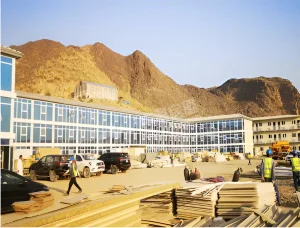
Why Are Prefabricated Houses Useful in Early Stage Mining Projects?
Early stage mining projects need buildings that can work before the full infrastructure is complete. A project team may need to house workers near the site, set up offices, and create basic service areas for food, hygiene, and safety. Quick installation houses help fill this gap with modular units that can be planned around real site needs.
Housing Before Permanent Infrastructure Is Ready
Permanent buildings often require longer approval, foundation, utility, and construction work. In a mining area, that can delay workforce mobilization. Prefabricated houses for mining areas with limited infrastructure allow project teams to create temporary or semi-permanent living spaces first, then adjust the site as permanent infrastructure develops.
For buyers, the first question is: what functions must be ready before mining work can move forward? The answer usually includes dormitories, bathrooms, dining space, and offices.
Reduced On-Site Construction Pressure
Remote mining areas may not have enough skilled local labor. Materials can also be difficult to deliver in small batches. Quick installation houses reduce on-site pressure because more work is shifted to factory preparation and modular assembly.
Buyers still need to prepare access roads, foundation conditions, unloading space, and installation sequence. The work becomes easier to organize when each unit has a clear function and assembly plan.
Faster Workforce Mobilization
Mining schedules often depend on getting people to the site quickly. If accommodation is delayed, workers may need to travel long distances each day or stay in unsuitable temporary shelters. That affects safety, rest, and daily efficiency.
Remote mining camp housing solutions should support fast workforce entry while keeping the camp organized. A well-planned camp helps workers live closer to the work area and gives managers enough space to control site operations.
What Should Project Managers Check Before Choosing Mining Camp Housing?
Choosing mining camp housing is not only about room size. Site access, worker number, climate, transport route, and future expansion all affect the right solution. A low-priced unit may become expensive if it is hard to ship, difficult to install, or unsuitable for local conditions.
Many mining camp problems come from early decisions that look small. A layout may save space but create long walking routes between dormitories and bathrooms. A camp may have enough beds but not enough dining, shower, or storage capacity. Project managers should check the whole operating flow before comparing unit prices.
Site Access and Transport Conditions
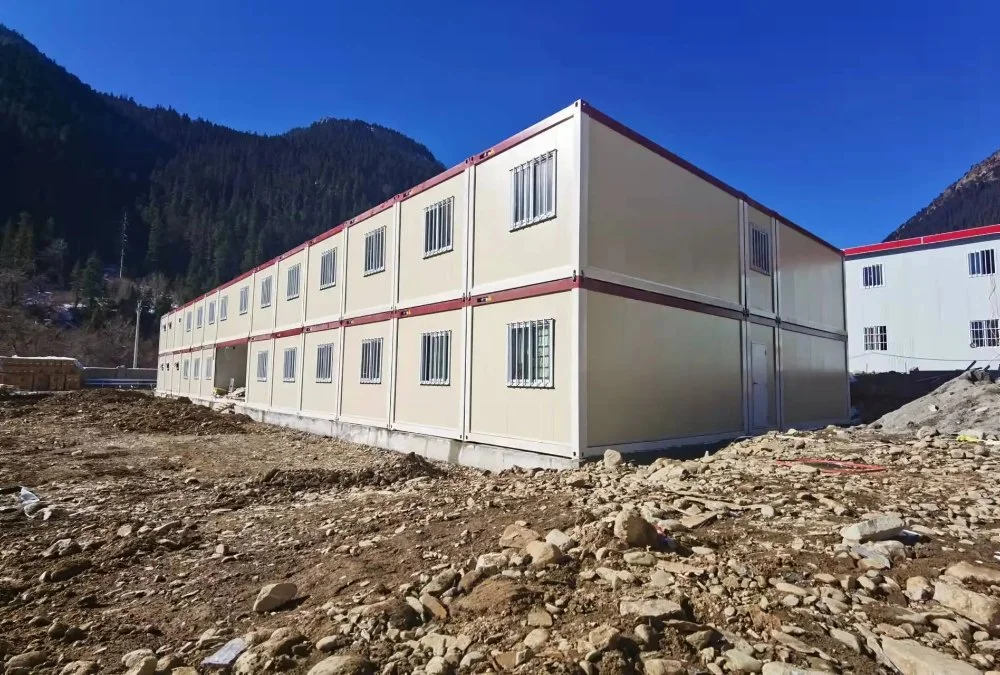
Before ordering, check road condition, truck access, unloading space, and available lifting equipment. Some mining areas are far from cities or located in mountainous regions. If the route is difficult, flat pack container houses for mining camps may be easier to arrange than large finished buildings because the transport plan can be more flexible.
The buyer should also confirm whether the site can store materials safely before assembly. Poor storage planning can damage components or slow installation.
Workforce Size and Functional Layout
A mining camp is a living system. If the camp layout is crowded or poorly arranged, daily movement becomes inefficient.
Project managers should confirm the number of workers, management staff, visitors, and subcontractors. Then they should define how many accommodation and office rooms are needed, and whether the camp requires a clinic, recreation room, or security booth.
Climate, Safety, and Local Compliance Requirements
Mining environments can be hot, cold, dusty, rainy, windy, or corrosive depending on location. Durable prefab houses for harsh mining environments should be selected with climate and safety in mind.
Which Facilities Should a Remote Mining Camp Include?
A remote camp should do more than provide beds. It should help workers rest, managers communicate, and the project run without daily disorder. The right facilities depend on workforce size, use period, climate, and camp management standards.
| Camp Function | Common Building Need | Buyer Checkpoint |
| Worker living | Dormitory units | Occupancy, ventilation, furniture, access route |
| Site management | Offices and meeting rooms | Layout, document storage, communication needs |
| Daily service | Dining, kitchen, bathroom, shower | Capacity, hygiene flow, water and drainage plan |
| Safety support | Clinic, guard room, storage | Location, emergency access, project rules |
Modular Worker Accommodation for Mining Camps
Modular worker accommodation for mining camps should be planned around comfort and daily use. Beds, lockers, lighting, windows, ventilation, and safe access all affect worker experience.
The dormitory area should be close enough to bathrooms and dining areas, but not placed where noise or vehicle traffic affects rest.
Site Offices and Management Buildings
Mining camp offices support engineering, safety, procurement, document control, and subcontractor coordination. These buildings should be easy to reach from the work zone, but separated from high-noise or high-traffic areas.
Office units may include meeting rooms, drawing review rooms, reception areas, and control rooms. If the site will expand, leave space for more office units or later relocation.
Daily Support Facilities for Remote Teams
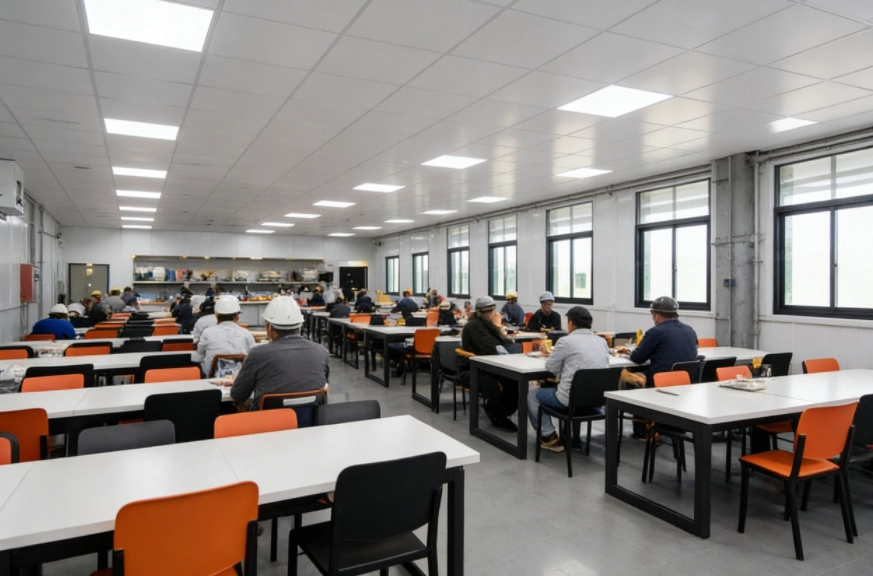
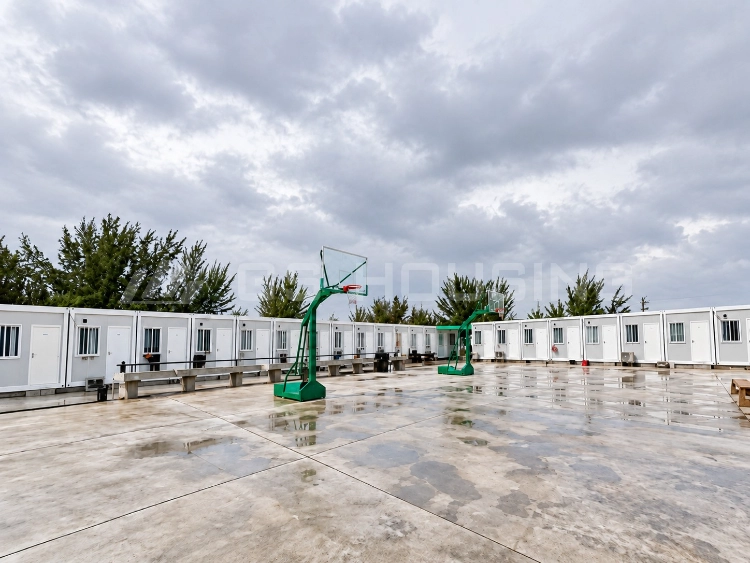
Dining halls, kitchens, bathrooms, shower rooms, medical rooms, laundry rooms, and recreation areas are not optional in many remote sites. Without them, camp life becomes harder to manage.
These facilities should be planned early because they affect utility connections, water use, drainage, hygiene, and worker movement.
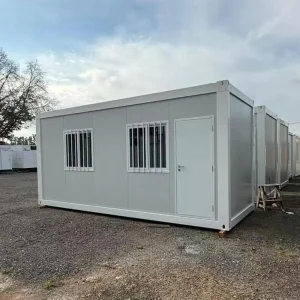
Which Prefabricated Housing Options Fit Mining Camp Projects?
Different mining projects need different housing solutions. Some need a complete camp system. Others need worker accommodation and offices first, then add service buildings later. GS Housing products can be matched with these different project stages.
Choose Prefabricated Camp when the project needs complete planning for accommodation, offices, dining, sanitary rooms, and support facilities. Use the Pakistan Accommodation Camp container house for 500 Workers as a reference when the buyer needs to study worker capacity, room zoning, circulation, and phased camp setup.
Prefabricated Camp for Complete Site Planning
A Prefabricated Camp is suitable when the buyer needs a planned camp rather than scattered temporary rooms. It can support accommodation, offices, temporary housing, and related site functions.
For mining projects, this solution is useful when the project manager needs to plan dormitory zones, office zones, dining areas, and sanitary areas together. The value is not only fast installation, but also better site order.
Container Camp Solutions for Worker Accommodation and Offices
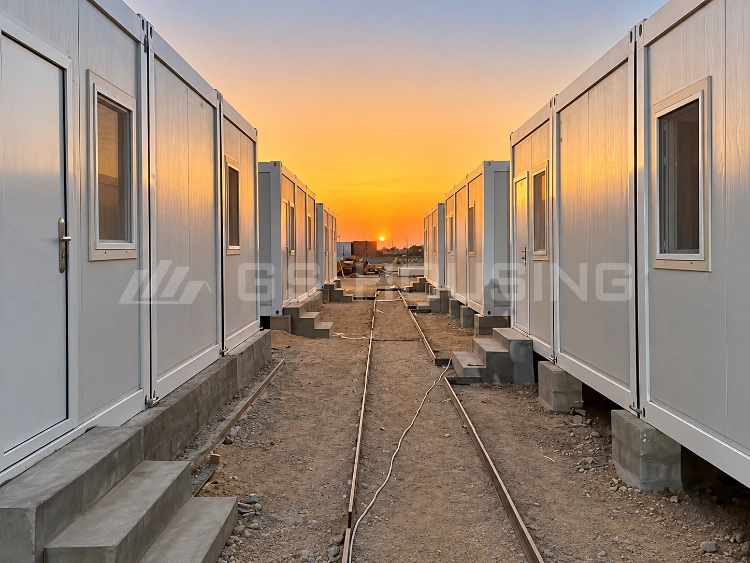
The Pakistan Accommodation Camp container house for 500 Workers is a useful reference for buyers planning worker housing and site facilities. It shows how container house camp planning can support workforce accommodation and project management needs in one organized system.
For project managers, this type of project reference shows what should be confirmed before ordering: worker accommodation scale, office location, dining and sanitary area placement, and space for later expansion. A container camp should be reviewed as a living and working system, not as separate rooms only.
Modular Design for Expansion and Relocation
Mining projects often change in stages. The first stage may need only housing and offices. Later, the camp may need more dormitories, a larger dining area, or extra service rooms.
Quick installation houses with modular planning can support this change better than fixed temporary structures. Units can be arranged with future expansion space, and some project layouts may allow relocation or reuse depending on site rules and product design.
How Can Buyers Reduce Risk Before Ordering Mining Camp Housing?
Procurement risk usually comes from missing information. A supplier cannot design the right camp if the buyer only asks for a price per unit. Mining projects need more detailed communication.
Clear Project Information Before Inquiry
Before sending an inquiry, prepare the project location, terrain, climate, workforce size, use period, required functions, available land area, transport conditions, and installation schedule.
If a rough layout is available, share it early. If not, list all required rooms and daily service needs. This helps the supplier suggest a practical camp structure.
Supplier Support from Camp Design to Installation Guidance
Buyers should ask what support is included before ordering. Useful support may include layout planning, product selection, packing advice, installation drawings, assembly guidance, and after-sales communication.
For remote projects, technical documents are especially important. They help the installation team reduce mistakes and keep the schedule more controlled. They also help procurement teams compare suppliers based on delivery support, not only unit price.
Contact GS Housing for Prefabricated Mining Camp Solutions
If your project needs quick installation houses for worker accommodation, offices, dining, sanitary areas, or remote camp support, prepare the site location, workforce size, transport route, required functions, and expected use period before the first discussion. You can contact GS Housing with drawings, sketches, or basic project information so the team can review whether Prefabricated Camp, container house planning, or a combined camp layout is more suitable.
Get a customized quotation for your Prefabricated Mining Camp solutions!
FAQ
Q: Is Prefabricated Mining Camp Housing Suitable for Remote Sites with Limited Infrastructure?
A: Yes. Prefabricated mining camp housing is suitable for remote mining sites where roads, utilities, and permanent buildings are not fully ready. They help project teams set up worker housing, offices, dining areas, and basic support facilities faster. They are also a practical form of prefabricated mining camp housing.
Q: What Should Be Included in Remote Mining Camp Housing Solutions?
A: Remote mining camp housing solutions usually include dormitories, site offices, meeting rooms, bathrooms, showers, dining halls, kitchens, medical rooms, laundry rooms, storage rooms, and security rooms. The exact layout should match workforce size and site operation needs.
Q: How Do I Choose Durable Mining Camp Housing for Harsh Environments?
A: Check the site climate, wind, rain, temperature, dust, corrosion risk, fire safety needs, and local requirements. Durable prefab houses for harsh mining environments should also come with clear installation guidance and enough supplier support for remote deployment.