Worker shortages can slow down on-site construction progress. Even with full equipment, sufficient materials and confirmed construction land, projects may face serious delays without enough skilled local workers. This issue widely troubles remote construction bases, infrastructure engineering, energy development and temporary site facilities.
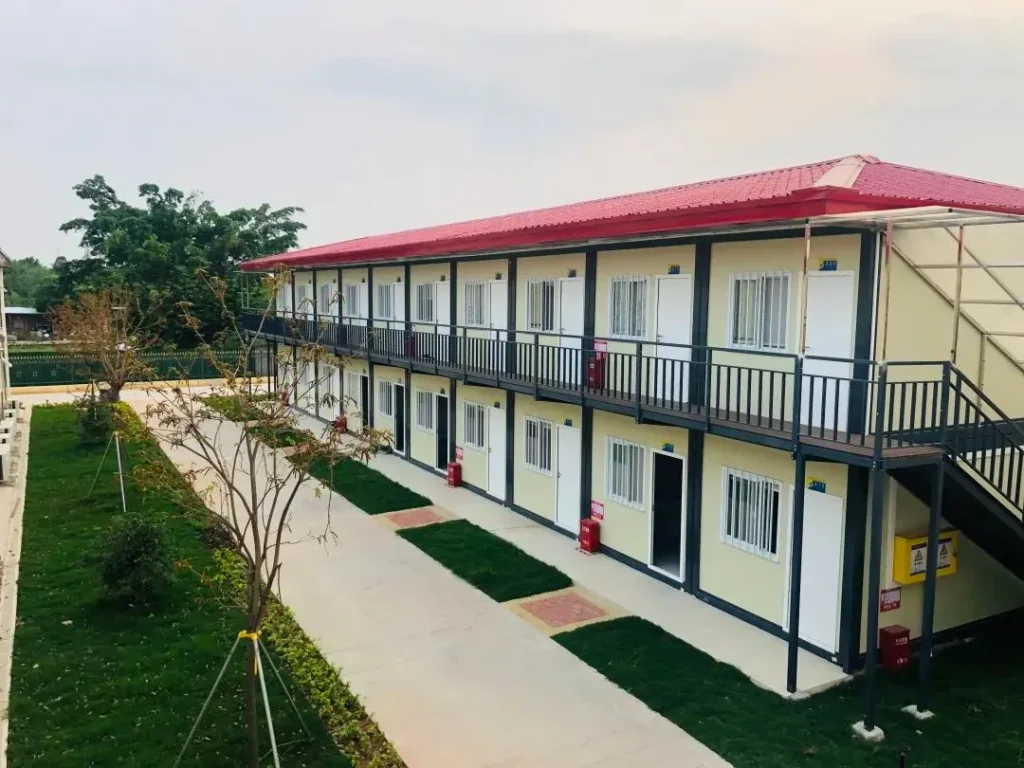
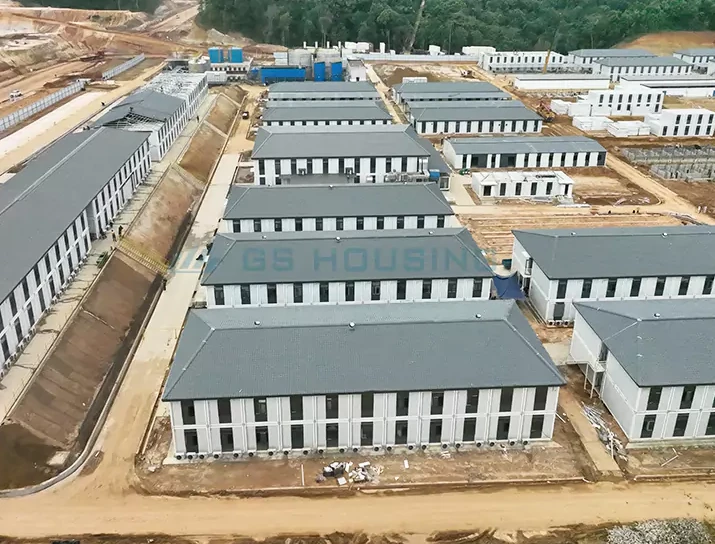
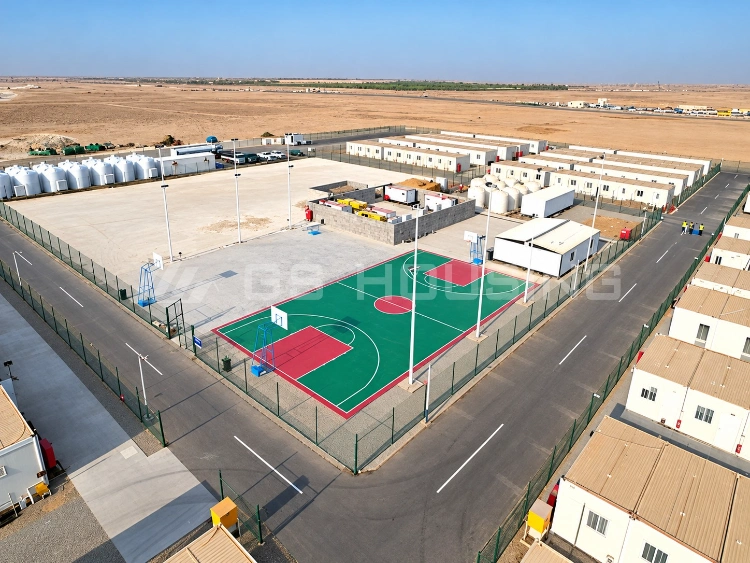
To bypass these labor bottlenecks, contractors are shifting from traditional site-builds to rapidly deployable modular housing. By prefabricating up to 90% of the building in a controlled factory environment, companies like GS 住宅 enable project managers to establish fully functional camps—even in extreme remote locations—before the main construction crew arrives.
Why Do Labor Shortages Create Delays in Modern Construction Projects?
Limited On-Site Workforce for Complex Building Tasks
Traditional site construction needs many workers at the same time. You need steel workers, electricians, plumbers, interior workers, waterproofing workers, and supervisors. If one trade is late, the next trade waits. In high-labor-cost markets, this becomes more painful.
In 2024, average hourly labor costs in construction reached €30.0 in the EU and €33.4 in the euro area. That number does not include the extra trouble caused by poor weather, rework, or subcontractor delays.
Table 1: below uses Eurostat 2024 labor cost data to show why reducing on-site work matters in European construction projects.
| Labor Cost Indicator in 2024 | EU | Euro Area |
| Whole economy average hourly labor cost | €33.5 | €37.3 |
| Construction average hourly labor cost | €30.0 | €33.4 |
| Annual rise in hourly labor costs | 5.0% | 4.5% |
Longer Construction Cycles Under Tight Project Schedules
Workforce camps are often a critical part of early project mobilization; if your accommodation and sanitary facilities are delayed, the main contractor cannot mobilize the workforce. That is why rapidly deployable modular housing works well here. It helps you prepare living and working space while the main site work moves forward.
Greater Demand for Simplified Installation Processes
A simple installation process is not a small detail. It reduces site management pressure. It also helps when local workers are not familiar with modular construction. Standardized components, clear drawings, and factory-prepared systems make the job easier to control.
How Rapid Deployment Modular Buildings Reduce On-Site Labor Pressure
Factory Prefabrication That Moves Work Off Site
With rapidly deployable modular housing, much of the work is finished in the factory. Structure, wall panels, insulation, basic wiring, plumbing parts, and interior fittings can be prepared before shipment. Many systems, such as basic electrical components, plumbing interfaces, insulation, and interior finishes, can be prepared in the factory, reducing the amount of secondary on-site work.
Standardized Components for Faster Assembly
Standardization is practical. It makes transport planning easier. It makes spare parts easier to manage. It also helps your site team repeat the same installation steps instead of solving new problems every day.
According to McKinsey’s benchmark reports on construction productivity, utilizing rapidly deployable modular housing can compress project schedules by 20% to 50% while reducing on-site labor requirements by up to 40%. For projects with a strict opening date, that time saving is often the real reason buyers choose modular buildings.
| Construction Method Factor | Traditional Site Build | Rapid Deployment Modular Build |
| Main work location | Mostly on site | Mostly factory plus site assembly |
| Schedule impact | More exposed to weather and labor gaps | More controlled before delivery |
| Reported timeline reduction | Not applicable | 20%–50% in modular projects |
| Site coordination | Many trades at once | Fewer trades and repeated assembly steps |
Reduced Dependence on Large Installation Teams
A remote project may not have enough skilled workers nearby. Bringing workers from another region adds visas, accommodation, food, transport, and supervision work. Modular buildings reduce this pressure because the site task becomes more about assembly, positioning, connection, and checking.
What Makes Modular Building Solutions Suitable for Time-Sensitive Projects?
Fast Deployment for Workforce Accommodation Offices and Camp Facilities
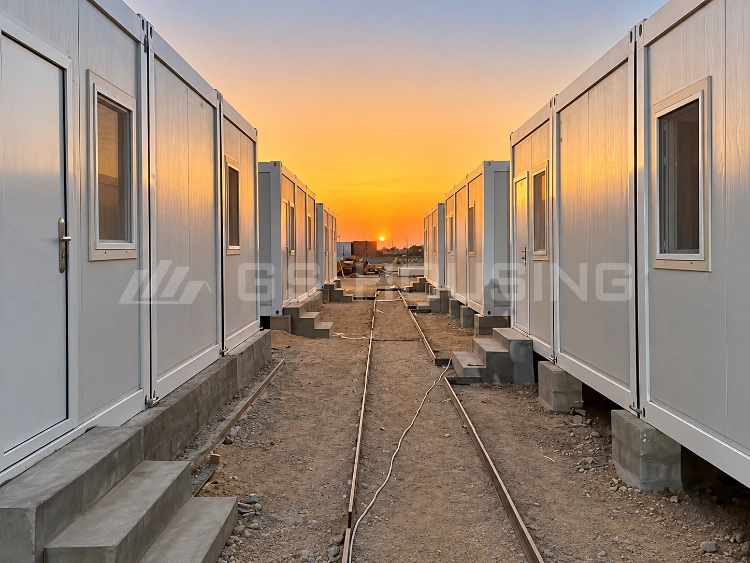
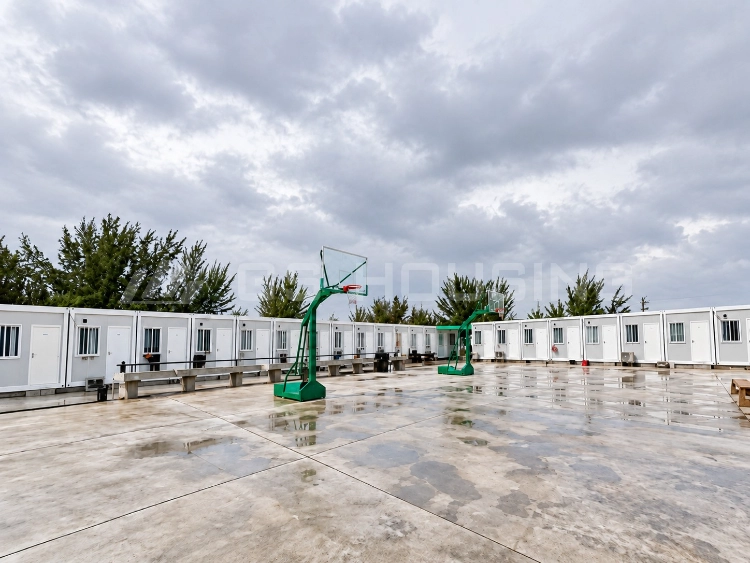
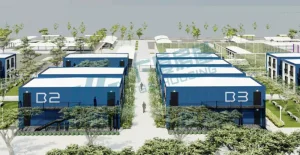
Modern camps require multi-functional zones—ranging from dormitories and industrial dining halls to clinics and command centers. Flat Packed Container Houses are engineered to be seamlessly combined to meet these complex site plans.
For a mining camp or infrastructure camp, this is useful because the camp can grow in phases. You can start with dormitories and offices, then add dining, washing, clinic, or meeting space as the team expands.
Flexible Layouts for Different Project Functions
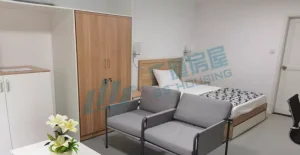
The same flat-packed container system can support worker dormitories, remote site offices, meeting rooms, kitchens, or site command rooms. You do not need a separate building method for every function. That makes procurement cleaner and modular camp management significantly easier.
Reliable Delivery for Remote and Large-Scale Projects
Remote delivery needs more than a product list. It needs packing, loading, transport sequence, lifting points, and installation order. GS Housing provides end-to-end global project support—from initial camp design and modular manufacturing to organized logistics and on-site installation guidance.
How Do Climate and Site Conditions Affect Rapid Modular Deployment?
Durable Structures for Diverse Outdoor Environments
Remote projects face wind, rain, heat, cold, dust, and sometimes coastal air. A modular building should not only arrive fast. It must remain usable after months or years of work. Steel structure, insulation, waterproofing, and surface protection all matter.
To ensure performance in harsh environments, GS Housing’s standard modular units adhere to strict structural metrics:
| Technical Specification | Standard Performance Metric |
| 設計使用壽命 | 15–20 years (depending on climate) |
| Wind Resistance | Up to Grade 11 (100–117 km/h) |
| Seismic Resistance | Grade 8 |
| Roof Snow Load | 0.5KN/m² |
| Assembly Speed | 3-4 skilled workers can install 1 standard unit in 3 hours |
Organized Transportation Handling and Installation Planning
Many project issues happen between factory and site. Rough roads, long sea freight, lifting damage, missing parts, and poor storage can slow down installation. A good supplier plans packing and transport from the start. Flat-packed delivery is useful because it can reduce volume and make long-distance shipment easier.
Technical Coordination From Factory to Project Site
You still need site coordination. Foundation, drainage, crane access, local permits, and utility connection should be checked early. This is where project support matters. A buyer should share site photos, layout drawings, climate conditions, and installation schedule before production starts.
How GS Housing Supports Rapid Deployment Camp and Housing Projects
Integrated Support From Design to Delivery
The service value is clear: design first, manufacture next, then organize shipment and installation support. This helps you avoid the common mistake of buying buildings before the camp layout is ready.
Proven Experience in Large and Urgent Projects
For large workforce camps, speed alone is not enough; execution certainty is required. Instead of generic promises, GS Housing relies on proven project execution. For example, in a recent remote mining infrastructure project, our team designed, manufactured, and delivered a fully functional 500-person accommodation camp within just 45 days.
Contact GS Housing for Workforce Camp and Remote Project Building Solutions
If you are planning a camp far from a city or port, share the site location, camp capacity, road access, climate, room functions, and delivery schedule. A clearer early plan will make the whole project easier. GS Housing is ready to step in with a project-based camp solution tailored to your site.
取得客製化報價 for Workforce Camp and Remote Project Building Solutions!
常見問題
Q: Can rapidly deployable modular housing be used for both temporary and semi-permanent camps?
A: Yes. It can be used for temporary workforce camps, construction offices, emergency housing, and longer-use camp facilities, depending on the design and local requirements.
Q: Is modular housing suitable for cold or wet climates?
A: Yes. Insulation, wind resistance, waterproofing, and drainage design can be configured according to local climate conditions and project requirements before production.
Q: What information should I prepare before asking for a solution?
A: Prepare the project location, camp capacity, room functions, site layout, climate conditions, transportation access, local rules, and expected delivery schedule. This makes the proposal much more accurate.