项目概述
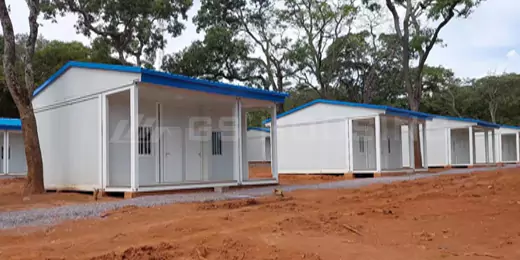
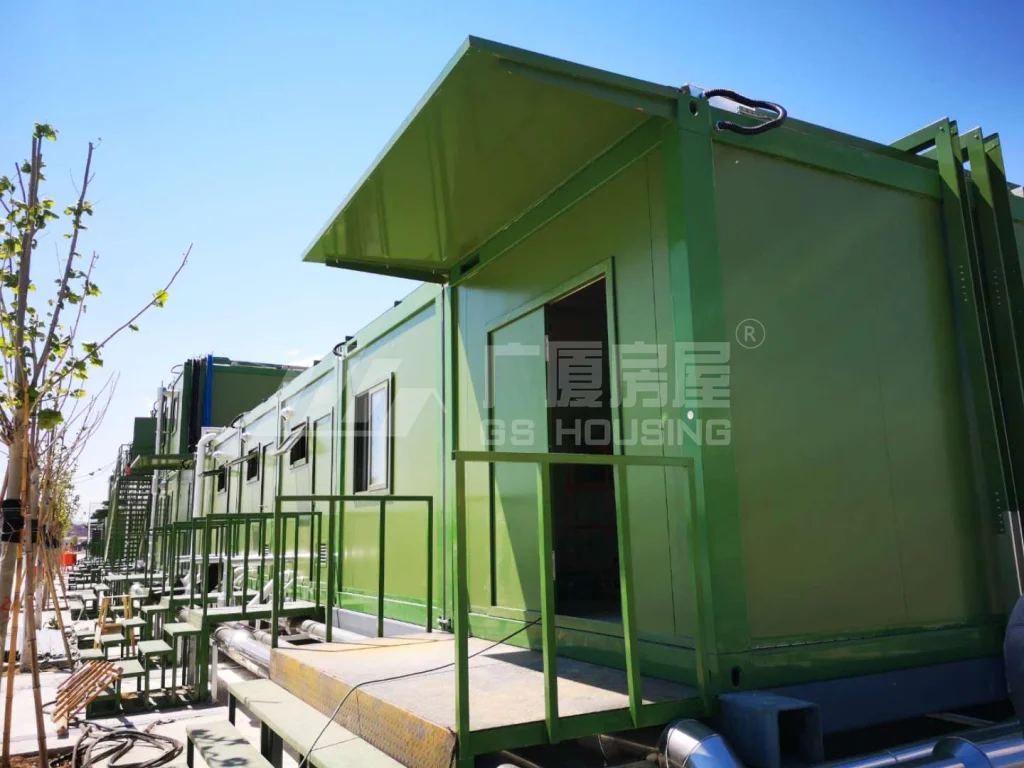
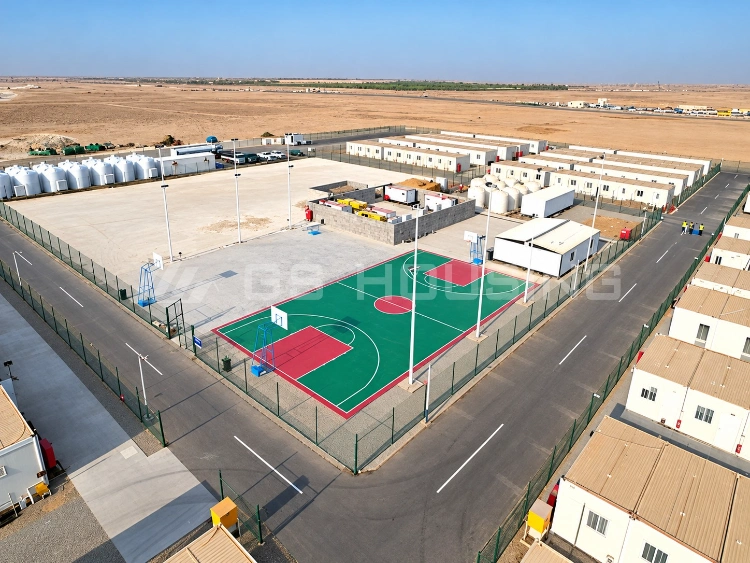
该 modular camp in Oman is designed to provide office, accommodation, sanitation, and support facilities for remote construction sites where permanent infrastructure is limited. In many remote project locations, contractors need a practical camp system that can be installed quickly, used efficiently, and adjusted according to project needs. This Oman project uses 56 flat-pack houses to create a solar-powered temporary workforce accommodation camp that supports both daily work and living requirements.
The project combines container office buildings, modular accommodation units, and portable sanitation modules into one organized site facility system. Instead of relying on traditional on-site construction, the camp uses prefabricated modular units that are produced in advance and transported to the site for installation. This helps reduce construction complexity in remote areas and allows the project team to establish usable facilities within a controlled schedule.
这 modular camp is not only a group of temporary rooms. It is planned as a complete workforce accommodation solution with office areas, living units, sanitation facilities, and energy support. For remote construction projects in Oman, this type of camp can provide a more flexible and practical site environment.
项目概况
- 项目类型:Temporary workforce accommodation camp
- 地点:Oman
- 比例尺:56 flat-pack houses
- 主要功能:Office, accommodation, sanitation, and support facilities
- Key Feature:Solar-powered camp configuration
- 建筑系统:Flat-pack modular construction
- 供应商:GS住房
These project facts show that the camp is a combined modular facility system. The use of flat-pack houses allows the project to form a complete site layout with office, accommodation, and sanitation functions. The solar-powered configuration also makes the solution more suitable for remote areas where stable electricity supply may be limited.
Modular Camp Design for Remote Sites
Modular Camp Design for Remote Sites
该 modular camp design focuses on practical use in remote construction environments. Oman’s climate and site conditions require buildings that can support daily operation while remaining easy to transport and install. Flat-pack modular units are suitable for this type of project because they can be manufactured in a controlled factory environment and assembled according to the actual site layout.
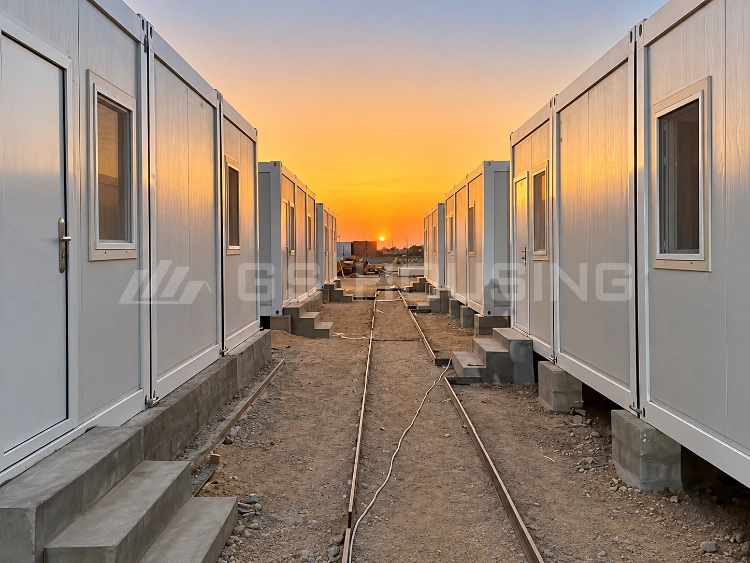
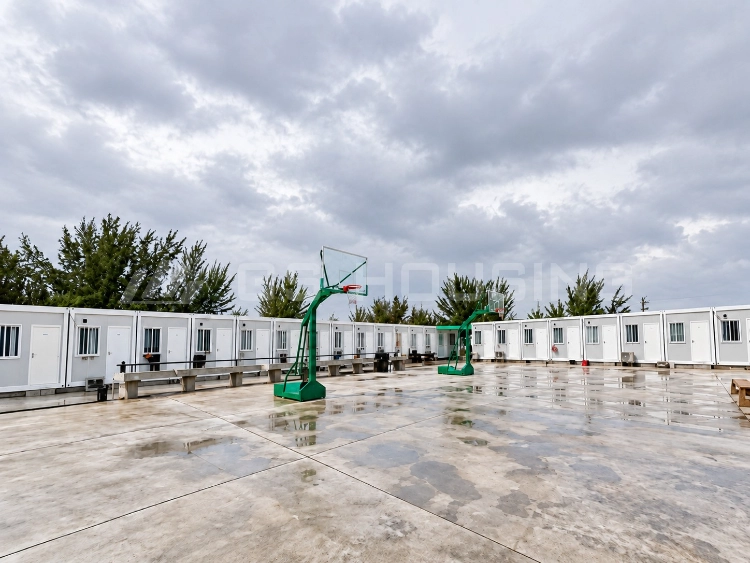
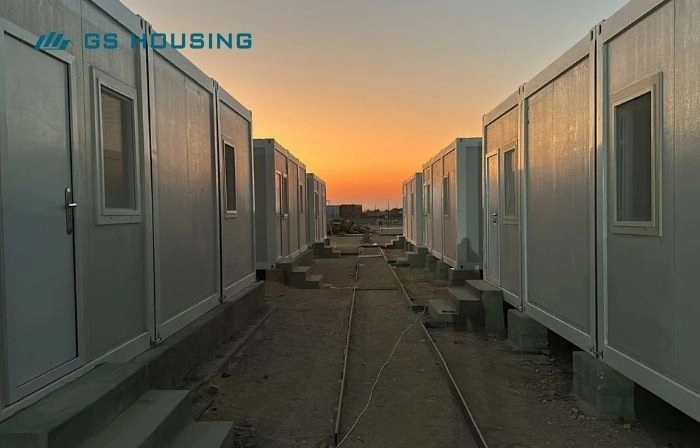
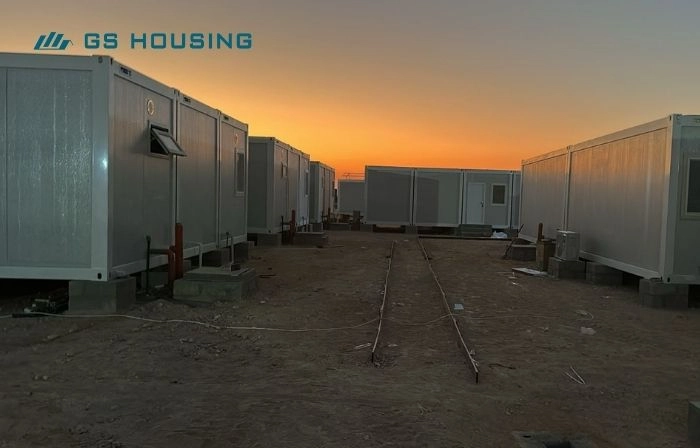
The camp layout can be arranged based on workforce size, site access, and functional requirements. Office units can be placed near the management area, accommodation units can be arranged in living zones, and sanitation modules can be distributed for convenient daily use. This zoning method helps the camp operate as a structured site facility rather than a scattered temporary housing area.
For contractors, this layout improves management efficiency. Workers can live close to the site, project managers can operate from the office area, and sanitation facilities can support daily hygiene needs. Each function is connected within one modular system.
Solar-Powered Office Area
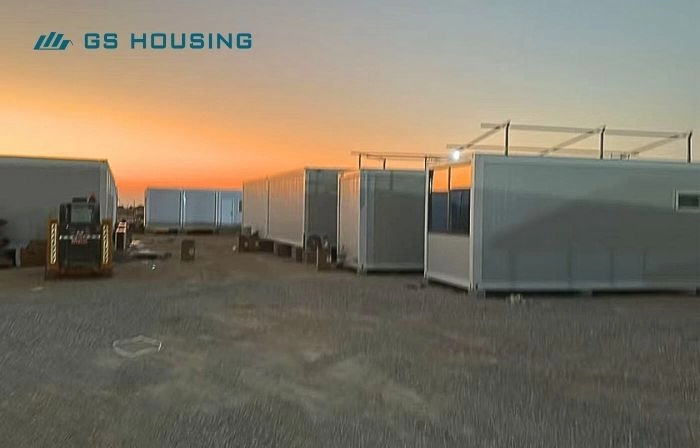
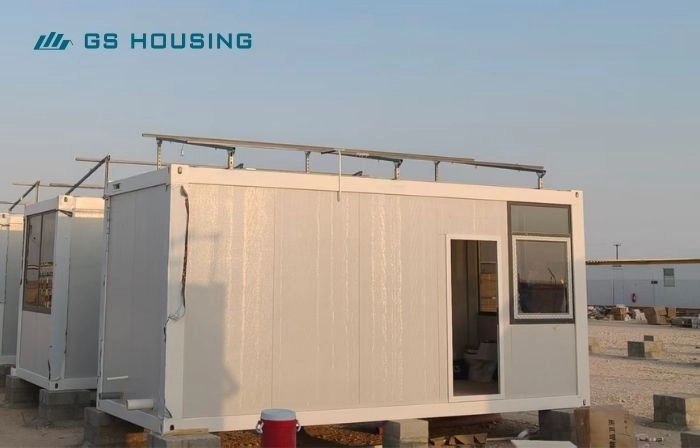
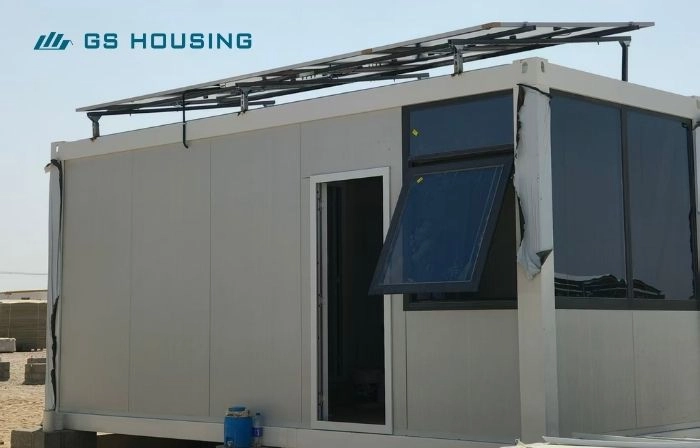
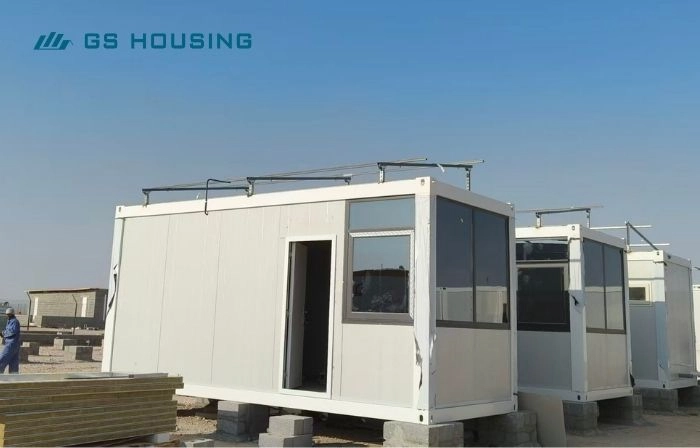
A key feature of this Oman project is the solar-powered office area. In remote construction sites, access to electricity can be limited or expensive. By using solar panels and battery storage, the office area can support lighting, air conditioning, computers, and other basic office equipment.
This makes the modular camp more practical for remote locations. The solar system helps reduce dependence on diesel generators and supports more stable daily office operation. For project teams, this means office work, communication, document handling, and site coordination can continue with less pressure from power supply limitations.
The solar-powered setup also supports long-term operating cost control. Fuel transportation and generator maintenance can increase costs on remote sites, especially over longer project cycles. A solar-supported camp system can help reduce part of this burden while improving daily energy availability.
Workforce Accommodation Function
Workforce Accommodation Function
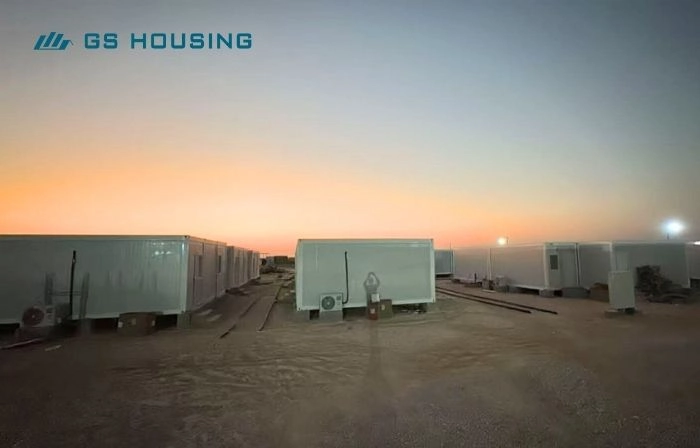
Workforce accommodation is one of the most important parts of this modular camp. Workers on remote construction projects often need to live near the work area, especially when surrounding housing resources are not available. Modular accommodation units provide practical living spaces that can be installed close to the project site.
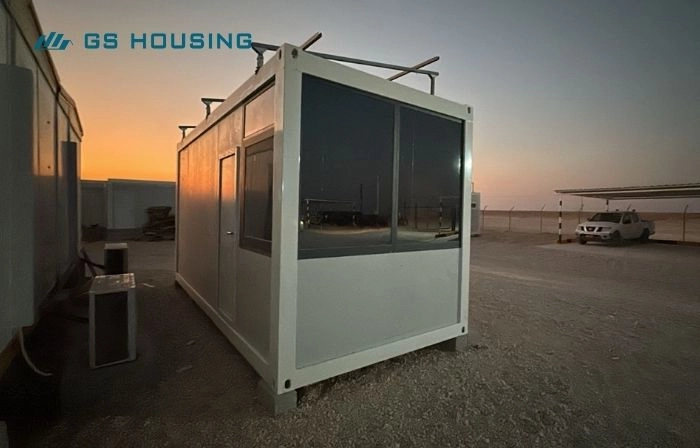
The accommodation units are designed for daily use, with insulation, doors, windows, internal space, and basic living functions. Depending on the project requirements, the layout can be adjusted for different room types and worker numbers. This flexibility allows the camp to support changing workforce needs during different project stages.
A properly planned accommodation area can also improve site management. When workers live within the same organized camp, daily movement, meal arrangements, work scheduling, and safety management become easier to coordinate.
Portable Sanitation Modules
Portable Sanitation Modules
Sanitation facilities are essential for any temporary workforce accommodation camp. This project includes portable sanitation modules that support the daily hygiene needs of workers and staff. These units can be installed as part of the camp layout and positioned according to convenience, access, and site planning.
For remote projects, sanitation modules are especially important because public infrastructure may not be available nearby. A complete modular camp should not only provide accommodation and office space, but also support basic living standards. Toilet and shower facilities help make the camp more usable for longer project periods.
The use of portable sanitation modules also improves flexibility. If the camp layout changes or expands, sanitation units can be adjusted together with accommodation and office units.
Fast Installation and Mobility
Fast Installation and Mobility
One of the main advantages of this modular camp is fast installation. Flat-pack houses are designed for efficient transportation and assembly. Compared with traditional buildings, modular units can reduce the amount of on-site construction work and shorten the preparation time for temporary site facilities.
This is valuable for contractors working in remote areas of Oman. Construction projects often need site offices and accommodation before the main work begins. A modular camp can be deployed quickly, helping the project team start operations sooner.
Mobility is another important benefit. After one project phase is completed, the units can be dismantled, relocated, or reused depending on future project needs. This makes the camp more practical for contractors managing multiple remote construction sites.
Modular Camp Value for Oman Projects
Modular Camp Value for Oman Projects
该 modular camp provides practical value for remote workforce accommodation in Oman. It combines several key needs into one system: office operation, worker living, sanitation support, and energy supply. This makes it suitable for construction sites, infrastructure projects, energy projects, and other remote working environments.
The solar-powered feature is especially useful for areas where electricity supply is limited. The flat-pack construction system supports transportation and installation efficiency. The modular layout allows the camp to expand or adjust as project needs change.
For project owners and contractors, this solution helps reduce the difficulty of building temporary facilities in remote locations. It also provides a more organized and manageable environment for workers and project teams.
GS住房 Role in the Project
GS住房 Role in the Project
GS Housing provides modular building solutions for temporary workforce accommodation and remote site camps. In this Oman project, GS Housing supports the delivery of flat-pack houses, modular accommodation units, container office buildings, and portable sanitation modules.
The project reflects how GS Housing applies modular construction to practical site needs. By combining design, production, transportation, and camp planning, the company provides a complete solution for remote construction environments. This makes the modular camp suitable for projects that require fast deployment, flexible layout, and reusable building systems.
结论
结论
该 modular camp in Oman provides a practical workforce accommodation solution for remote construction sites. With 56 flat-pack houses, the project integrates container office buildings, modular accommodation units, portable sanitation modules, and solar power support into one complete camp system.
By using prefabricated modular construction, the camp can be installed efficiently and adjusted according to project requirements. The solar-powered office area helps improve energy independence, while the accommodation and sanitation modules support daily living needs. For remote construction projects in Oman and similar regions, this type of modular camp offers a flexible, reusable, and site-ready solution for workforce accommodation and project management.