Site delays cost money. When setting up mining sites, field offices, or remote projects, project leaders cannot afford slow construction times. During the 139th Canton Fair, buyers made their priorities clear: they need secure, fast, and adaptable modular building options that reduce field labor. They sought more than short-term shelters; they aimed for dependable setups to keep their workforce safe and ready. For business-to-business clients, the core demands remain constant: rapid shipment, firm standards, and expandable designs.
GS住房 is a modular building provider with large-scale production capacity, project support experience, and international delivery capabilities. For workforce camps, temporary offices, and remote project sites, GS Housing can provide safe, practical, and ready-to-assemble modular building solutions.
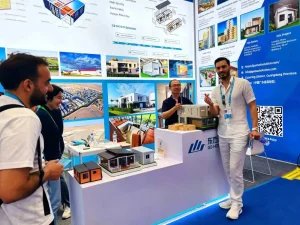
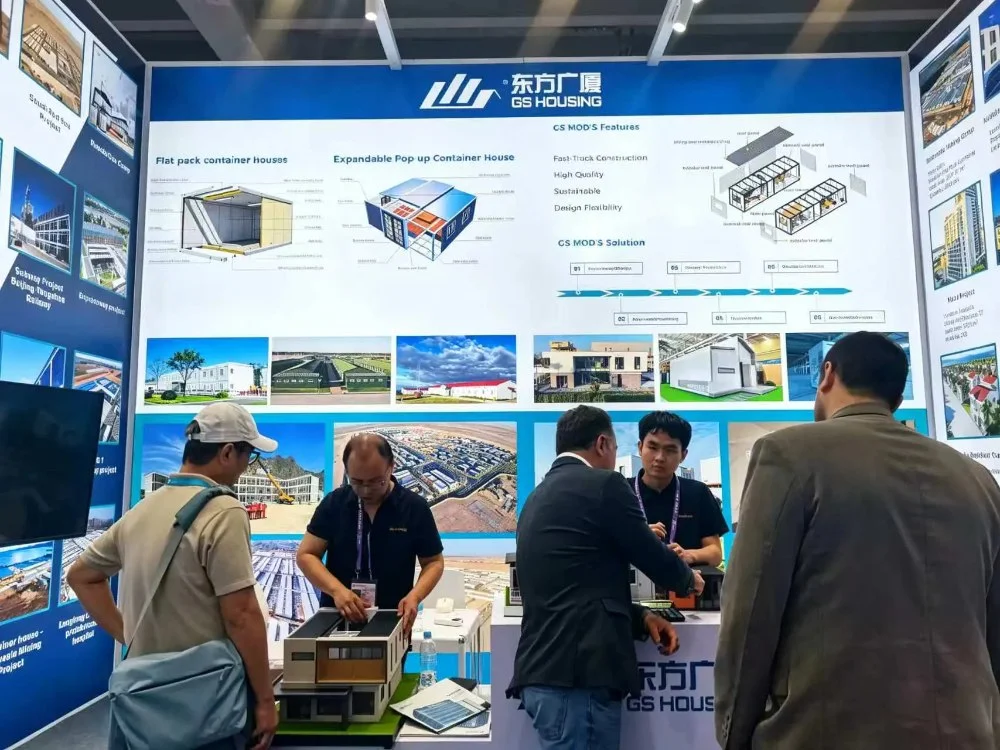
Visitor Engagement and Business Discussions at the GS Housing Booth
The booth served as a useful gathering spot for project owners, builders, buying groups, and camp organizers. Numerous guests came with actual project questions. These covered worker lodging counts, site launch speed, needed camp roles, and ways to ease setup strain.
Such talks revealed that modular building goes beyond simple unit purchases. Success calls for proper item selection, straightforward plan mapping, plant standard checks, and trustworthy shipment backing. Thus, projects run smoother from start to finish.
Booth Highlights: Product Demonstrations, Project Consultations, and Client Meetings
Item displays let attendees view modular home creation, transport, joining, and linking processes. One unit might function as an office, rest area, health post, guard room, meeting room, storage unit, or cleaning space. Several units could shape lodging sections, admin zones, meal areas, and support buildings.
Task reviews brought added worth. Discussions included field measure, weather, staff amount, structure roles, shipment time, assembly order, and later growth. These factors determine if the end camp operates well post-arrival. Careful planning ensures everything fits the real needs.
High Visitor Interest in Flat-Pack Container Houses and Prefabricated Building Solutions
Flat-pack container houses gained solid notice. They tackle pressing task demands with speed. These suit group output, bendable designs, and rapid setup. For efforts requiring lodging, offices, cleaning rooms, cooking areas, dining halls, shower units, storage units, or control posts, flat-pack container houses aids in building a working field using less field effort.
Prefabricated building choices also caught eyes from clients wanting bigger designs or finer-tuned structures. If an effort demands broader inner areas, a steadier look, or exact role mapping, prefabricated homes could match better. Such options provide lasting value for varied uses.
Showcasing Key Products and Expanding Global Reach
Once early chats wrapped up, plenty of clients sought a straightforward reply: which product type best matches their project needs? The response ties to field setup, use span, needed volume, structure roles, ease demands, and shipment timeline. Matching these leads to better outcomes.
展出的主要产品
Choosing the right structure depends on your field setup and use span. Here is a direct breakdown to guide your decision:
| 功能 | Flat-Pack Container Houses | Prefabricated Houses |
| Best For | Fast deployment, temporary camps, tight site access | Long-term use, large common areas, tailored layouts |
| Installation Speed | Very fast (pre-assembled frames and roofs) | Moderate (requires more field assembly) |
| Common Uses | Worker lodging, site offices, clinic rooms, washrooms | Mega dining halls, training centers, recreation facilities |
| Flexibility | High (easy to stack, add, or move) | High (scalable for large floor plans) |
In many large-scale efforts, a blended approach proves ideal. Plant managers often set up Flat-Pack containers for quick lodging and rely on Prefabricated houses to build spacious common areas. This mix balances speed and daily function.
Global Project Cases: Mining Camps and Remote Workforce Accommodation
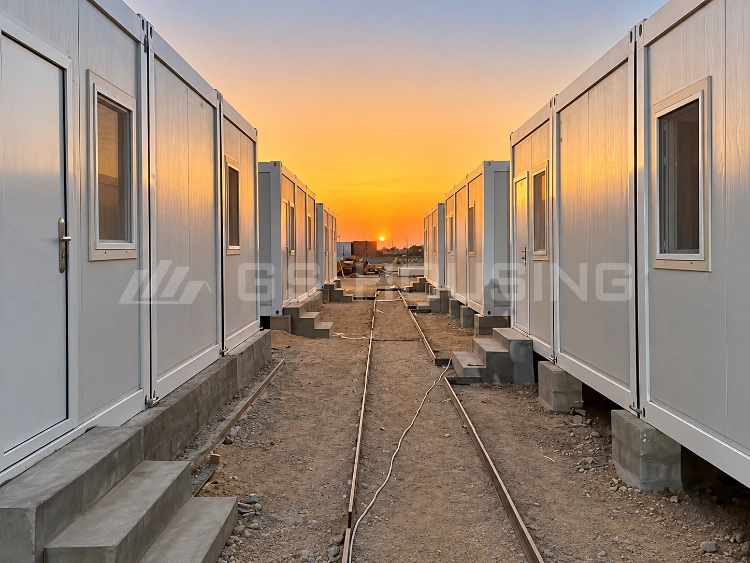
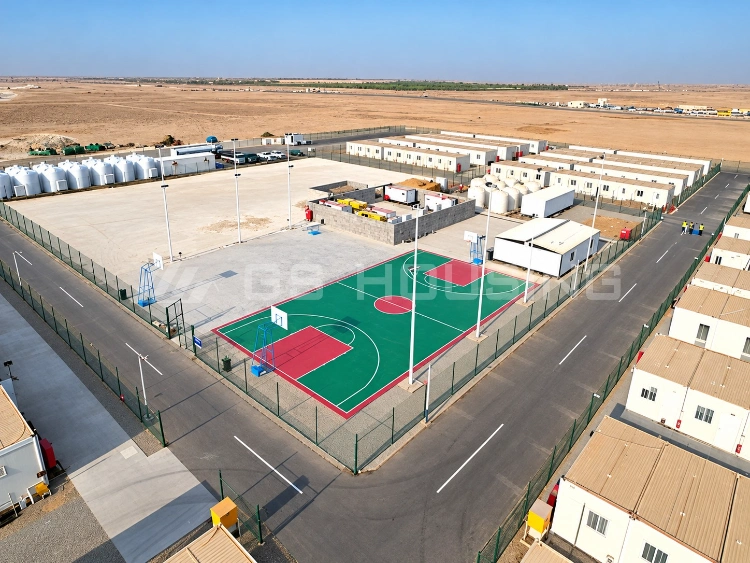
Major mine efforts test a modular building choice under stress. A mine camp does more than offer rest spots. It supports daily living, work, meals, breaks, basic aid, and safe movement. Real cases show how these setups hold up.
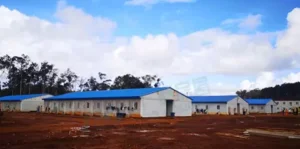
- Congo Mining Camp Project
该 Congo mining camp project made use of 1,100 prefabricated houses for workforce accommodation. It formed an organized living setup for a sizable mine team in a far location. Swift shipment and solid standards proved crucial there.
- Indonesia Mining Camp
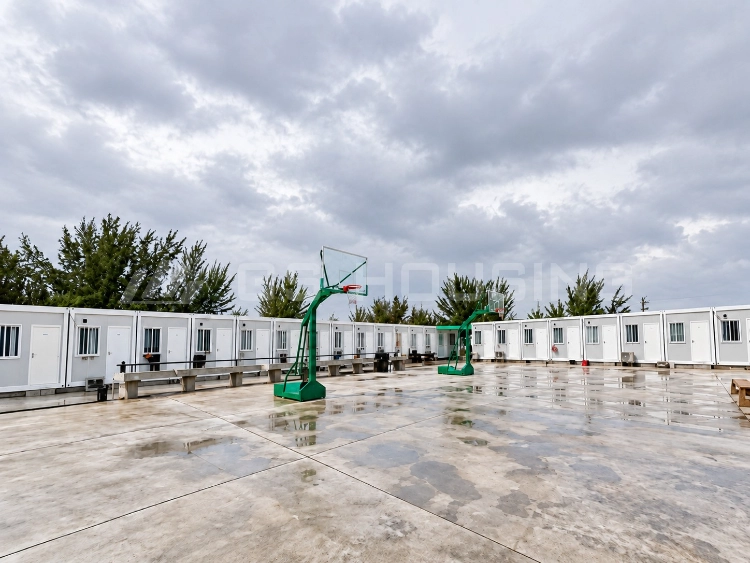
该 印度尼西亚采矿营地 targeted 5,000 people. This sets it as a solid case for large-scale far staff lodging. At such size, the camp turns into a brief temporary project village. It includes rest areas, offices, dining rooms, cooking spots, cleaning units, wash zones, health rooms, storage spaces, and outer paths. Planned design ensures smooth operations.
Our Commitment to Excellence: Reliability and Customer-Centric Practices
For business-to-business clients, product quality standards mark just one choice element. Firm output, plain skill aid, and prompt replies to field shifts matter too. These build trust in the process.
Reliability: Factory Production Capacity and Quality Control
Plant output lends modular building a clear edge. Under standard specifications, GS Housing’s flat-pack container houses can be designed with seismic grade 8, wind resistance grade 12, and a designed service life of 20 years. Set parts, managed steps, and ongoing reviews maintain even standards over big orders. When efforts demand numerous homes, this evenness cuts assembly problems and boosts field output.
Plant-driven output also eases site demands. Distant efforts often deal with worker gaps, tough weather, restricted entry, and firm deadlines. If most tasks finish before shipment, field crews can concentrate on putting together, connecting, reviewing, and passing over. This approach saves time and effort.
Customer-Centricity: Insights Gathered Onsite to Drive Innovation
The Canton Fair allowed clients to voice true project challenges up close. Topics ranged from tight schedules and varying volumes to hard weather, narrow paths, area rules, staff ease, and growth plans. These views guide better item creation and aid strategies.
A client-oriented modular choice starts with basic queries. Consider the project location. Think about user counts for the homes. Identify key roles. Note use length for the structures. Plan for possible camp growth. Answering these shapes a fitting solution.
Looking Ahead: Sustaining Momentum Beyond the Exhibition
Post-Show Achievements and Next Steps
When preparing a project, start by listing the required building functions, such as accommodation, offices, dining rooms, kitchens, bathrooms, shower units, clinic rooms, meeting rooms, storage rooms, recreation areas, and guard rooms. Then confirm workforce size, expected service life, delivery schedule, and site conditions. This information provides a solid basis for modular planning.
Factor in path entry, lift tools, weather, water access, power sources, drain systems, assembly workers, and later growth too. A useful modular choice aligns with these elements. It avoids mismatches that cause delays.
联系我们 GS Housing for Modular Building Solutions
Share your project location, building functions, required quantity, and delivery schedule to receive a customized modular building solution.
常见问题
Q: Which product is better for a large workforce camp?
A: Flat-pack container houses suit quick lodging, offices, bathrooms, and basic camp pieces. Prefabricated houses fit bigger common areas and tailored designs. Blends often work well for scale.
Q: What information should you prepare before asking for a proposal?
A: Prepare the project location, required building functions, quantity, workforce size, site conditions, and delivery schedule. These details help create a more accurate modular building plan.
Q: Can modular houses support large mining camp projects?
A: Yes. The Congo project employed 1,100 prefabricated houses. Meanwhile, the Indonesia project handled a 5,000-person mine camp. Both highlight strong capacity.