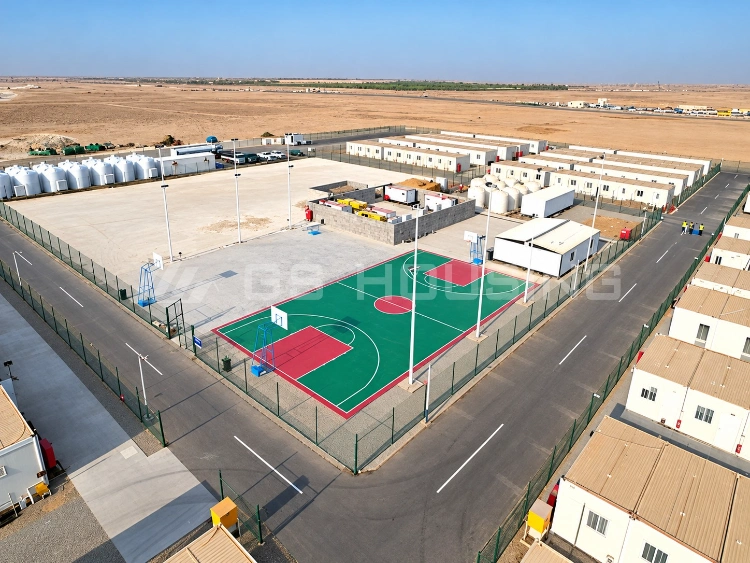
If you are planning to work as a container house distributor, do not start with price only. Price matters, but most project problems happen after payment: unclear drawings, missing accessories, weak packing, slow replies, or local workers not knowing how to open and fix the units on site. The buyer may ask about model size, folded transport, layout, installation, spare parts, and after-sales. If the factory cannot answer these details, the pressure goes back to you.
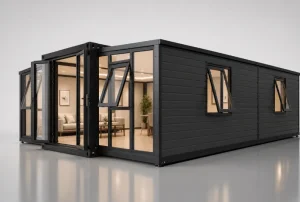
GS Housing supplies modular and container house systems for project use, including expandable container houses, flat pack container houses, and prefab modular homes. Its Expandable Container House range includes 700 mini, 20ft, 30ft, and 40ft models, giving distributors more room to match different local buyer groups.
Why Does the Right Manufacturer Matter for a Container House Distributor?
A distributor is not only forwarding a catalog. In real B2B orders, you may need to explain technical points, help buyers compare models, check delivery documents, and support installation questions after the goods arrive.
Some factories look fine during quotation. The trouble usually starts when the buyer asks for drawings, packing details, installation support, or spare parts. That is why supplier selection should include production, documents, installation, and service response.
In distributor business, the first order is often a test. If the house arrives with unclear parts, poor installation guidance, or details that do not match the buyer’s site, the buyer will not blame the overseas factory first. They will come back to the local distributor.
Stable Supply for Bulk Orders
Many project buyers order in stages. They may test a few units first, then add more after checking local demand. A contractor may start with office units, then later ask for accommodation, bathrooms, storage rooms, or site reception space.
For a container house distributor, stable supply means the manufacturer can keep product details, packing methods, documents, and response speed consistent across repeat orders. A low first price is not useful if later batches are hard to match.
Product Range That Matches Local Demand
Local buyers are not all the same. A small contractor may need a 20ft unit for a temporary office. A tourism operator may prefer a larger opened layout. A public project buyer may care more about safety, installation speed, and daily use.
GS Housing’s บ้านแบบตู้คอนเทนเนอร์ที่สามารถขยายได้ range helps distributors serve different buyer groups. The 700 mini model can fit compact offices, guard rooms, retail points, or trial orders. Larger expandable models are more suitable for worker housing, family-style temporary homes, tourism cabins, or project offices with more interior movement.
Before recommending a model, ask the buyer how many people will use the house, how long it will stay on site, whether it needs bathroom or kitchen planning, and how it will be transported locally.
Project Support Beyond Unit Sales
A buyer may know the function they need, but not the exact layout. They may ask which model is suitable, how many people can use the space, how the house is transported, or what site preparation is needed.
A good expandable container house manufacturer for distributors should help with product matching, drawings, installation guidance, and project communication. This helps the distributor speak with contractors and procurement teams more clearly.
How to Build a Product Selection Checklist for Container House Distributors?
Before choosing a supplier, prepare a simple container house distributor product selection checklist. Do not only compare the outside photo or unit price. The checklist should show whether the product can be sold, shipped, installed, and supported in your local market.
| จุดตรวจสอบ | Why It Matters for Distributors | What to Ask Before Ordering |
| Model Size | Different buyers need different interior space | Which model fits office, housing, cabin, or retail use? |
| Folded Transport | Shipping and local delivery affect landed cost | What are the folded size, packing method, and loading plan? |
| Opening and Expansion Method | Poor operation can cause site complaints | How is the unit opened, fixed, and checked after installation? |
| Layout Options | Buyers may need doors, windows, bathrooms, or partitions | What parts can be adjusted before production? |
| After-Sales Process | Distributors need fast answers after delivery | How are missing parts, spare parts, and warranty issues handled? |
Expandable Container Houses for Repeatable Project Orders
Expandable container houses are useful when buyers want more usable space after delivery, but still need compact transport before installation. This makes them suitable for many distributor markets.
GS Housing’s expandable range can support different repeatable orders. Smaller models can be used for compact living or office space. Larger models can serve families, worker housing, tourism cabins, or project offices. For distributors, one product line can cover several buyer types instead of only one narrow use.
Custom Layouts for Different Buyer Groups
Do not present every expandable house as the same product. A buyer looking for a site office cares about desks, doors, wiring, and fast setup. A buyer looking for temporary housing may care more about privacy, insulation, bathroom planning, and daily comfort. A tourism cabin buyer may ask about appearance and interior layout.
Before placing bulk orders, ask the manufacturer what layout options are available and what can be adjusted. Doors, windows, internal partitions, utility points, and furniture planning may affect whether the unit fits the local market.
Transport, Assembly, and Expansion Planning
Transport is part of the real cost. A unit may look attractive in photos, but if the folded size, loading quantity, packing method, or installation sequence is not clear, the distributor may face extra cost after shipment.
Ask the manufacturer for folded dimensions, loading details, installation steps, foundation needs, and site preparation points. If the buyer may expand the project later, leave room for future units in the first layout plan.
What Should an Expandable Container House Quality Checklist Include?
For distributors, this checklist is not only about product quality. It also helps reduce after-sales risk when local buyers ask about safety, operation, and long-term use.
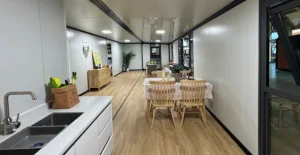
An expandable container house quality checklist should focus on the parts that affect safety, daily use, and later complaints. Exterior photos are not enough. A distributor should check the frame, expansion mechanism, insulation, waterproof details, doors, windows, electrical routing, accessories, and packing records.
Steel Structure, Frame Stability, and Expansion Mechanism
The steel frame carries the product. For distributor sales, frame quality affects buyer trust and after-sales risk. Ask about the frame material, surface treatment, connection points, roof and floor structure, and how the house is protected during transport.
For expandable houses, the expansion mechanism needs careful checking. The unit must open smoothly and stay stable after installation. If this part is weak or hard to operate, complaints may appear as soon as the buyer starts using the house.
Insulation, Waterproofing, and Fire-Safe Materials
End users care about the space after move-in. Wall panels, roof insulation, waterproof treatment, floor materials, doors, and windows all affect comfort. In hot, rainy, windy, dusty, or coastal areas, these details matter even more.
Distributors should ask the manufacturer to explain insulation materials, roof drainage, panel connection, waterproof treatment, and fire-safe options. Clear answers help you reply to buyer questions with confidence.
Factory Inspection Before Shipment
Factory inspection helps reduce disputes. Before shipment, ask whether the factory checks frame connection, expansion parts, wall panels, roof sealing, doors, windows, electrical components, accessories, packing lists, and loading photos.
For large or repeat orders, these records are useful. If the local installation team finds a missing part, the distributor can trace the issue faster.
What Installation Support Should Container House Distributors Expect?
A good product can still cause trouble if the local team does not know the correct steps. Container house installation support for distributors is not a small service item. It affects project speed, customer satisfaction, and repeat orders.
Installation Drawings and Video Guidance
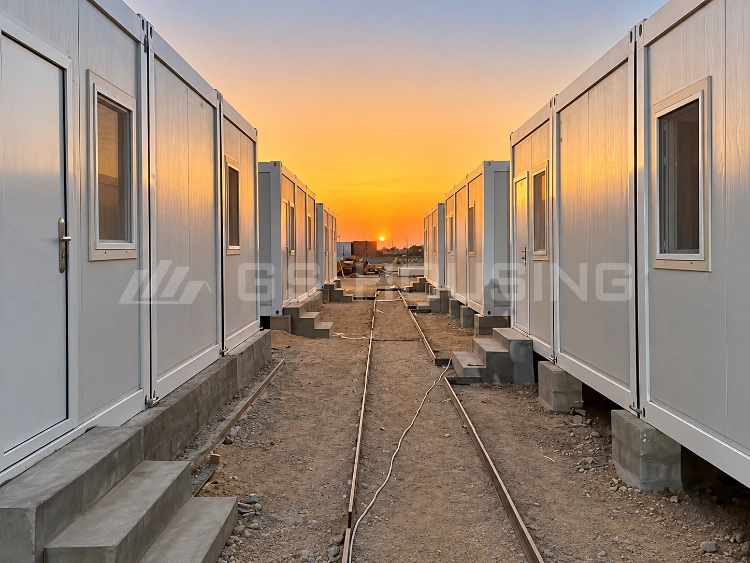
For standard projects, drawings and videos help local workers prepare tools, check the sequence, and avoid basic mistakes. Clear guidance also saves the distributor from answering the same questions many times.
GS Housing provides product communication and technical support for overseas container house projects. This is useful when distributors work with local contractors or installation teams that need clear documents before the goods arrive.
On-Site Supervision for Large Projects
Some projects need stronger support than drawings. Worker camps, public facilities, tourism sites, and multi-unit layouts may have tight schedules and more site coordination.
Before cooperation, ask what project information the manufacturer needs before installation starts. Also ask whether technical guidance, remote support, or on-site supervision can be arranged for larger orders.
After-Sales Response, Spare Parts, and Warranty Handling
After-sales work often decides whether the distributor can keep the customer. Buyers may need spare parts, replacement panels, repair advice, or technical clarification after use begins.
Ask how quality feedback is submitted, how photos or videos should be sent, how spare parts are supplied, and how warranty cases are judged. A clear process is better than a loose promise.
How Can GS Housing Support Your Container House Distributor Business?
A distributor needs a manufacturer that can support product selection, project communication, delivery preparation, and after-sales response. The product itself matters, but the process behind the product matters just as much.
Project-Based Product Recommendation
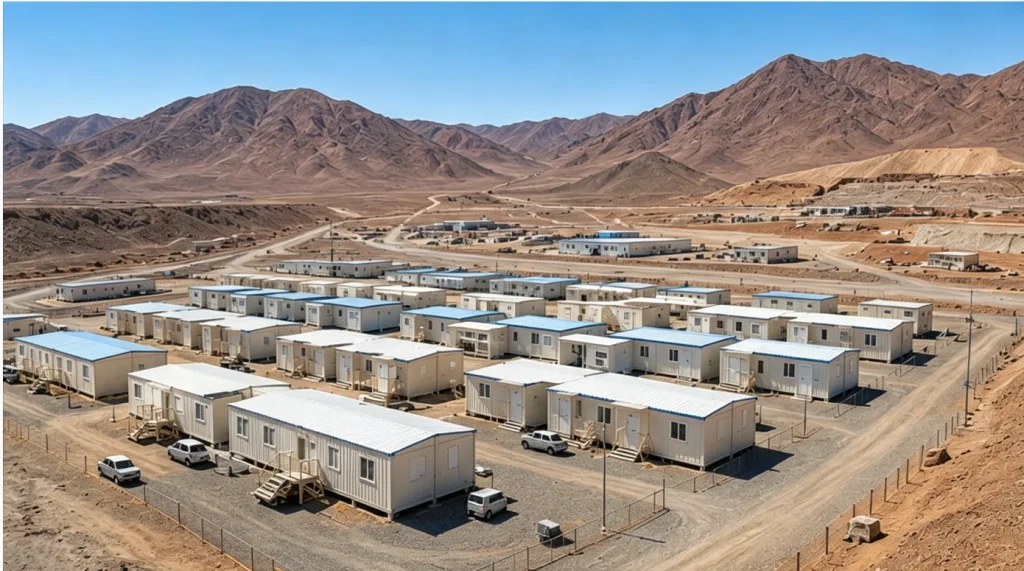
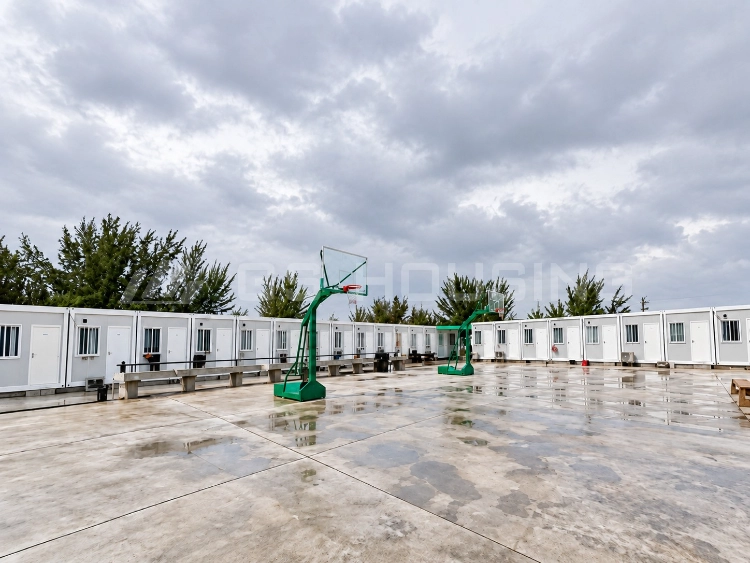
GS Housing’s expandable container houses can be considered for temporary homes, site offices, worker housing, cabins, retail spaces, and other project uses. The right model should be selected by project type, land size, user number, transport route, local climate, and installation conditions.
For a container house distributor, this project-based selection is easier to sell than a single standard model. It allows you to match the product with the buyer’s real use.
Global Delivery and Technical Coordination
Overseas orders need clear communication before shipment. Distributors may need product files, packing details, installation documents, layout feedback, and technical answers for local buyers.
Good coordination helps the distributor answer questions before problems appear on site. It also makes buyers feel that the distributor can support the full process, not just sell the unit.
Contact GS Housing for Expandable Container House Distributor Support
A container house distributor has a stronger chance when the local market has repeat project needs, such as temporary offices, worker accommodation, tourism cabins, public facilities, or emergency housing. If buyers only want the lowest one-time price, the business may be difficult to manage.
If your buyers are asking about model selection, transport, installation files, or long-term supply, prepare the project location, target users, quantity range, required functions, site conditions, and delivery plan first. These details help the manufacturer judge which expandable model is more suitable.
ติดต่อ GS Housing to discuss expandable container house distributor support, including model selection, packing details, installation guidance, spare parts, and long-term supply cooperation.
คำถามที่พบบ่อย
Q: How can I become a container house distributor without choosing the wrong supplier?
A: Start by checking product range, production control, installation support, quality inspection, project experience, and after-sales process. A container house distributor should not choose only by price, because buyers will also ask about layout, transport, installation, and service.
Q: What should a container house distributor ask before ordering expandable container houses?
A: Ask about model size, folded size, expanded area, frame structure, insulation, waterproofing, packing method, installation drawings, spare parts, and warranty handling. Also ask whether the manufacturer can help match the product to local buyer groups.
Q: Are expandable container houses suitable for distributor sales?
A: Yes, if your market has demand for fast housing, site offices, worker accommodation, tourism cabins, retail spaces, or temporary project buildings. Expandable container houses are easier to present when buyers want more usable interior space with a transportable structure.