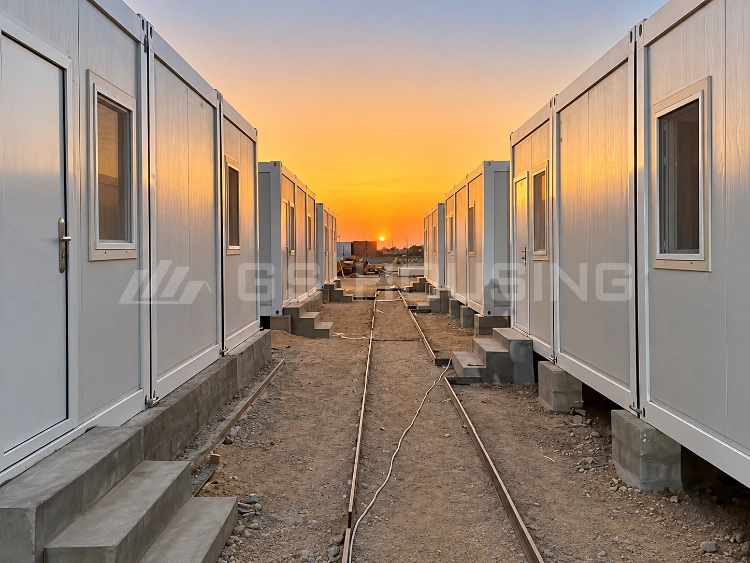
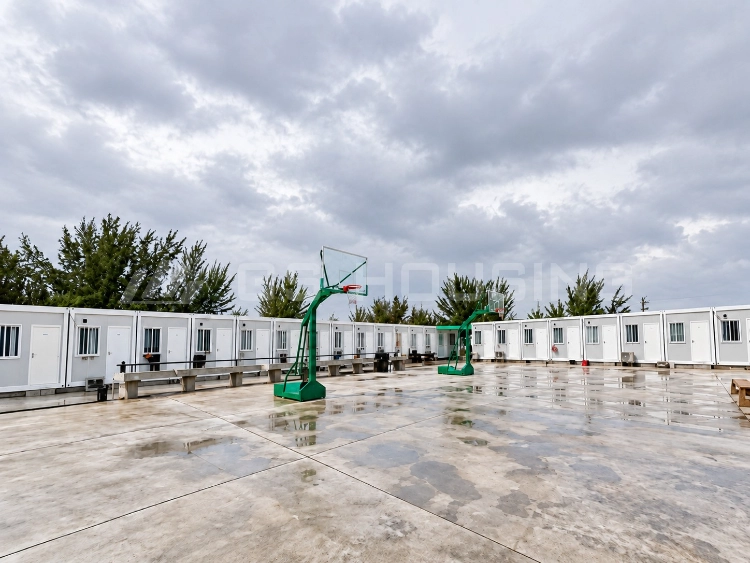
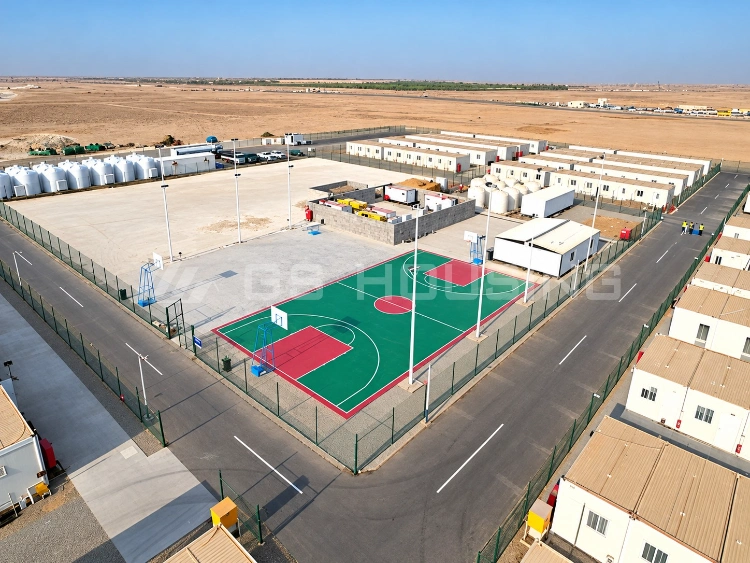
The European construction market is facing rising on-site labor costs, stricter carbon reduction goals, and growing demand for high-quality workforce housing and modular building solutions. If your work in Europe relies on quick setup, solid build, and steady shipping, picking the proper container house manufacturer turns into a key move.
Traditional construction methods often fail to keep pace with these demands. GS Housing provides integrated modular building solutions, covering project planning, factory production, packing, transportation coordination, and installation support.
What makes a container house manufacturer stand out in Europe?
Picking a container house manufacturer skips simple list checks. It calls for judging factory depth, rule prep, and build sameness over lands. In a market where quality is non-negotiable, a manufacturer must prove they can handle the nuances of European logistics and building codes.
Experience and engineering capability of a container house manufacturer
A reliable container house manufacturer should operate with a mature modular production system rather than simple workshop-based production. This engineering depth is visible in the material specifications. For European projects, look for galvanized steel frames that resist corrosion and high-density insulation—such as 100 kg/m³ rock wool—to meet thermal transmittance (U-value) requirements.
Block making setups reach these efficiencies:
- On-site construction time: 30–50% shorter than traditional methods.
- Factory completion rate: 60–80% of total work done before shipping.
- Material waste reduction: 70–90% compared to site-built structures.
- Weather delay impact: Minimal, as blocks are built in controlled indoor environments.
These advantages should be evaluated based on project-specific data, product configuration, and actual site conditions. A qualified container house manufacturer should demonstrate project flexibility across applications such as mining camps, energy projects, infrastructure works, emergency housing, and workforce accommodation.
Comprehensive services offered by a container house manufacturer
A reliable container house manufacturer should provide more than manufacturing. In the B2B sector, the “product” is actually the service. You should expect joined plan aid, plant pre-make setups, ship teamwork, spot fit help, and life-cycle tech back. European clients often struggle with the “last mile” of installation; a manufacturer that provides clear technical documentation and remote or on-site guidance is invaluable.
Focus on sustainability and quality control
Green ways no longer sit as a choice for any container house manufacturer in Europe. With the EU’s “Green Deal” pushing for lower carbon footprints, factory pre-making cuts green harm significantly. The efficiency gains in a controlled plant environment are massive:
- Construction waste reduction: 70–90% through precision laser cutting and recycling.
- Energy efficiency improvement: 8–15% better airtightness compared to traditional builds.
- Carbon emission reduction: 15–30% due to fewer truck trips and optimized logistics.
- On-site resource consumption: Up to 60% lower water and power use during setup.
Controlled factory production and reduced on-site construction activities can support more efficient and sustainable project delivery. A new container house manufacturer must mix tight check steps. These cover build, heat, and safe rule fits before blocks leave the plant.
How can you ensure your container house manufacturer meets project needs?
Choosing a container house manufacturer needs set judging, not guesses. You must verify that the maker can scale with your project while maintaining the same level of quality for the first block as the hundredth.
Verify manufacturing capability of the container house manufacturer
A reliable manufacturer should use standardized production processes, professional welding procedures, surface treatment systems, and strict quality inspection to improve structural consistency. You should also check annual production capacity, factory equipment, quality control procedures, and packing capability to determine whether the manufacturer can support large-scale project delivery.
GS Housing supports контейнерные дома в разобранном виде and other modular products, significantly improving transportation efficiency and installation convenience. For large-scale workforce housing projects in Europe, suitable product design, packing methods, and delivery coordination can help improve schedule and cost control.
Check communication and engineering support
A reliable container house manufacturer should provide design clarification before production, production progress updates, installation guidance, and compliance-related documentation support. If a manufacturer can provide detailed structural calculations and fire safety certifications or offer BIM support, the architects will integrate modular blocks into the site plan more seamlessly.
GS Housing prioritizes clear communication, offering dedicated engineering support that bridges the gap between factory production and the technical compliance required on European project sites.
Evaluate reputation and project references
A true container house manufacturer holds shown work in big workforce homes, far base camps, quick home setups, and multi-land ship tasks. Evaluating a manufacturer’s past performance in diverse climates—from high-heat desert zones to heavy-snow European mountain regions—is the best way to judge reliability.
GS Housing’s extensive portfolio of international projects proves its ability to deliver durable, high-quality modular solutions that stand up to the rigorous demands of the global infrastructure market.
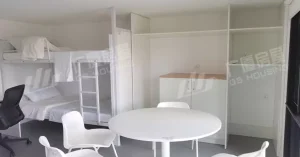
Why choose a modular system-driven container house manufacturer?
A modern container house manufacturer should act not only as a product supplier, but also as a project solution provider. This “system-driven” approach means the manufacturer considers how electrical, plumbing, and HVAC systems integrate into the modular units before they leave the factory.
Integrated production and project delivery
In fresh make setups, up to 80–90% of build acts finish in plants. This path lets tasks gain from quicker setup rounds, less work need, and better build sameness. When you move construction into the factory, you eliminate the variables of site-based labor and unpredictable weather.
GS Housing utilizes this integrated production model to deliver modular units that are 90% complete upon arrival, allowing for near-instant deployment once they reach their European destination.
Flexible modular solutions for different scenarios
Your project may involve mining camps, energy project sites, infrastructure facilities, or workforce accommodation. A capable container house manufacturer must shift plans without losing set ways. Modular units can be connected horizontally or stacked vertically to create different functional spaces based on project requirements. This flexibility is vital for urban infill projects where space is limited. Modular units can be stacked vertically to maximize the footprint.
GS Housing’s modular system is designed for this exact versatility, offering European developers the ability to customize layouts while maintaining the cost benefits of mass production.
Factory quality control and international delivery support
Plant-based making forms the main plus of a current container house manufacturer. Held spots let you set weld and join work, reach sharp cut and fit, and maintain steady check setups. Flaw rates in grown setups often stay under 3%. Logistics is a major factor in the European price point. The “Flat Pack” design allows 4 to 6 units to be packed into a single shipping container, significantly reducing freight costs.
GS Housing excels in this logistical efficiency, ensuring that its factory-controlled quality is matched by a delivery system that minimizes freight costs for European project buyers.
Industrial comparison: modular vs traditional construction
- Project duration: Modular is 30–50% faster than traditional baselines.
- On-site labor demand: Modular reduces site labor significantly, which is critical given European labor shortages.
- Quality consistency: Modular is factory-controlled and standardized; traditional is site-dependent.
- Waste generation: Modular is 70–90% lower, aiding in EU green compliance.
- Scalability: Modular is high (add units as needed); traditional is limited and disruptive.
These gaps show why calls for a container house manufacturer keep climbing worldwide. GS Housing bridges these gaps by offering a modular system that provides the speed of manufacturing with the durability of permanent construction, making it the ideal partner for the modern European building sector.
Request a modular building solution for your project
If your project faces tight schedules, remote site conditions, or complex workforce accommodation requirements, it is important to choose a manufacturer that can provide technical support beyond a simple product list. GS Housing can support project planning, modular layout suggestions, product configuration, packing solutions, and installation guidance according to your project needs. GS Housing will provide customized solutions based on your European project’s on-site conditions, power standards, and time requirements, ensuring a seamless transition from factory to foundation.
Get a Customized Quotation for Your Container House Project in Europe!
Часто задаваемые вопросы
Q1: What defines a reliable container house manufacturer?
A sure container house manufacturer gives joined plan, plant making, build checks, and ship teamwork. It holds shown task know across many fields. GS Housing is recognized for this comprehensive approach, ensuring all technical and logistical hurdles are handled before the product reaches the site.
Q2: Why is modular construction preferred in large projects?
It cuts make time up to 50%. Plus, it betters build sameness and drops waste plus spot risks versus old ways. GS Housing has optimized this process to help European contractors meet aggressive timelines that traditional construction simply cannot support.
Q3: Is modular construction suitable for long-term use?
Yes. New block setups build for lasting build work. Life spans often top 20 years based on specs and care. GS Housing uses premium materials and anti-corrosion coatings to ensure that its modular buildings serve as long-term assets for any project in Europe.
Поделитесь этой историей — выберите платформу!
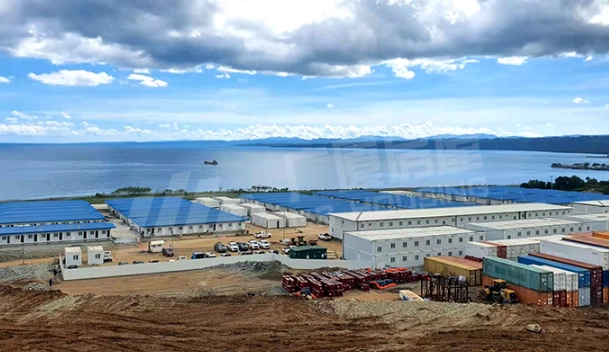 Жилье для удаленных работников горнодобывающей промышленности: модульные решения для горнодобывающих проектов
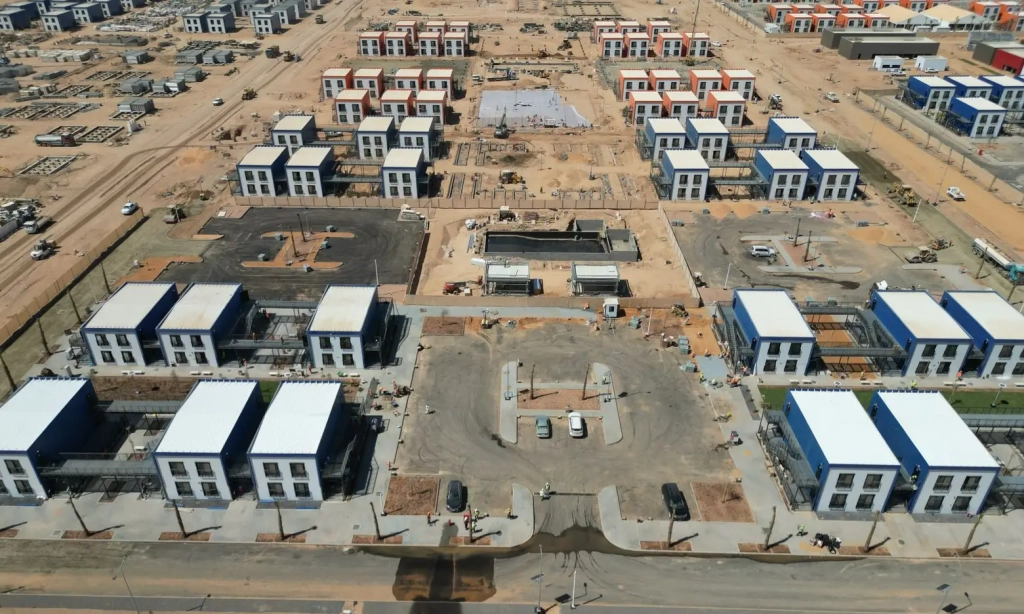 Как сократить логистические расходы при строительстве из сборных контейнерных модулей для удаленных проектов